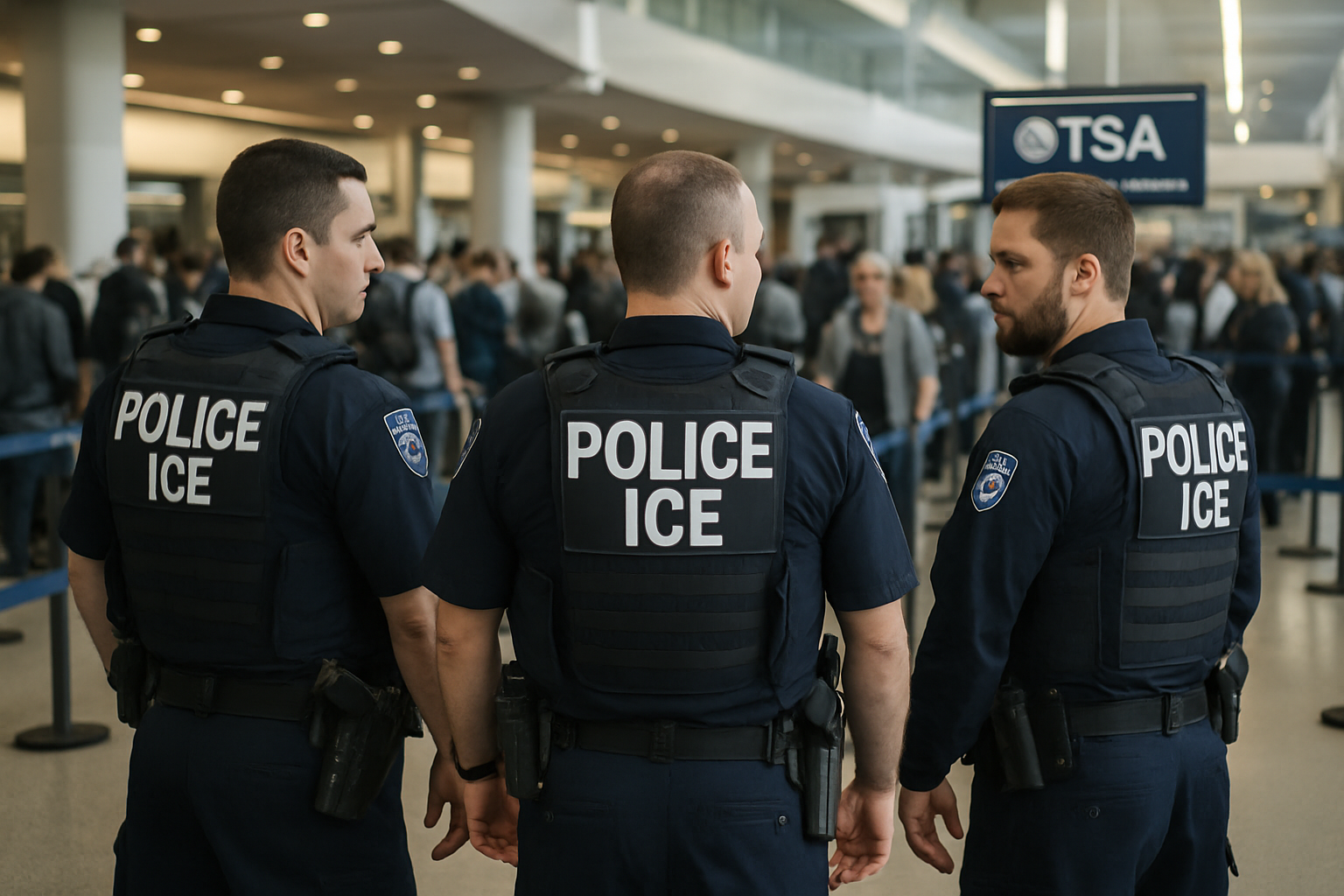
Armed federal immigration officers in tactical gear moved through terminals at some of the busiest US airports Monday, standing near security lines and checkpoints after President Donald Trump ordered their deployment during a partial government shutdown that has severely disrupted air travel nationwide.
Immigration and Customs Enforcement (ICE) agents have been deployed to 14 airports across the country to assist with Transportation Security Administration (TSA) operations, according to government officials. The unprecedented move comes as TSA workers face a second missed paycheck on March 27 amid a 36-day partial government shutdown that has left critical aviation security functions understaffed.
Unprecedented Federal Response to Aviation Crisis
The deployment represents the first time immigration enforcement officers have been assigned to airport security operations in US history, raising questions about the blending of immigration enforcement with aviation security functions. ICE agents, trained primarily in immigration law enforcement and deportation operations, are now being asked to supplement TSA personnel who specialize in aviation threat identification and passenger screening.
At John F. Kennedy International Airport in New York, agents in tactical vests bearing "POLICE ICE" insignia could be seen patrolling near security checkpoints, while similar scenes played out at major hubs including Hartsfield-Jackson Atlanta International Airport. At least some of the deployed agents are armed, according to Finnish media reports monitoring the situation.
Border Czar Tom Homan confirmed the deployment, stating agents would help TSA "move those lines" more efficiently. However, the administration has not specified the exact roles ICE agents will perform at airports, creating confusion about operational procedures and command structure.
Government Shutdown Triggers Security Crisis
The airport deployment stems from a bitter political standoff over immigration enforcement practices and border security funding. Congressional Democrats have demanded comprehensive ICE accountability reforms following the fatal shootings of Alex Pretti and Renee Nicole Good in Minneapolis in February 2026, which triggered a previous government shutdown and mandatory body camera requirements for immigration agents.
TSA workers, who are classified as essential personnel but have been working without pay during the shutdown, are experiencing significant staffing shortages as employees call in sick or seek temporary employment elsewhere. The agency reports that extended wait times at security checkpoints have created operational challenges at airports nationwide, with some delays exceeding three hours during peak travel periods.
"I will move our brilliant and patriotic ICE Agents to the Airports where they will do Security like no one has ever seen before."
— President Donald Trump, Truth Social post
The shutdown represents the 36th day of the partial government closure, making it one of the longest in US history. House Speaker Mike Johnson's attempts to broker ICE reform debates have stalled amid the funding crisis, with both sides maintaining entrenched positions.
Security Experts Question Agent Preparedness
Aviation security experts have raised concerns about ICE agents' preparedness for airport security duties, noting fundamental differences in training focus. While ICE specializes in immigration enforcement, document fraud detection, and deportation operations, TSA agents undergo months of specialized training in aviation-specific threats, explosive detection, and passenger screening protocols.
The deployment comes amid broader concerns about ICE operations, with recent polling showing two-thirds of Americans believe the agency has "gone too far" in its enforcement activities. The agency has quadrupled deportations during the first nine months of Trump's second term compared to previous levels, according to a University of California study.
Security vulnerabilities at airports represent a particular concern, as the 9/11 attacks demonstrated the devastating potential of compromised aviation security. The mixing of immigration enforcement personnel with aviation security operations creates unprecedented questions about operational effectiveness and potential security gaps.
Economic Impact and Industry Pressure
The aviation industry faces mounting pressure as the shutdown enters its sixth week, with airlines reporting significant operational challenges and passenger frustration. Extended airport wait times have led to missed connections, delayed flights, and cancellations, creating ripple effects throughout the transportation network.
Industry analysts estimate the aviation sector could face hundreds of millions of dollars in losses if the shutdown continues, with international media covering the crisis as a symbol of American governmental dysfunction. European and Asian news outlets have highlighted the situation as an example of how immigration policy disputes cascade across multiple government functions, affecting millions of Americans.
Historical Context and Political Stakes
The crisis represents an escalation of Trump's pressure tactics in federal funding negotiations, though early reactions from Congressional Democrats suggest hardened opposition rather than concessions. The deployment of ICE agents to airports has no historical precedent, raising questions about the boundaries between different federal law enforcement agencies and their specialized roles.
The situation follows the controversial Operation Metro Surge in Minnesota, which resulted in over 4,000 arrests but also led to civilian casualties, nationwide protests, and the implementation of mandatory body cameras for ICE agents. The Minneapolis operation was ultimately scaled back following intense criticism and legal challenges.
Federal Judge Ana Reyes previously blocked the termination of Temporary Protected Status for approximately 350,000 Haitians, ruling that the decision was motivated by discriminatory considerations. Similar legal challenges to immigration enforcement methods have emerged across multiple federal jurisdictions, with courts increasingly requiring ICE to obtain warrants unless there is an escape risk.
Congressional Response and Oversight
Congressional Democrats have maintained their position requiring comprehensive ICE reforms before approving funding, including demands for agent identification requirements and restrictions on face coverings during operations. The party has threatened to block Department of Homeland Security funding unless "drastic changes" are implemented in immigration enforcement practices.
House Speaker Johnson had previously scheduled two weeks of ICE reform debates, but these discussions have been overshadowed by the funding crisis and airport deployment controversy. Some Republicans have privately expressed concerns about the effectiveness and constitutional implications of using immigration agents for aviation security purposes.
International and Domestic Implications
The airport deployment has drawn international attention, with European media outlets characterizing it as evidence of American institutional dysfunction during a critical period for global diplomacy. The situation occurs as the US faces complex international challenges requiring steady governance and reliable partnerships.
Domestically, the crisis demonstrates how immigration policy disputes can cascade across government functions, affecting sectors far removed from border security. The aviation industry, which depends on consistent federal security operations, has become an unexpected battleground in broader debates about immigration enforcement and federal accountability.
Looking Ahead: Resolution Prospects
Resolution of the crisis will likely require significant compromises from both sides, including ICE accountability measures demanded by Democrats and border security funding sought by Republicans. The unprecedented nature of the airport deployment creates additional pressure for a negotiated settlement, as the mixing of immigration enforcement with aviation security raises operational and constitutional questions that extend beyond typical budget disputes.
The situation represents a test of democratic oversight over federal law enforcement agencies, with implications that may establish precedents for future immigration enforcement operations and the balance between security priorities and constitutional protections. As TSA workers face their second missed paycheck and ICE agents take on unfamiliar aviation security roles, the resolution of this crisis may determine not only immediate government funding but also the long-term relationship between immigration enforcement and other federal functions.
The deployment of ICE agents to airports represents more than a temporary staffing solution – it embodies a broader conflict over immigration enforcement practices, federal accountability measures, and the proper role of different law enforcement agencies in American governance. How this unprecedented situation resolves will likely influence immigration and aviation security policies for years to come.