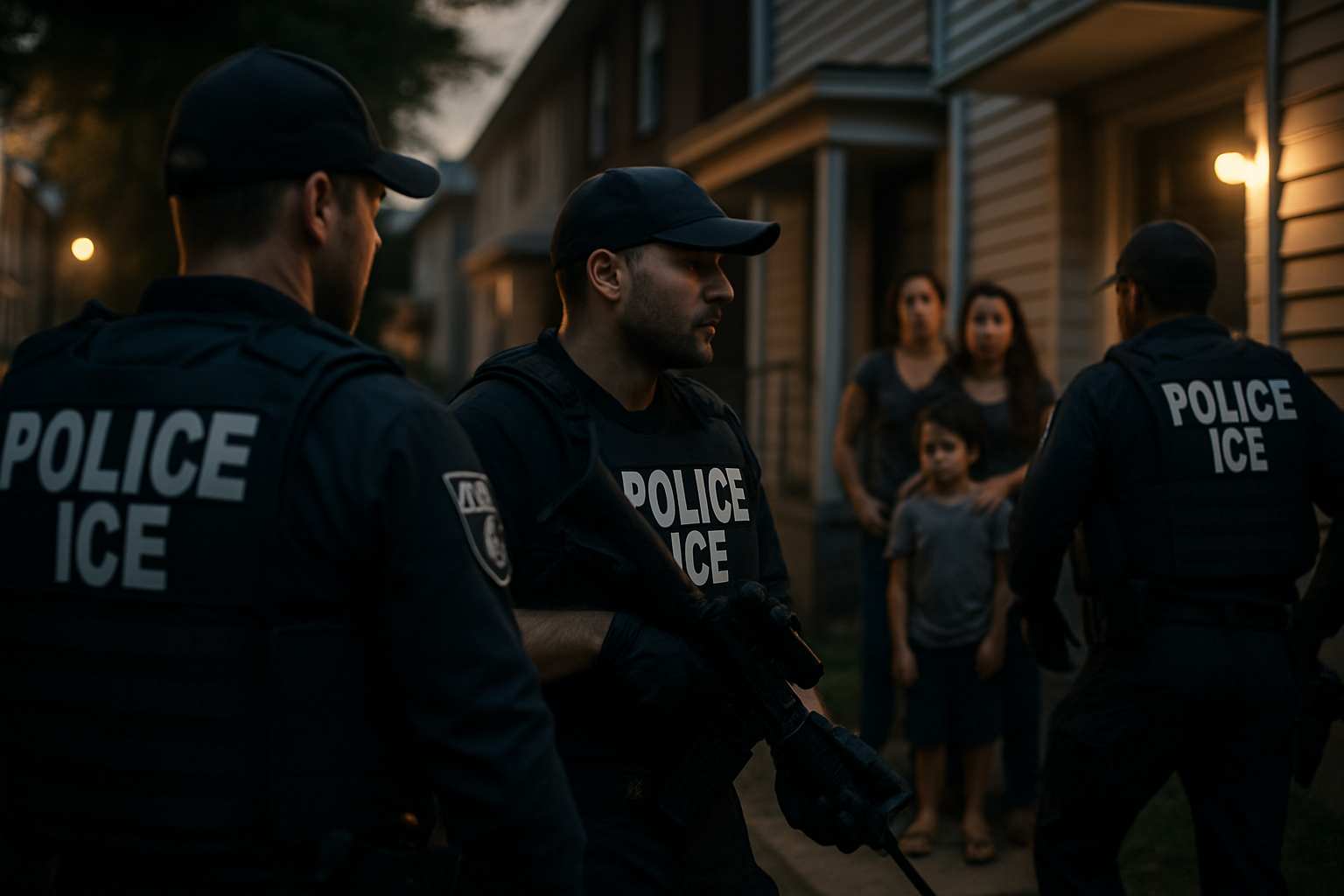
Immigration and Customs Enforcement (ICE) operations have intensified dramatically across multiple states, with families going into hiding, civil rights organizations raising alarm, and thousands of activists facing federal charges for attempting to interfere with enforcement activities.
The escalation represents the most significant immigration enforcement surge since the Trump administration's return to power, with operations now extending far beyond traditional workplace raids to include coordinated multi-state sweeps that have prompted international attention and congressional scrutiny.
Families in Hiding Across Minnesota
In Minnesota, families have been living in fear for over a month, with one Honduran family reportedly hiding inside their home since early January, afraid to venture outside due to increased ICE patrol activity. The climate of fear has become so pervasive that local residents have begun monitoring ICE patrol routes and sharing information through community networks.
"A climate of fear reigns in their town, with locals monitoring ICE patrols," according to reports from France 24, highlighting how entire communities have been affected by the enforcement operations.
The situation has become so dire that some immigrant families are taking extraordinary measures to protect their pets. In Texas, there has been a notable increase in families surrendering their pets to animal shelters, fearing deportation and wanting to ensure their animals don't end up abandoned if they are taken into custody.
Congressional Hearings and Deadly Encounters
The intensified operations have drawn sharp congressional scrutiny, particularly following the shooting deaths of two protesters in Minneapolis. ICE leadership was called before Congress to defend the agency's actions, with officials facing intense questioning about operational protocols and accountability measures.
The congressional hearings came after what officials described as a significant escalation in enforcement activities, with Trump's immigration campaign facing heavy scrutiny following the fatal incidents. The deaths have become a rallying point for critics of the administration's approach to immigration enforcement.
"Trump's immigration campaign has been heavily scrutinized in recent weeks, especially after the shooting deaths in Minneapolis"
— Congressional Source
Crackdown on Immigration Activists
Federal authorities have dramatically expanded their enforcement actions beyond targeting undocumented immigrants themselves. Thousands of local activists are now being arrested under Title 18, Section 111 of the U.S. Code, a federal statute criminalizing interference with federal officers conducting official duties.
ICE has specifically intensified its crackdown on individuals who follow enforcement vehicles in their cars, often community volunteers who attempt to document operations or alert families to ICE presence in their neighborhoods. These "car followers" are now being systematically arrested and charged with federal crimes.
The broad application of federal interference statutes represents a significant expansion of enforcement beyond traditional immigration violations, effectively criminalizing community-based resistance and documentation efforts that have historically been considered forms of civic engagement.
International Attention and Diplomatic Concerns
The enforcement operations have attracted significant international media coverage, with European, Asian, and Latin American news outlets reporting extensively on the human impact of the raids. International observers have noted the contrast between the administration's immigration policies and broader humanitarian concerns.
The Mexican government has issued warnings to its nationals about increased ICE operations, particularly around major public events. These diplomatic communications reflect growing international concern about the scope and intensity of current enforcement operations.
Historical Context and Escalation
According to historical data, deportations have quadrupled during the current administration compared to previous levels, with University of California studies confirming a 4.6-fold increase in interior deportations during the first nine months alone. This represents the most dramatic escalation in immigration enforcement in recent decades.
The current operations go far beyond traditional workplace raids, extending to residential areas, public spaces, and community gatherings. Federal agents are now conducting what officials describe as "systematic daily operations" with federally chartered aircraft operating regular deportation flights from major airports.
Legal Challenges and Civil Rights Concerns
The expanded enforcement has prompted numerous legal challenges from civil rights organizations, who argue that current operations violate due process protections and target individuals based on racial profiling rather than specific criminal activity.
Federal judges in several jurisdictions have begun requiring ICE to obtain warrants before conducting arrests, unless there is immediate flight risk. This represents a significant judicial pushback against the administration's enforcement approach, though implementation varies by jurisdiction.
Native American communities have reported particular concerns about racial profiling, with tribal members being wrongfully detained despite their status as indigenous peoples. Several tribes have established safe zones and are providing tribal identification cards to help protect members from mistaken detention.
Economic and Social Impact
The enforcement operations have created widespread economic disruption across multiple sectors, particularly agriculture, hospitality, and healthcare, where immigrant workers constitute significant portions of the workforce. Major corporations, including Target, are facing employee pressure to clarify their policies regarding ICE operations on company property.
Immigrant families are increasingly avoiding essential services, including medical care and education, due to fear of detection and detention. This avoidance behavior has raised public health concerns and is disrupting normal community functioning in areas with large immigrant populations.
The psychological impact on children in immigrant families has been particularly severe, with educators reporting increased anxiety, behavioral problems, and school attendance issues among students from immigrant families, regardless of their legal status.
Political and Congressional Response
Congressional Democrats have threatened to block Department of Homeland Security funding unless "drastic changes" are implemented in ICE operations. This represents an unprecedented political crisis over immigration enforcement accountability, with current DHS funding only secured through mid-February.
House Speaker Mike Johnson has scheduled two weeks of ICE reform debates, indicating the political pressure surrounding current enforcement practices. The debates will likely focus on operational protocols, accountability measures, and the scope of enforcement activities.
Polling data shows that two-thirds of Americans now believe ICE has "gone too far" in its enforcement activities, marking a significant shift in public opinion even among some previous supporters of stricter immigration enforcement.
Federal Courts and Constitutional Questions
Federal courts have begun issuing rulings that challenge the scope of current enforcement activities. Besides warrant requirements, some judges have blocked attempts to terminate Temporary Protected Status for certain populations, citing discriminatory intent.
Civil rights lawsuits have been filed challenging visa suspensions affecting 75 countries, arguing that such broad restrictions violate due process and equal protection principles. These cases could potentially reshape the legal framework surrounding immigration enforcement.
Looking Forward
The current situation represents a critical test of American democratic institutions' ability to balance national security concerns with civil rights protections and humanitarian obligations. The outcome of ongoing legal challenges, congressional investigations, and public pressure campaigns will likely determine the future scope and methods of immigration enforcement.
International observers continue monitoring the situation closely, as the current enforcement approach has implications for global discussions about migration, human rights, and democratic governance. The resolution of current tensions may serve as a precedent for immigration policy approaches in other democratic nations facing similar challenges.
As enforcement operations continue and legal challenges work their way through the courts, the fundamental questions about the balance between immigration enforcement and civil rights protections remain unresolved, making this one of the defining domestic policy issues of the current administration.