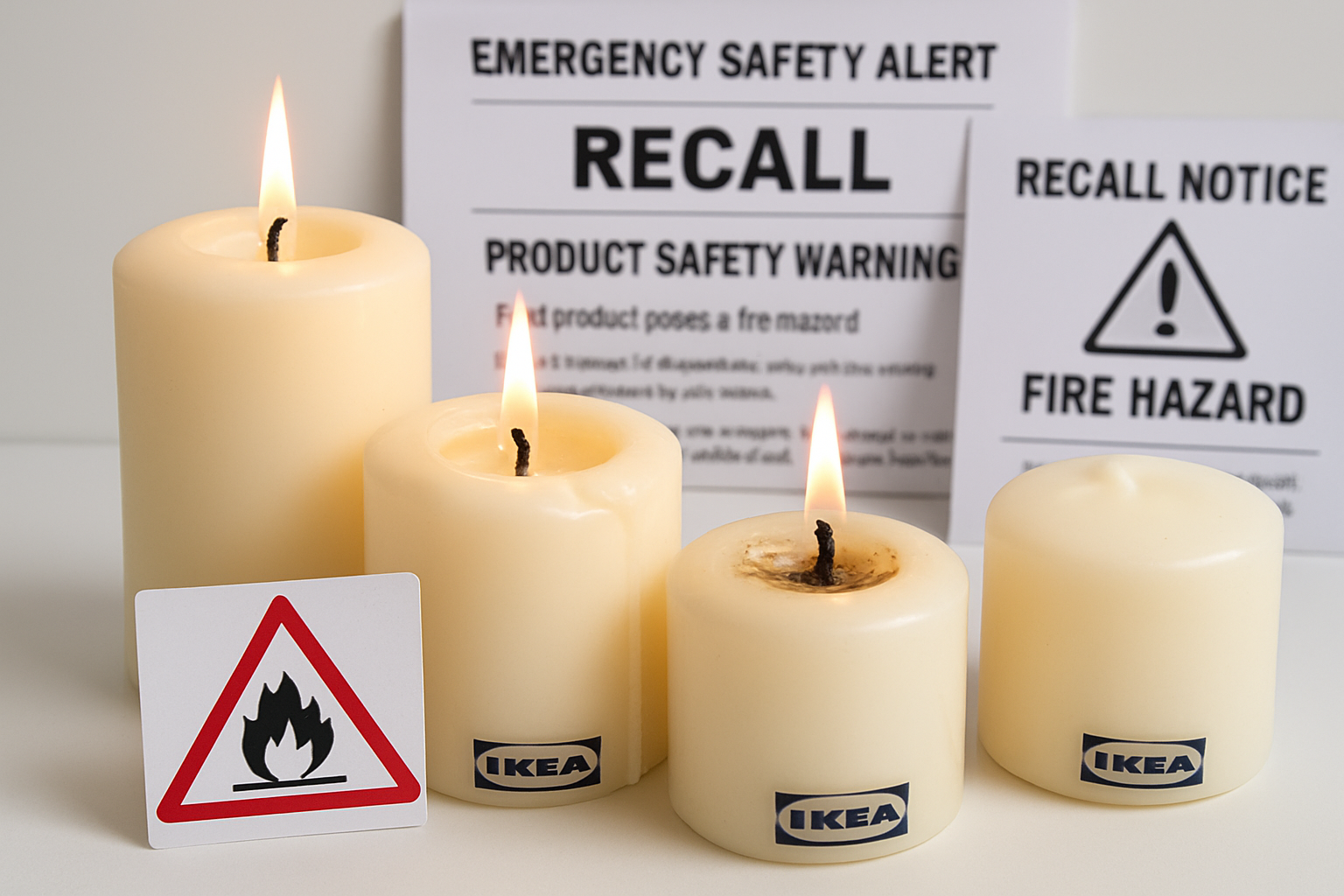
Multiple Nordic countries issued urgent product recalls on March 24, 2026, as IKEA withdrew dangerous candles across Denmark, Finland, Norway, and Sweden, while New Zealand fined The Warehouse $234,000 for unsafe toy packaging, highlighting escalating global consumer safety failures during the 20th consecutive month of temperatures exceeding 1.5°C above pre-industrial levels.
IKEA's coordinated multi-country recall of Smöjträd scented candles represents a significant consumer safety crisis across Scandinavia. The 25-centimeter unscented candles contain embedded extra wicks due to production errors, creating unexpectedly large flames that pose serious fire and burn injury risks to consumers.
Nordic Recall Coordination
Norwegian authorities led the international response, with IKEA confirming through press releases that affected products could ignite additional wicks embedded in the wax. "In the affected products, the extra wicks can be ignited, which causes a larger flame than expected and poses a risk of fire or burn injuries," IKEA stated in official communications.
The recall extends across multiple Nordic markets:
- Denmark: Ekstrabladet reported the candles could contain extra wicks due to production errors, creating significant fire hazards
- Finland: Yle News confirmed IKEA requests customers immediately stop using the candles
- Norway: NRK reported comprehensive recall details with customers advised to return products to IKEA stores
- Sweden: Expressen confirmed the fire risk warnings
IKEA has instructed customers who purchased the affected candles to return them to any IKEA store location for full refunds, regardless of receipt status.
Global Packaging Safety Concerns
Simultaneously, New Zealand's commerce regulator imposed a substantial $234,000 fine on The Warehouse Ltd following Commerce Commission action over potentially dangerous toy packaging. The retailer was penalized for packaging toys that had failed multiple small parts safety tests, creating choking hazards for children.
The case highlights systematic failures in product safety verification, where packaging decisions override safety test results. Industry experts warn this represents a concerning pattern where commercial pressures compromise consumer protection protocols.
Historical Context of 2026 Crisis
These recalls occur within the context of an unprecedented global food and consumer safety crisis that has defined 2026. The European infant formula contamination affecting 36+ infants with cereulide toxin from Bacillus cereus bacteria in Nestlé and Danone products established a pattern of multinational corporations failing basic safety protocols.
"2026 has been identified as a critical transformation turning point requiring enhanced international coordination, climate-adaptive processing, and prevention-focused approaches integrating traditional wisdom with modern safety science."
— EFSA Safety Assessment Report
The crisis extends far beyond food products. Recent incidents include:
- Malta's dual warnings for Aptamil infant formula and asbestos-contaminated kinetic sand toys
- Multiple algae contamination events across Algeria, Egypt, and Jordan
- Systematic food safety violations from Lithuania to Singapore
- Agricultural disease outbreaks in Cyprus and Denmark
Climate Amplification Effects
The sustained global warming - now marking the 20th consecutive month of temperatures exceeding 1.5°C above pre-industrial levels - creates optimal pathogen growth conditions while disrupting traditional preservation and manufacturing processes.
January 2026 recorded as the hottest month in global temperature records, fundamentally altering quality control requirements for consumer products. Traditional manufacturing protocols designed for historical temperature ranges prove inadequate for current environmental conditions.
Consumer Confidence Transformation
These recalls accelerate measurable shifts in consumer behavior, with declining confidence in multinational corporations driving increased demand for local sourcing and simplified supply chains. Social media platforms have emerged as powerful enforcement tools, with viral exposure of violations accelerating regulatory responses.
Economic implications include mounting insurance costs for manufacturers and retailers, mandatory molecular testing infrastructure investments, and potential market share losses for trust-dependent product categories.
Regulatory Evolution
The European Food Safety Authority (EFSA) is developing standardized international protocols and coordinated early warning systems for cross-border contamination prevention. Enhanced testing requirements now extend beyond conventional methods to detect heat-stable compounds that survive traditional safety processes.
The African Continental Free Trade Agreement is establishing agricultural standards that enable coordinated responses to challenges individual nations cannot address independently.
Prevention-First Transformation
Industry experts emphasize the superiority of prevention-focused strategies over reactive crisis management. Countries implementing comprehensive prevention programs report better community resilience, reduced healthcare service demands, and improved economic competitiveness.
The integration of traditional safety wisdom with modern scientific understanding represents a sustainable approach to consumer protection during accelerating environmental change.
Economic and Strategic Implications
The convergence of immediate safety threats with long-term environmental pressures creates unprecedented challenges for global supply chains. Success requires sustained political commitment, adequate funding, and enhanced oversight adapting to rapidly changing conditions.
Consumer safety is evolving into a global public good requiring collective protection rather than individual national responses. The window for building resilient, equitable consumer protection systems is narrowing as environmental pressures accelerate and vulnerable populations face disproportionate risks.
Implementation Requirements
Effective response requires:
- Enhanced international cooperation respecting local autonomy
- Comprehensive regulatory reforms addressing systemic vulnerabilities
- Investment in climate-adaptive processing technologies
- Integration of traditional knowledge with modern safety protocols
- Sustained political commitment beyond electoral cycles
The choices made regarding safety protocols, international cooperation frameworks, and prevention strategies during 2026 will potentially determine global consumer protection trajectories for decades ahead, affecting millions of consumers worldwide who depend on stable, fair, and safe product systems.