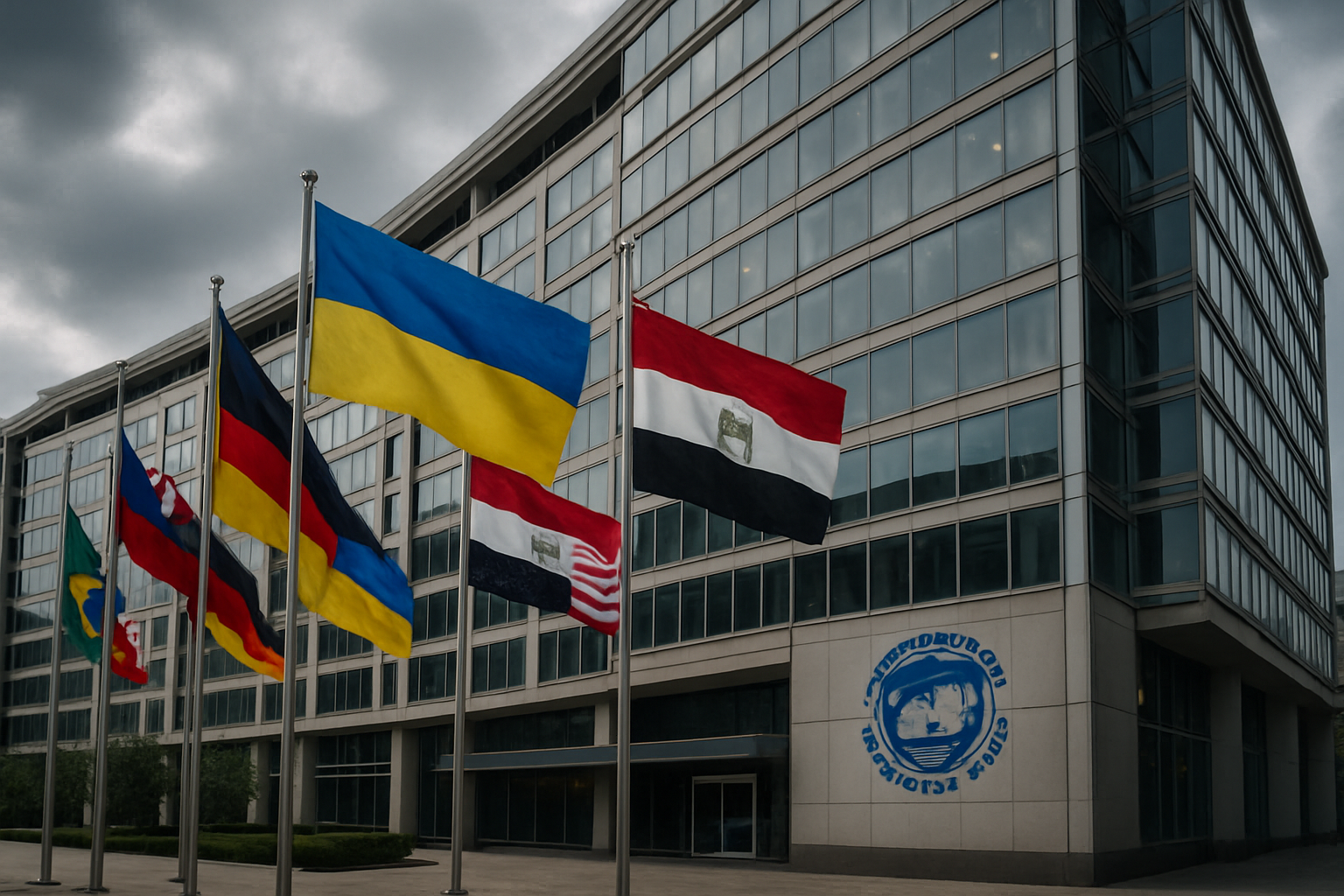
The International Monetary Fund has approved unprecedented economic support packages totaling $10.4 billion for Ukraine and Egypt, with $8.1 billion allocated to Ukraine and $2.3 billion to Egypt, representing the largest coordinated IMF assistance effort amid mounting global financial pressures and diplomatic breakthroughs in February 2026.
Ukraine Receives Largest IMF Package Since Conflict Began
The IMF Executive Board approved a new $8.1 billion, 48-month Extended Fund Facility program for Ukraine, replacing the previous 2023 facility and unlocking an immediate $1.5 billion disbursement. This represents the largest single financial assistance package provided to Ukraine since Russia's invasion began in February 2022, signaling international confidence in the country's economic management despite ongoing conflict.
Ukrainian authorities have demonstrated remarkable economic resilience, maintaining currency stability and implementing structural reforms even as the war approaches its fourth anniversary. The new IMF program includes provisions for wartime economic adaptation, recognizing the extraordinary circumstances facing the Ukrainian government in maintaining basic economic functions while defending territorial sovereignty.
"This program represents not just financial support, but international confidence in Ukraine's commitment to economic stability and democratic governance during the most challenging period in modern European history."
— IMF Officials, as reported by multiple sources
Egypt's Economic Stabilization Program Continues
Simultaneously, the IMF completed the fifth and sixth reviews of Egypt's Extended Fund Facility programme, alongside the first review under the Resilience and Sustainability Facility, enabling Egypt to access approximately $2.3 billion. This includes $2 billion under the EFF and $273 million under the RSF, bringing total disbursements to $5.2 billion across both programs.
Egypt's macroeconomic conditions have shown significant improvement following sustained stabilization measures. The country's real GDP growth reached 4.4 percent in fiscal year 2024/2025, while tight monetary and fiscal policies, combined with exchange rate flexibility, have helped restore stability, reduce inflation, and strengthen the external position.
The Central Bank of Egypt has maintained robust foreign reserves at $52.59 billion, providing a crucial buffer against regional volatility. This financial stability has enabled Egypt to implement comprehensive reforms while maintaining social programs essential for the country's 100+ million population.
Regional Economic Context and Challenges
These IMF approvals come amid broader regional economic developments that highlight both challenges and opportunities across emerging markets. Sub-Saharan Africa has seen the IMF revise growth projections upward to 4.6 percent for 2026, reflecting successful internal fiscal reforms and strategic navigation of shifting global trade alliances.
However, the global economic landscape remains complex, with memory chip prices increasing sixfold affecting technology infrastructure development, and continued impacts from the prolonged Ukraine conflict on global supply chains and energy markets. The IMF's coordinated support for both Ukraine and Egypt demonstrates the institution's commitment to maintaining economic stability in strategically important regions.
Diplomatic Breakthrough Context
The timing of these approvals coincides with significant diplomatic progress in efforts to resolve the Ukraine-Russia conflict. Recent trilateral talks in Abu Dhabi achieved a historic prisoner exchange of 314 individuals and restored US-Russia military communications after a four-year suspension. This diplomatic momentum has provided additional confidence for international financial institutions to maintain long-term commitments to Ukraine's economic stability.
The restoration of military communications between the United States and Russia, including Pentagon deconfliction protocols, represents the most significant diplomatic achievement since the conflict began. These developments have created an environment where financial institutions can plan for both continued support during conflict and eventual post-conflict reconstruction needs.
Global Financial Architecture Implications
The coordinated IMF support packages reflect broader changes in international financial cooperation. The institution has adapted its traditional lending frameworks to address unprecedented challenges, including active conflict zones and post-pandemic economic recovery needs. This flexibility has proven crucial for maintaining economic stability in regions facing multiple simultaneous crises.
Egypt's successful program implementation demonstrates how emerging markets can leverage IMF support for comprehensive economic transformation. The country's focus on exchange rate flexibility, fiscal consolidation, and structural reforms has created a model for other nations facing similar economic pressures while maintaining social stability.
Implementation Challenges and Opportunities
Both programs face significant implementation challenges despite strong international support. Ukraine must continue economic management while defending against ongoing Russian attacks, including systematic targeting of energy infrastructure that has left over 1,170 Kyiv buildings without heating during extreme winter conditions.
Egypt's program requires sustained commitment to structural reforms while managing regional economic pressures and maintaining social stability. The country's strategic position as a bridge between Africa, Asia, and Europe makes its economic stability crucial for broader regional development.
The success of both programs will depend on continued international coordination, sustained political commitment to reform implementation, and adaptive management approaches that can respond to rapidly changing economic and security conditions.
Future Implications for Global Economic Stability
These IMF approvals set important precedents for international financial cooperation during complex crises. The institution's willingness to provide substantial support to countries facing active conflict (Ukraine) and implementing comprehensive reforms (Egypt) demonstrates evolved understanding of economic development challenges in the 21st century.
The programs also highlight the interconnected nature of global economic stability, where regional crises can have far-reaching impacts on international trade, energy markets, and financial systems. The coordinated approach to supporting both countries reflects recognition that economic stability in strategically important regions benefits global prosperity.
As these programs move into implementation phases, they will provide crucial testing grounds for innovative approaches to economic development, crisis management, and international cooperation. Success could establish new models for addressing complex economic challenges that combine traditional financial support with adaptive management frameworks suited to rapidly changing global conditions.
The February 2026 approvals mark a critical juncture in international economic cooperation, demonstrating both the challenges facing the global economy and the potential for coordinated responses to address unprecedented circumstances while maintaining commitments to economic stability and democratic governance.