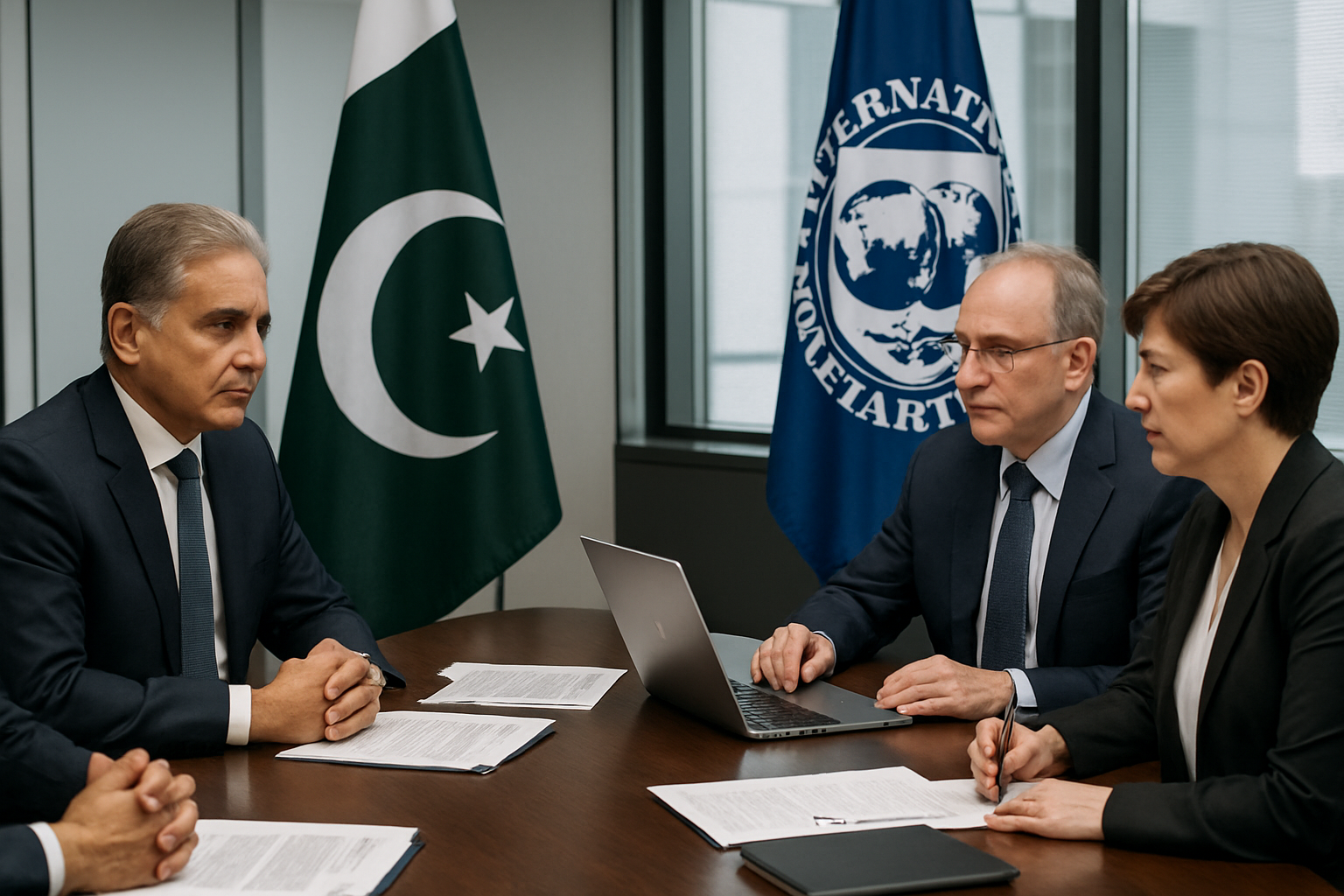
The International Monetary Fund (IMF) announced Saturday that it has reached a staff-level agreement with Pakistani authorities for the disbursement of approximately $1.2 billion, marking the successful completion of the third review under Pakistan's Extended Fund Facility (EFF) and the second review under the Resilience and Sustainability Facility (RSF).
The agreement, which requires approval by the IMF Executive Board, would provide Pakistan with about $1.0 billion (SDR 760 million) under the EFF and approximately $210 million (SDR 154 million) under the RSF, bringing total disbursements under both arrangements to about $4.5 billion since the programs' inception.
Critical Economic Support During Global Crisis
The announcement comes as Pakistan grapples with severe economic pressures stemming from the ongoing global energy crisis triggered by the Iran-Middle East conflict. The country has been implementing unprecedented austerity measures, including four-day work weeks for government employees and cabinet salary forfeits, as fuel prices reach Rs321.17 per liter—the highest in South Asia.
"Program implementation by Pakistan under the EFF remained broadly aligned with the authorities' objectives to strengthen public finances, ensure inflation remains durably within the State Bank of Pakistan's target range, and advance reforms to improve the viability of the energy sector," the IMF stated in its official release.
The development follows discussions held by an IMF team led by Iva Petrova in Karachi and Islamabad from February 25 to March 2, 2026, with continued virtual engagement afterward. At the conclusion of the discussions, Petrova praised Pakistan's commitment to the reform program despite challenging global circumstances.
Energy Crisis Impact and Policy Responses
The IMF's endorsement comes amid Pakistan's struggle with the global energy crisis that has seen oil prices breach $100 per barrel for the first time since 2022, with Brent crude reaching $119.50 and WTI jumping a record 18.98% to $108.15. Iran's closure of the Strait of Hormuz, which affects 40% of global seaborne oil transit, has created unprecedented supply disruptions worldwide.
Pakistan's response has included implementing wartime austerity measures under Prime Minister Shehbaz Sharif's leadership. The government has forfeited cabinet salaries for two months, cut fuel allowances for official vehicles by 50%, and suspended 60% of government vehicles. These measures affect the country's 240 million population and represent the most dramatic government cost-cutting since the 2008 financial crisis.
The IMF tacitly endorsed Islamabad's fuel pricing policy amid the Middle East crisis, acknowledging the government's efforts to balance economic stability with social protection during unprecedented global energy market volatility.
Financial Market Performance and Economic Indicators
Despite global financial market turmoil—including Pakistan's KSE-100 experiencing its largest single-day decline in history at -8.97%—the country has shown resilience in certain economic indicators. The State Bank of Pakistan reported liquid foreign reserves of $21.43 billion as of February 27, with central bank reserves increasing $87 million to $16.30 billion during the week.
"The staff-level agreement is subject to approval by the IMF Executive Board. Upon approval, Pakistan will have access to about US$1.0 billion under the EFF and about US$210 million under the RSF."
— IMF Official Statement
The agreement represents a significant milestone for Pakistan's economic stability amid one of the most challenging global environments in decades. The country's financial sector has demonstrated robustness through digital transformation initiatives and electronic payment systems, providing stability during global volatility.
Regional Context and Energy Security
Pakistan's economic management comes against the backdrop of the most severe global energy crisis since the 1970s oil shocks. The International Energy Agency (IEA) has deployed the largest strategic petroleum reserve release in its 50-year history—400 million barrels from 32 countries—as governments worldwide implement emergency measures to address supply disruptions.
The global crisis has prompted unprecedented government responses, with countries like Hungary implementing immediate price caps against "war-driven explosions," France deploying 500 fuel inspectors to prevent manipulation, and New Zealand considering "Muldoon-era" emergency measures including car-free days.
Pakistan's position as a mediator in regional conflicts has also gained prominence, with Prime Minister Shehbaz Sharif offering Pakistan as a host for "meaningful and conclusive talks" between the United States and Iran to reach a "comprehensive settlement" of the ongoing conflict.
Historical Context and IMF Relations
The current agreement builds on Pakistan's track record with IMF programs, demonstrating the country's commitment to economic reform and fiscal discipline. Historical memory reveals that Pakistan has successfully navigated previous economic challenges through comprehensive reform packages and international cooperation.
The timing is particularly significant as it comes amid what experts describe as the "most dangerous international crisis since the Cold War," affecting regional war prevention, global energy security, and nuclear governance credibility simultaneously.
Looking Forward: Reform Implementation
The IMF agreement underscores Pakistan's progress in key reform areas, including public finance management, monetary policy effectiveness, and energy sector viability. The program's success depends on continued implementation of structural reforms while managing the external pressures from the global energy crisis.
Energy experts, including Samuel Ciszuk, have described the current situation as the "most severe energy security crisis in decades," with single-chokepoint vulnerabilities exposed. Pakistan's ability to maintain program compliance while navigating these challenges demonstrates institutional resilience and policy adaptability.
The agreement also reflects the IMF's recognition of Pakistan's efforts to balance economic stabilization with social protection during extraordinary global circumstances. As the international community faces what UN Secretary-General António Guterres calls the "greatest test of multilateral cooperation in the modern era," Pakistan's commitment to reform and regional stability positions it as a key player in global crisis management.
Economic Outlook and Market Confidence
The staff-level agreement is expected to provide crucial support for Pakistan's economic stability and market confidence. The country's foreign exchange reserves position provides a buffer against external shocks, while ongoing structural reforms support long-term economic resilience.
As Pakistan navigates this complex global environment, the IMF support represents not just financial assistance but international confidence in the country's economic management and reform commitment. The agreement sets a foundation for continued economic stability as global markets adjust to unprecedented energy supply disruptions and geopolitical uncertainties.
With the global energy crisis potentially extending for months, Pakistan's ability to maintain economic stability while supporting regional peace efforts will be crucial for both domestic prosperity and international stability in one of the world's most strategically important regions.