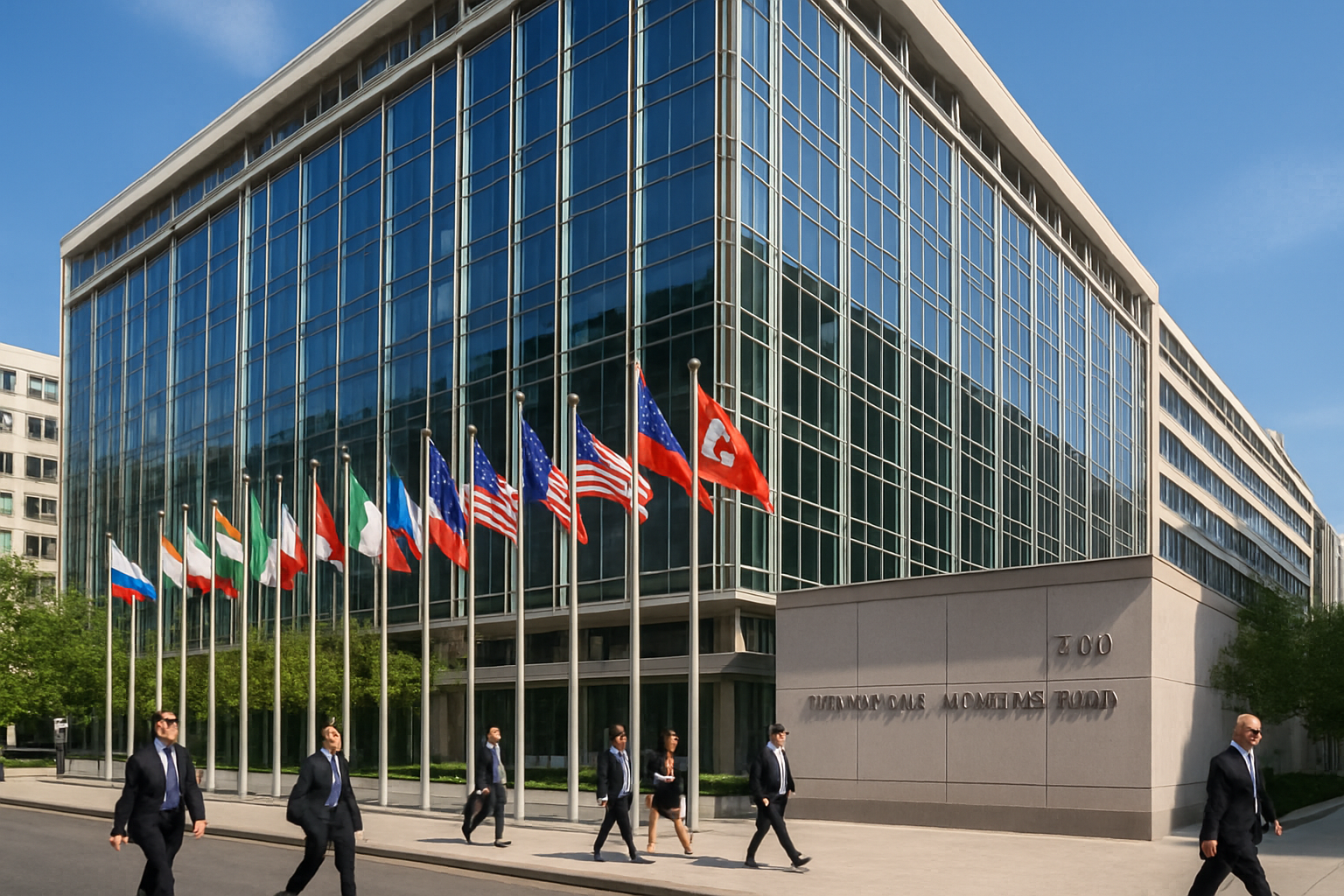
The International Monetary Fund announced Thursday it is restoring relations with Venezuela after a seven-year suspension, recognizing the government of Acting President Delcy Rodriguez in a significant shift that opens new avenues for financial cooperation and economic stabilization.
IMF Managing Director Kristalina Georgieva confirmed the institution will now deal with Venezuela under Rodriguez's administration, citing the views of member countries representing a majority of the fund's voting power. The restoration follows long-standing IMF practices for government recognition and marks one of the most significant diplomatic developments in Latin American finance since 2019.
Historic Diplomatic Transformation
The relationship between the IMF and Venezuela was suspended in 2019 amid questions about government recognition during the height of the political crisis under former President Nicolas Maduro. The restoration comes as part of broader international recognition of Venezuela's interim government following dramatic political changes in January 2026.
"Guided by the views of International Monetary Fund members representing a majority of the IMF's total voting power, the Managing Director today announced that the IMF is now dealing with the government of Venezuela,"
— IMF Statement
This decision represents a complete transformation in international relations with Venezuela, paralleling the broader diplomatic breakthrough that began with the United States' formal recognition of Rodriguez's government in March 2026. The timing follows Venezuela's remarkable economic cooperation achievements, including oil exports surging 60% to 800,000 barrels daily, with the US displacing China as the top customer.
Economic Cooperation Framework
The IMF's recognition creates immediate opportunities for financial cooperation, economic advisory services, and potential access to international financing. This development comes at a critical moment as Venezuela seeks to stabilize its economy following years of hyperinflation and infrastructure challenges.
Venezuela's economic transformation has accelerated dramatically since the political transition. Energy Secretary Chris Wright's historic February visit to Caracas resulted in comprehensive cooperation agreements that ended the 2019 oil embargo. Major companies including Chevron, BP, Shell, Eni, and Repsol have been authorized for expanded operations, creating substantial investment opportunities.
Regional and International Implications
The IMF's decision reflects broader regional realignment, with the Dominican Republic reopening full diplomatic relations and Brazil and the European Union providing cautious support for Venezuela's democratic transition. This pattern demonstrates growing international confidence in the sustainability of Venezuela's political and economic reforms.
The restoration of IMF relations creates a template for bilateral economic cooperation that could influence similar arrangements throughout Latin America. Market analysts view this as part of the Trump administration's "bilateral energy diplomacy" strategy, combining economic incentives with diplomatic engagement to counter Chinese regional influence.
Financial Markets Response
International financial markets have responded positively to Venezuela's economic transformation. Oil production, though currently at 700,000 barrels versus the historical peak of 3 million barrels daily, shows potential for dramatic expansion under proper investment and technical assistance.
The broader context includes significant improvements in Venezuela's financial infrastructure. Over 750 political prisoners have been released under a comprehensive 1999-2026 amnesty program, representing the most extensive Latin American reconciliation effort in recent history.
Challenges and Opportunities Ahead
Despite the positive developments, substantial challenges remain. Venezuela faces 475% inflation rates, infrastructure decay, and power outages that require sustained international investment and technical assistance. The success of the IMF relationship will depend on continued democratic progress and effective economic policy implementation.
The timing of this announcement coincides with Venezuela's growing energy partnership with the United States. American Airlines has requested authorization for Miami-Caracas flights, and over six tons of US medical supplies have been delivered through diplomatic channels, demonstrating expanding cooperation beyond energy sectors.
Looking Forward
The restoration of IMF relations positions Venezuela for potential access to multilateral development financing and technical assistance programs. This could prove crucial for addressing infrastructure needs, economic diversification, and institutional capacity building required for sustained growth.
Congressional response in Washington has been mixed, with Republicans supporting the anti-China strategy while Democrats demand greater transparency. This political dynamic will likely influence the pace and scope of future cooperation initiatives.
As Venezuela continues its democratic transition, the IMF relationship provides international credibility and access to global financial markets that could accelerate economic recovery. The success of this partnership may serve as a model for international crisis resolution through economic cooperation in an increasingly multipolar world.
The developments represent the most significant hemispheric realignment since the end of the Cold War, with implications extending far beyond Venezuela to influence international approaches to democratic transitions and economic cooperation throughout Latin America and beyond.