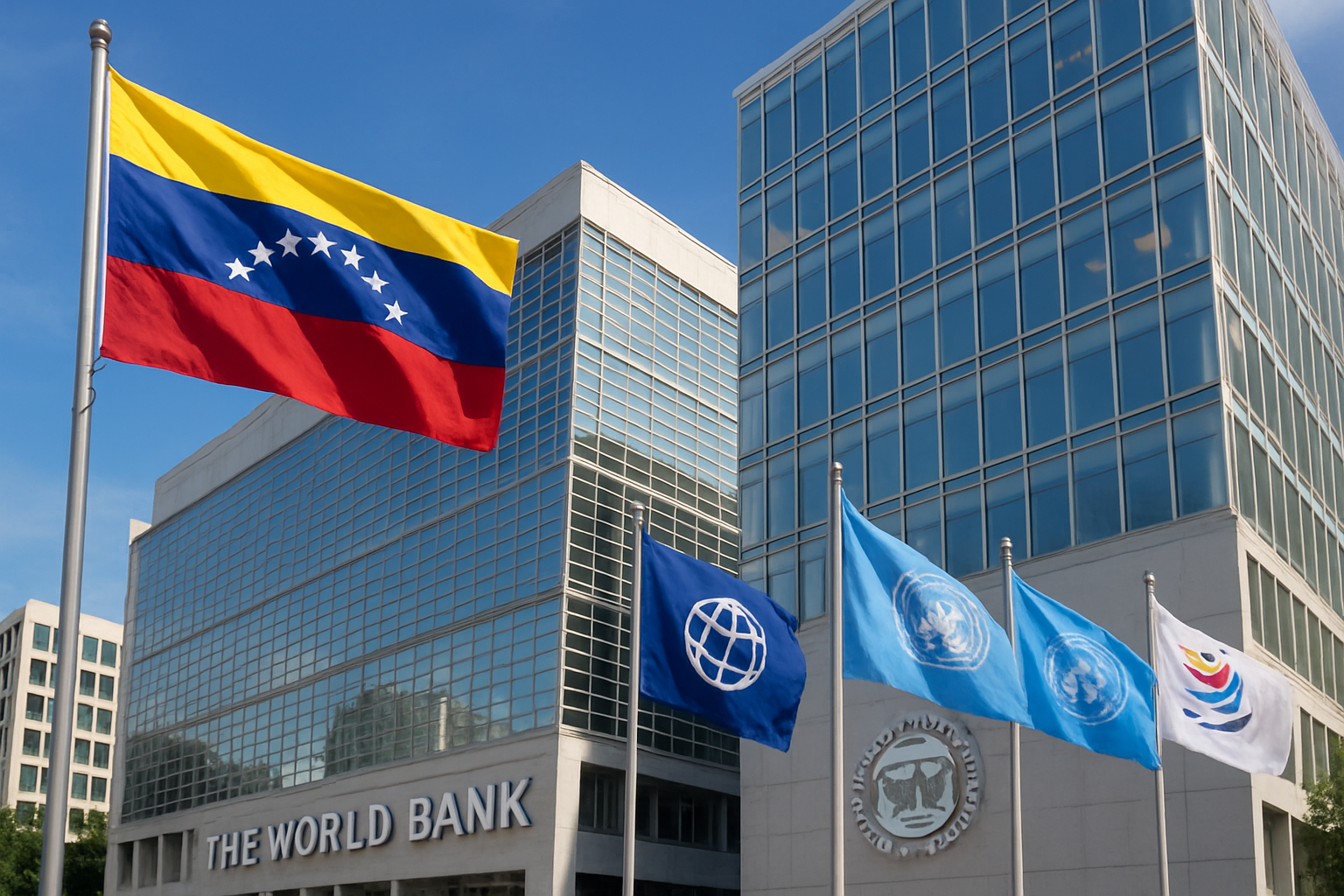
The International Monetary Fund and World Bank announced Thursday the restoration of official relations with Venezuela after a seven-year suspension, marking a pivotal diplomatic breakthrough for Acting President Delcy Rodríguez's interim government while opposition figures continue to face systematic persecution.
The IMF's decision, backed by member countries representing a majority of voting power, enables the fund to engage with the Rodríguez administration in accordance with its government recognition protocols. This ends a diplomatic impasse that effectively froze Venezuela out of international financial institutions since March 2019, when disputes among member states over government legitimacy halted all engagement.
Historic Financial Reengagement
IMF Managing Director Kristalina Georgieva confirmed the restoration follows "long-standing practices for government recognition" by member nations. The World Bank Group simultaneously announced its own resumption of relations with Caracas, creating unprecedented opportunities for Venezuela's economic stabilization after years of international isolation.
Acting President Rodríguez hailed the development as a "great achievement" of Venezuelan diplomacy, emphasizing the significance for the nation's economic recovery. The restoration opens pathways for potential financial cooperation, economic advisory services, and eventual access to international financing mechanisms crucial for addressing Venezuela's ongoing humanitarian crisis.
The breakthrough comes amid Venezuela's dramatic transformation since January 2026, when former President Nicolás Maduro was captured by U.S. military forces. Oil exports have surged 60% to 800,000 barrels daily, with the United States displacing China as Venezuela's top customer following comprehensive energy cooperation agreements.
Opposition Crackdown Continues
Despite international financial reintegration, the Venezuelan opposition faces escalating persecution under the interim government. Opposition party Primer Justicia (First Justice) denounced the arbitrary detention of leader Alexis Paparoni at Maiquetía Airport near Caracas, highlighting the contradictory nature of Venezuela's political transition.
The detention occurred as international observers celebrated the IMF and World Bank announcements, underscoring persistent human rights concerns despite diplomatic progress. Paparoni's arrest follows a pattern of harassment targeting opposition figures who challenge the government's legitimacy or advocate for genuine democratic reforms.
While over 750 political prisoners have been released under the interim government's comprehensive amnesty program covering 1999-2026 political offenses, approximately 600 remain detained according to human rights organizations. Many releases have involved restrictive conditions including house arrest and electronic monitoring, raising questions about the authenticity of democratic reforms.
Constitutional Crisis and Electoral Uncertainty
Opposition voices are increasingly calling for new presidential elections, citing Article 233 of Venezuela's Constitution regarding the "absolute absence" of Nicolás Maduro. María Corina Machado, the 2025 Nobel Peace Prize laureate, has demanded that the National Assembly convene new elections within 30 days as constitutionally mandated.
"The Venezuelan Constitution is very clear and effectively establishes that in case of absolute absence, and no one can doubt there is an absolute absence of Mr. Nicolás Maduro, elections must be called within the next thirty days."
— María Corina Machado, Opposition Leader
However, the Rodríguez administration has resisted electoral calls, instead launching what critics describe as a "campaign against elections." Government officials argue that external pressures and ongoing sanctions create inappropriate conditions for democratic processes, despite international recognition and restored diplomatic relations.
International Diplomatic Realignment
The IMF and World Bank decisions reflect broader international acceptance of Venezuela's interim government following dramatic geopolitical shifts. The United States formally restored diplomatic relations with Venezuela in March 2026, ending a seven-year diplomatic freeze that began during the Trump administration's "maximum pressure" campaign.
Energy cooperation has become central to the new relationship, with Energy Secretary Chris Wright's historic February visit to Caracas resulting in comprehensive agreements ending the 2019 oil embargo. Major international companies including Chevron, BP, Shell, Eni, and Repsol have been authorized for expanded operations under Treasury Department permissions.
The Dominican Republic has reopened full diplomatic and commercial relations with Venezuela, while Brazil and European Union nations maintain cautious but supportive engagement. Former Spanish Prime Minister José Luis Rodríguez Zapatero continues mediation efforts, and Cardinal Baltazar Porras has organized nationwide prayer vigils supporting the reconciliation process.
Economic Challenges Remain
Despite diplomatic breakthroughs and increased oil revenues, Venezuela faces severe economic challenges requiring sustained international investment and technical assistance. Central Bank data reveals a 475% inflation rate in 2025, the world's highest, while oil production remains at 700,000 barrels daily compared to historical peaks of 3 million barrels.
Infrastructure decay continues to affect millions of Venezuelans, with regular power outages, fuel shortages, and deteriorating public services. The IMF relationship provides international credibility and potential access to global financial markets, but recovery will require comprehensive reforms beyond immediate diplomatic recognition.
International humanitarian organizations report that Venezuela's humanitarian programs received only $133 million of the requested $606 million in 2025, covering just 19% of identified needs despite assisting over 2 million people. The restoration of international financial relationships could help address these funding shortfalls.
Template for Democratic Transition
Venezuela's complex transition serves as a closely watched template for international crisis resolution combining military pressure, economic incentives, and selective engagement. The success or failure of this approach will influence similar strategies globally, particularly in Latin America where other nations face comparable challenges.
Secretary of State Marco Rubio's three-phase reconstruction plan appears to be progressing: stabilization through political prisoner releases and institutional changes, economic recovery through sanctions relief and investment, and eventual democratic transition toward free elections. The IMF and World Bank restoration represents significant progress in the economic recovery phase.
However, persistent opposition persecution and electoral avoidance suggest that the most challenging phase—genuine democratic transition—remains ahead. The international community's response to these contradictions will be crucial for determining whether Venezuela's transformation represents authentic democratic reform or merely cosmetic changes designed to secure international legitimacy while maintaining authoritarian control.
Regional Implications
The Venezuelan case is being monitored throughout Latin America as a potential model for post-authoritarian transitions and international engagement strategies. The combination of rapid diplomatic rehabilitation with ongoing human rights concerns reflects broader challenges facing democratic development in the region.
Success in achieving genuine democratic governance could influence approaches to similar transitions globally, while failure might undermine confidence in economic cooperation as a tool for promoting political reform. The stakes extend beyond Venezuela's borders to broader questions about international order adaptation in an era of great power competition.
As Venezuela enters this new phase of international engagement, the tension between economic reintegration and political repression will test both the interim government's commitment to democracy and the international community's willingness to maintain pressure for genuine reforms. The coming months will prove decisive in determining whether this historic diplomatic breakthrough translates into lasting democratic transformation or merely provides international legitimacy for continued authoritarian governance.