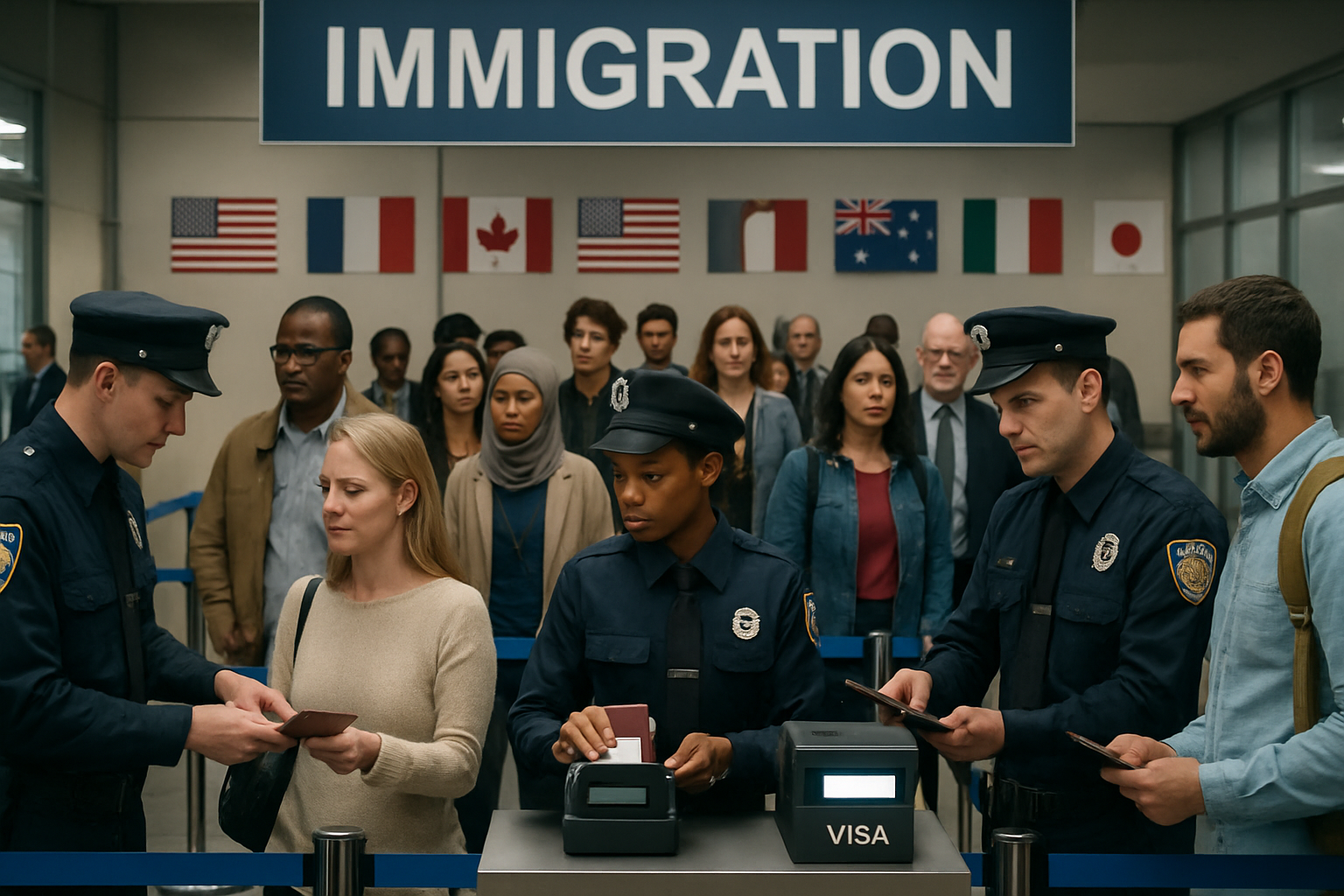
A sweeping global transformation in immigration and border policies is reshaping international mobility as nations from Australia to South Africa implement unprecedented restrictions, creating what experts describe as the most significant shift in migration management since the post-World War II refugee protection framework was established.
The convergence of restrictive measures across multiple continents represents a fundamental departure from protection-focused policies toward deterrence-based approaches, affecting millions of migrants, refugees, and even dual nationals who previously enjoyed freedom of movement.
Australia's Dual Immigration Approach
Australia exemplifies the complexity of modern immigration policy through two contrasting developments. The country has implemented a temporary six-month ban on Iranian passport holders entering on temporary visas, effectively blocking thousands of potential visitors and students amid geopolitical tensions.
Simultaneously, Australia has tightened its pathway to Italian citizenship, with new restrictions overturning 165-year-old eligibility rules. Australian woman Carla, in her 50s, found her retirement plans destroyed when Italian authorities suddenly changed requirements despite her Italian parents, fluent language skills, and daily contact with European family members.
"I consider myself Italian – I just needed the papers to prove it. Now these new conditions may mean I'll never become an Italian citizen."
— Carla, Australian seeking Italian citizenship
The Iranian visa restrictions represent Australia's first use of an Arrival Control Determination to block an entire nationality from temporary visa access, demonstrating how geopolitical tensions increasingly influence immigration policy.
Canada Faces Immigration Fraud Fallout
Canada's immigration system is under scrutiny following revelations of widespread fraud in its international student program. Former Immigration Minister Sean Fraser, now Justice Minister, acknowledged he would have acted sooner to cap international students if he had foreseen the scale of abuse.
The crisis has prompted calls for ministerial resignations from Opposition Conservatives, who argue the government failed to prevent systematic exploitation of legal immigration channels. The scandal highlights vulnerabilities in student visa programs that have become common targets for immigration fraud globally.
Fraser's admission comes as Auditor General Karen Hogan's findings revealed extensive fraud during his tenure overseeing immigration policy, raising questions about oversight mechanisms in one of the world's most immigrant-friendly nations.
United States Escalates Enforcement Operations
The United States has dramatically intensified immigration enforcement under the Trump administration's renewed focus on border security. Immigration and Customs Enforcement (ICE) operations have expanded beyond traditional workplace raids to include major airports, creating unprecedented security concerns.
Lawyers are warning Haitian immigrants with uncertain legal status to avoid air travel entirely, following reports of increased ICE presence at airports nationwide. The advisory reflects growing anxiety within immigrant communities as deportation operations have quadrupled compared to previous levels.
"Do not travel with ICE in airports. The risk is simply too great for those with uncertain immigration status."
— Legal advocates, advising Haitian community members
The enforcement escalation follows controversial operations that resulted in civilian casualties and prompted federal courts to require warrants for ICE arrests unless suspects pose flight risks. Two-thirds of Americans now believe ICE has "gone too far," according to NPR/PBS/Marist polling, marking a significant shift in public opinion.
Mexico Protests US Immigration Deaths
Diplomatic tensions have escalated between Mexico and the United States following the deaths of 13 Mexican nationals in ICE custody. Mexico's Foreign Minister has formally protested the "unacceptable situation" to US authorities, demanding accountability and improved detention conditions.
The deaths have sparked international scrutiny of US detention facilities and prompted Mexico to issue travel warnings for its citizens. The crisis threatens to complicate broader US-Mexico cooperation on border security and trade issues.
Mexican consulates have increased assistance programs for nationals facing immigration enforcement, while advocacy groups document systematic problems in detention facilities across the American immigration system.
Italy Implements Revolutionary Border Changes
Italy has quietly revolutionized its approach to citizenship and border control, implementing some of Europe's most restrictive measures. The country has significantly expanded its use of Albanian processing centers for asylum seekers, creating a template that other European nations are adopting.
The Italian model involves transferring asylum seekers to facilities outside EU territory while their claims are processed, effectively ending the principle that reaching European soil guarantees access to protection procedures. This approach is now being replicated by a coalition of European nations seeking to deter irregular migration.
South African Immigration Protests
South Africa has witnessed significant civil unrest over immigration policy, with protesters in Durban demanding immediate arrests of undocumented immigrants and stricter border controls. The demonstrations reflect growing tensions over economic competition and resource allocation in communities already struggling with high unemployment.
The protests highlight the global nature of immigration tensions, extending beyond traditional destination countries to affect middle-income nations serving as transit routes or regional migration hubs. South African authorities face the challenge of balancing humanitarian obligations with domestic political pressures.
European Union's Systemic Transformation
The European Union has undergone the most significant transformation of its asylum system since its establishment. The European Parliament approved historic changes allowing deportation to "safe" third countries through a center-right and far-right alliance, fundamentally shifting from protection-based to deterrence-focused principles.
Enhanced cooperation mechanisms now enable smaller groups of member states to advance restrictive policies without unanimous consent, bypassing traditional humanitarian safeguards. Greece leads a coalition with Germany, Netherlands, Austria, and Denmark to establish African deportation centers for rejected asylum seekers.
The EU's Entry/Exit System has detected over 4,000 overstayers in its first four months of operation, exceeding expectations but creating processing delays that required partial summer suspensions. The technology demonstrates both the potential and limitations of digital border management.
Climate Change as Migration Driver
The policy transformations occur during the 19th consecutive month of global temperatures exceeding 1.5°C above pre-industrial levels, creating unprecedented displacement pressures that existing immigration systems were never designed to handle.
Climate migration adds complexity to traditional immigration categories, as people displaced by environmental changes often fall outside existing refugee definitions. Nations are struggling to adapt legal frameworks while simultaneously implementing more restrictive policies.
Economic Contradictions and Human Costs
The wave of immigration restrictions creates economic contradictions as many countries face severe labor shortages in healthcare, agriculture, and construction sectors. Countries implementing restrictions simultaneously acknowledge their need for foreign workers, creating policy tensions between political rhetoric and economic reality.
Individual cases illustrate the human impact of policy shifts. Veterans face deportation despite military service, travelers encounter violence at airports due to immigration-related stress, and families are separated by rapidly changing visa requirements. The gap between political policies and complex migration realities continues to widen.
Educational sectors face particular disruption, with the UK's emergency visa restrictions threatening billions in international student revenue and undermining academic partnerships developed over decades.
Technology and Enforcement Evolution
Digital border management has emerged as a key tool in the global immigration transformation. From biometric systems detecting overstayers to electronic travel authorizations replacing physical visas, technology is reshaping how nations control mobility.
However, implementation challenges persist. Processing delays, technical failures, and privacy concerns highlight the limitations of technological solutions to complex migration challenges. The digital divide also creates new barriers for travelers lacking technological literacy or internet access.
International Cooperation Under Strain
Traditional international cooperation frameworks face unprecedented strain as nations prioritize unilateral approaches over multilateral coordination. The success of some regional initiatives, like Albania's integration of 27,000 foreign nationals to address labor shortages, contrasts sharply with the restrictive approaches adopted elsewhere.
Diplomatic tensions over immigration enforcement, detention conditions, and refugee treatment threaten broader international relationships. Countries must balance domestic political pressures with international obligations under refugee conventions and human rights law.
Looking Forward: A Watershed Moment
March 2026 represents a watershed moment in international migration management. The convergence of restrictive policies, technological enforcement, climate displacement, and demographic pressures creates an unprecedented complex landscape that will influence migration patterns for decades.
The success or failure of current approaches will establish templates for how democratic nations balance humanitarian commitments with security objectives while managing complex migration flows driven by climate change, conflicts, and economic disparities.
As nations grapple with these challenges, the fundamental question remains whether democratic institutions can maintain humanitarian values while responding to contemporary migration pressures. The policies implemented in 2026 will determine whether the international community can develop humane, effective approaches to 21st-century migration challenges or whether the current restrictive trend will continue to reshape global mobility.
The human stories behind these policy changes – from Australian citizens losing retirement dreams to families hiding from enforcement operations – remind us that immigration policy affects real lives. As governments balance security concerns with humanitarian obligations, the challenge lies in maintaining human dignity while addressing legitimate concerns about border management and national security.