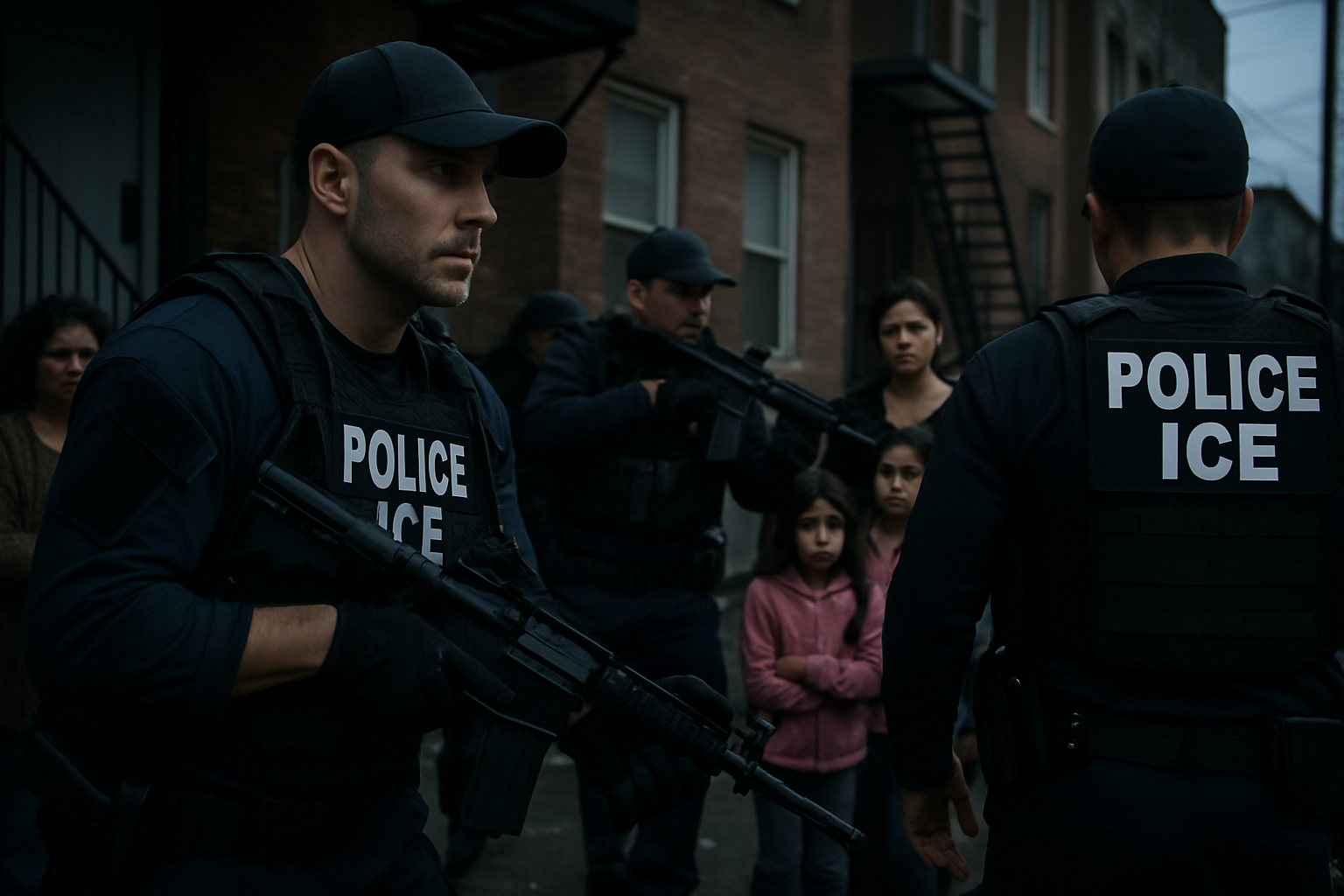
Immigration enforcement operations across the United States have intensified dramatically, driving immigrant families into hiding and sparking widespread protests as the Trump administration's policies face mounting opposition from both protesters and polling data showing two-thirds of Americans believe ICE has "gone too far."
Two major incidents this week underscore the growing crisis. In Minneapolis, a Mexican family has locked themselves inside their home, feeling "trapped behind their own deadbolt" as deportation raids sweep through their neighborhood. Meanwhile, at Columbia University in New York, 12 anti-ICE protesters were arrested during demonstrations against the administration's enforcement tactics.
The Human Impact of Intensified Enforcement
The case of the Minneapolis family represents thousands of similar situations across the country. Recent University of California research reveals deportations from the U.S. interior have quadrupled during the first nine months of Trump's second administration compared to pre-Trump levels, driven primarily by increased random arrests of undocumented individuals in public spaces.
The enforcement escalation follows a series of controversial incidents, including the fatal shootings of two U.S. citizens—Alex Pretti and Renee Nicole Good—by ICE agents in Minneapolis in January 2026. These deaths sparked protests, contributed to a three-day government shutdown, and led to the administration's announcement of a "softer touch" approach in Minnesota, resulting in the withdrawal of 700 federal agents from the state.
"Immigrant families are avoiding essential services, workforce disruptions are hitting agriculture, hospitality, and healthcare sectors hard. The climate of fear is unprecedented."
— Congressional Democratic Leadership
The administration's tactical adjustments in Minnesota represent the first public acknowledgment of potential enforcement moderation needs, according to Border Czar Tom Homan, who characterized the move as "smarter law enforcement, not less law enforcement." However, overall enforcement strategy remains unchanged despite these localized modifications.
Campus Resistance and Growing Opposition
The Columbia University arrests highlight the expanding scope of resistance to ICE operations. Protesters gathered on campus to voice opposition to what they characterize as overly aggressive enforcement tactics that have disrupted academic communities and instilled fear among immigrant students and faculty.
This campus activism reflects broader public opinion shifts. Recent NPR/PBS/Marist polling reveals that two-thirds of Americans believe ICE has "gone too far" in immigration enforcement, marking a significant jump in disapproval among Democrats and independents, while Republicans maintain their support for the administration's approach.
The polling shift follows not only the Minneapolis shootings but also high-profile cases like that of five-year-old Liam Conejo Ramos, who was detained with his father—a case that became a symbol of aggressive enforcement after Federal Judge Fred Biery issued a scathing ruling criticizing the operation.
International Ramifications and Economic Impact
The enforcement campaign has drawn extensive international media coverage across Europe, Asia, and the Americas, highlighting tensions in the U.S. immigration system. The Mexican consulate has warned nationals about ICE operations during major events like Super Bowl LX, advising citizens to "travel responsibly."
Guatemala's Institute of Migration reports that 5,094 Guatemalan nationals were returned from the U.S. and Mexico in January 2026 alone, with an average age of 24, many having developed technical skills and work experience during 3+ years abroad. This represents a significant brain drain for the Central American nation.
Economic disruptions are mounting as immigrant families avoid essential services and businesses face workforce challenges. Major corporations like Target are under employee pressure to clarify their policies regarding ICE workplace raids and federal agent access to their stores and parking lots.
Legal Challenges and Congressional Response
The administration faces multiple legal challenges to its enforcement policies. Federal Judge Ana Reyes blocked the termination of Temporary Protected Status (TPS) for 350,000 Haitians, citing discriminatory intent. An Oregon federal judge has required ICE to obtain warrants unless there's an escape risk, following the Minneapolis controversy.
Congressional Democrats are threatening to block Department of Homeland Security funding unless "drastic changes" are implemented in ICE operations, creating an unprecedented political crisis over immigration enforcement accountability. Current DHS funding only runs through February 13, setting up a potential new political battle.
House Speaker Mike Johnson has scheduled two weeks of ICE reform debates following the earlier government shutdown resolution. The debates will address accountability measures demanded by Democrats, including requirements for agent identification badges and restrictions on face coverings during operations.
Administrative Response and Policy Adjustments
DHS Secretary Kristi Noem has implemented mandatory body cameras for ICE agents in Minneapolis, effective February 2, representing a shift toward federal law enforcement accountability. This policy could serve as a precedent for other cities where similar incidents occur.
The administration has also expanded enforcement operations to include major public events beyond traditional workplace and residential raids. This creates what advocates describe as a "climate of concern" in immigrant communities, where families report avoiding public gatherings, medical appointments, and children's school events.
"Despite Minnesota tactical adjustments, the administration maintains its overall enforcement strategy unchanged. We're seeing unprecedented coordination between federal, state, and local law enforcement."
— Tom Homan, Border Czar
Looking Ahead: Uncertain Future
The immigration enforcement debate has become a test of democratic oversight over federal agencies. While the administration achieved some legislative victories—including a $1.2 trillion spending package that ended the government shutdown with a 217-214 House vote—the underlying tensions remain unresolved.
Civil rights lawsuits challenge visa suspensions affecting 75 countries, while constitutional challenges focus on the balance between federal immigration enforcement powers and individual rights. The success or failure of current policies may determine the trajectory of U.S. immigration enforcement for years to come.
As families continue to go into hiding and protests spread to college campuses, the human cost of the enforcement escalation continues to mount. The administration faces the challenge of maintaining security while addressing growing concerns about the methods and scope of its operations, particularly as public opinion appears to be shifting against the current approach.
With DHS funding battles looming and legal challenges mounting, February 2026 may prove to be a pivotal month in determining the future direction of American immigration policy and enforcement practices.