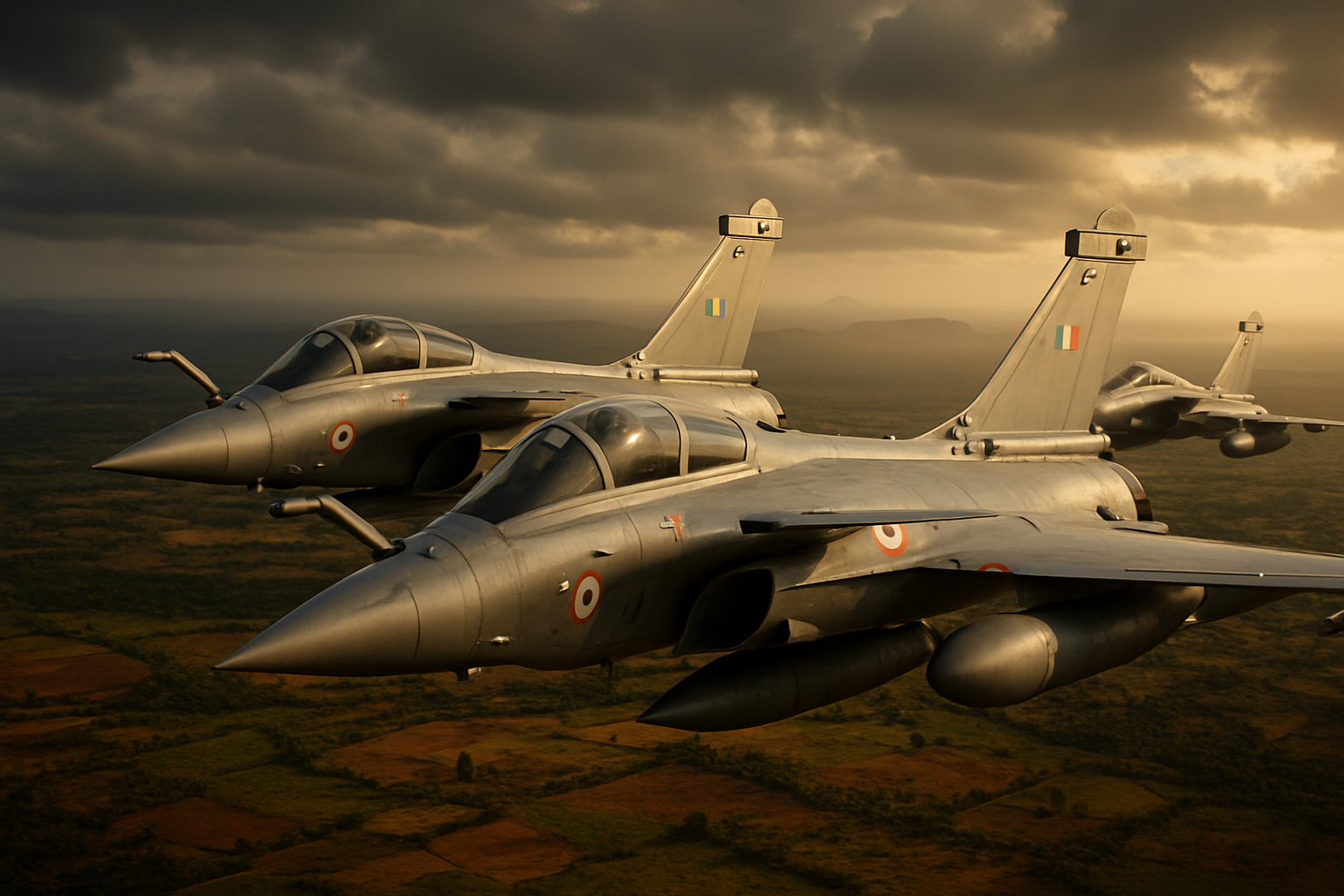
India's Defence Acquisition Council has approved one of the nation's largest military procurements in history, authorizing the purchase of 114 French Rafale fighter jets valued at $39 billion (Rs 3.25 lakh crore), marking a significant boost to the Indian Air Force's capabilities amid rising regional security concerns.
The massive defense acquisition, announced Thursday, comes just days ahead of French President Emmanuel Macron's scheduled visit to New Delhi next week, highlighting the deepening strategic partnership between the two nations. The procurement represents a substantial expansion of India's existing Rafale fleet, which already includes dozens of the advanced multirole fighters currently operational with the Indian Air Force.
Strategic Manufacturing Partnership
In a significant departure from traditional arms deals, approximately 80% of the new Rafale jets will be manufactured domestically in India under the government's "Make in India" initiative. This arrangement is designed to bolster indigenous defense manufacturing capabilities while addressing the Indian Air Force's urgent modernization requirements.
"The procurement will enhance the capability of undertaking air dominance roles across the spectrum of conflict and significantly boost the deterrence capabilities of IAF with long-range offensive strikes," India's defense ministry stated in an official announcement, emphasizing the strategic importance of the acquisition.
The domestic manufacturing component aligns with India's broader defense industrialization goals, aimed at reducing dependence on foreign suppliers while building a robust indigenous defense ecosystem. This approach follows successful precedents established during earlier defense partnerships with international manufacturers.
Expanding Defense Modernization Program
Beyond the Rafale acquisition, sources indicate the defense procurement package includes additional military equipment and systems designed to enhance India's overall defense readiness. The comprehensive nature of the approval suggests a coordinated effort to address capability gaps across multiple domains of modern warfare.
The timing of the announcement reflects India's accelerated defense modernization timeline, driven by evolving regional security dynamics and the need to maintain technological superiority. Defense analysts note that the Multi Role Fighter Aircraft (MRFA) program, under which these Rafales are being procured, represents a cornerstone of the Indian Air Force's fleet expansion strategy.
The Defence Acquisition Council's approval, comprising top military officers and Defense Minister Rajnath Singh, marks the crucial first step in India's complex military hardware procurement process. The council's unanimous backing indicates strong institutional support for the strategic partnership with France.
Regional Security Context
The substantial defense investment comes against the backdrop of heightened regional tensions and India's ongoing efforts to modernize its armed forces. The acquisition will significantly enhance India's air power projection capabilities, particularly in contested border regions where advanced fighter aircraft play critical strategic roles.
Military experts emphasize that the Rafale's proven combat capabilities, advanced avionics, and multi-role versatility make it particularly suitable for India's diverse operational requirements. The aircraft's ability to conduct precision strikes, air superiority missions, and reconnaissance operations provides the Indian Air Force with enhanced tactical flexibility.
The domestic manufacturing requirement ensures technology transfer and skill development within India's defense industrial base, creating long-term strategic value beyond the immediate military capabilities enhancement. This approach supports India's goal of becoming a major defense exporter while reducing strategic vulnerabilities associated with import dependency.
Franco-Indian Defense Cooperation
The Rafale procurement underscores the robust defense relationship between India and France, which has evolved into one of New Delhi's most significant strategic partnerships. French President Macron's upcoming visit is expected to further consolidate bilateral cooperation across multiple domains, including defense technology, nuclear energy, and space exploration.
Previous Rafale acquisitions have demonstrated the aircraft's effectiveness in Indian operational conditions, providing confidence for this expanded procurement. The success of earlier technology transfer agreements and joint manufacturing initiatives has established a foundation for the current large-scale partnership.
Industry sources suggest that the timing coordination between the Defense Acquisition Council's approval and President Macron's visit reflects careful diplomatic choreography designed to showcase the strategic depth of Franco-Indian relations. The announcement serves both countries' interests in demonstrating successful defense cooperation models.
Economic and Industrial Impact
The Rs 3.25 lakh crore investment represents a substantial boost to India's defense manufacturing sector, with significant multiplier effects expected across the broader industrial ecosystem. The domestic production component will create thousands of jobs while developing advanced manufacturing capabilities in the aerospace sector.
Financial analysts note that the procurement's scale and domestic manufacturing requirements position Indian companies to become integral partners in global defense supply chains. This development supports India's aspirations to emerge as a major defense technology hub serving both domestic and international markets.
The phased implementation of the manufacturing program will allow for systematic skill development and technology absorption, ensuring sustainable capacity building rather than mere assembly operations. This approach reflects lessons learned from previous defense industrial partnerships and India's evolving procurement policies.
The historic defense acquisition signals India's commitment to maintaining technological superiority while building indigenous capabilities that serve long-term strategic interests. As regional security challenges continue to evolve, this substantial investment in advanced military capabilities demonstrates India's proactive approach to defense preparedness and technological self-reliance.