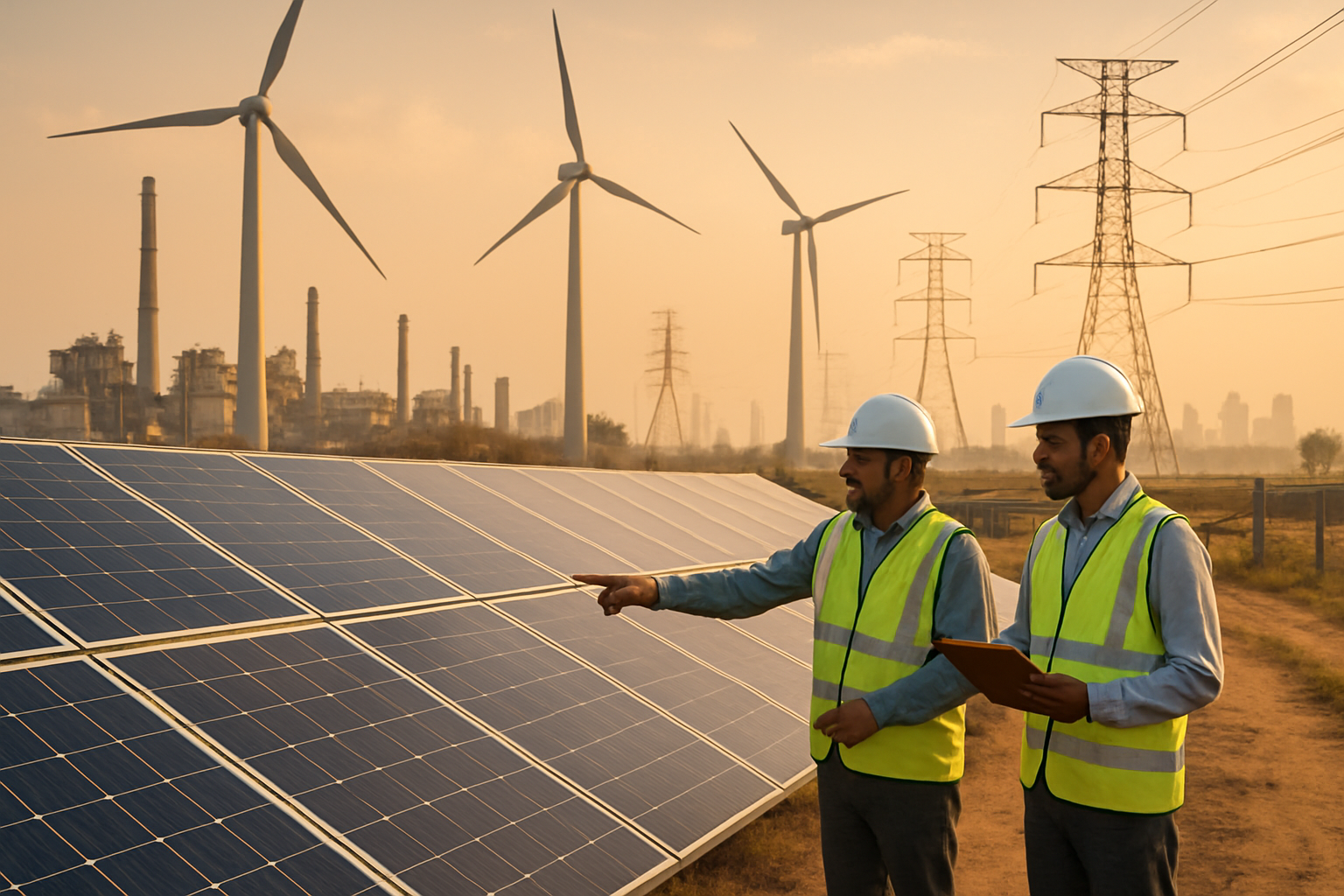
UN Secretary-General António Guterres highlighted India as a global exemplar demonstrating that expanding access to clean energy and growing industry can advance simultaneously, as Europe continues developing green energy corridors to achieve energy independence.
Writing on social media platform X on Friday, Guterres emphasized that the world should view this moment as an opportunity for development and growth while accelerating a fair and rapid transition to clean energy for both people and the planet. His comments come as India showcases remarkable progress in balancing industrial expansion with renewable energy deployment, offering a template for developing nations worldwide.
The UN Chief's endorsement of India's approach signals international recognition of the country's innovative strategy in addressing the traditional perceived conflict between economic development and environmental protection. India's model demonstrates that nations need not choose between industrial growth and climate commitments, but can pursue both objectives through strategic planning and technology integration.
Europe's Green Corridor Infrastructure Push
Meanwhile, Azerbaijan is advancing ambitious infrastructure projects to establish green power corridors across the Black Sea region, addressing Europe's urgent need for energy independence. Technical specifications for what would become among the world's longest and deepest subsea power cables require specialized manufacturing and installation capabilities that push the boundaries of current engineering.
The proposed infrastructure would necessitate significant onshore grid upgrades, particularly in Georgia, to accommodate variable renewable energy flows at unprecedented scale. These developments represent critical steps toward European energy security while reducing dependence on traditional energy sources amid ongoing geopolitical tensions.
Azerbaijan's strategic positioning as a key energy coordinator between East and West has gained recognition from the U.S. Chamber of Commerce, which identified the South Caucasus nation as pivotal for regional energy hub development. Current U.S.-Azerbaijan trade totals $74.9 million annually, with massive expansion potential leveraging Azerbaijan's $27.2 billion in global exports.
Global Context of Energy Transformation
These developments occur during a period of unprecedented climate urgency, with January 2026 marking the 18th consecutive month of temperatures exceeding 1.5°C above pre-industrial levels. The sustained warming demonstrates human-induced climate change overriding natural climate variability, including La Niña cooling effects that typically reduce global temperatures.
Critical supply chain vulnerabilities continue to challenge renewable energy scaling, with China maintaining control of 60% of global production and 90% of refining capacity for lithium, cobalt, and rare earth elements essential for renewable infrastructure. The U.S.-EU-Japan Critical Minerals Partnership, involving 55 countries and seven African alternative suppliers, represents coordinated efforts to diversify these strategic dependencies.
Memory chip prices have increased sixfold, affecting renewable energy control systems and highlighting the interconnected nature of global technology supply chains. These shortages are expected to persist until 2027 when new fabrication facilities come online, creating strategic opportunities for nations positioning themselves advantageously in the digital economy.
Technology Integration and Innovation
India's success in combining clean energy expansion with industrial growth relies heavily on sophisticated technology integration, including digital monitoring systems, smart grid management, and automated efficiency protocols. These advanced systems enable precise measurement of environmental and economic benefits, crucial for evidence-based policy development.
Estonia continues to lead European renewable energy development with 88% renewable electricity production in 2024 and operation of continental Europe's largest battery storage facility, serving 90,000 households. The Baltic nation's model demonstrates the viability of high renewable energy penetration while maintaining grid stability and economic competitiveness.
Romania is advancing its €1 billion Battery Energy Storage System project spanning 2,500 MW across multiple locations, designed to balance energy systems during peak demand periods while addressing EU concerns about critical materials dependencies.
Economic Development and Environmental Protection Synthesis
The convergence of environmental protection with economic development represents a fundamental shift from traditional approaches that viewed these objectives as competing priorities. Contemporary successful initiatives demonstrate that environmental protection functions as an economic growth engine rather than a regulatory burden.
International cooperation models are evolving through energy partnerships that combine traditional energy expertise with cutting-edge renewable technology. Algeria-Italy Mediterranean energy corridors, Armenia-Japan technology transfers, and Azerbaijan's regional hub positioning exemplify comprehensive approaches addressing immediate energy security alongside long-term sustainability commitments.
Hungary's Paks II nuclear construction project, representing Europe's largest atomic energy initiative with €39.1 billion investment and IAEA backing, illustrates diverse pathways toward carbon-neutral energy systems. The project incorporates Russia's latest VVER reactor technology with advanced safety systems, digital monitoring, and robotics assembly.
Implementation Challenges and Strategic Solutions
Success in balancing clean energy expansion with industrial development requires addressing multiple interconnected challenges. Funding sustainability remains critical for developing nations where economic pressures often override environmental considerations. Technical capacity building requires sustained investment in education, training, and institutional development.
Climate change increasingly disrupts project timelines, requiring adaptive management capabilities that can respond to rapidly changing conditions. The recent succession of European storms - Kristin, Leonardo, Marta, and Nils - highlighted infrastructure vulnerabilities designed for historical rather than current climate conditions.
Portugal's A1 highway viaduct collapse during February 2026 flooding demonstrates the urgent need for "build back better" approaches that anticipate future climate conditions rather than simply replacing damaged infrastructure with identical systems.
International Cooperation Frameworks
Effective clean energy transitions increasingly depend on sophisticated international cooperation that goes beyond bilateral agreements to encompass multilateral frameworks addressing diverse expertise, financing sources, and technological capabilities. The African Continental Free Trade Agreement enables cross-border environmental projects, while EU coordination supports climate-conscious infrastructure development.
South-South cooperation knowledge sharing and technology transfers are accelerating, with developing nations increasingly viewed as solutions providers rather than aid recipients. Namibian President Netumbo Nandi-Ndaitwah's positioning of her nation as a "global player in delivering climate solutions" exemplifies this paradigm shift.
Regional integration benefits extend beyond energy security to encompass economic development, with infrastructure serving as the physical foundation for enhanced commerce, efficiency, and competitiveness. Croatia's completion of Zagreb's green corridor and Uganda's historic €641.1 million Standard Chartered Bank financing demonstrate diverse approaches to sustainable development.
Future Trajectory and Strategic Significance
The February 2026 convergence of India's clean energy success with European green corridor advancement represents a pivotal moment in global energy transformation. Success depends on resolving infrastructure constraints, maintaining international cooperation frameworks, and developing sustainable business models that prioritize human welfare alongside economic development.
A multipolar clean energy landscape is emerging that challenges traditional Silicon Valley technological concentration, with diverse national strategies reflecting local circumstances while contributing to global objectives. India's approach bridges developed and developing economy needs, while European initiatives focus on digital sovereignty and energy independence.
The window for effective climate action continues narrowing, but technological advancement, environmental urgency, and geopolitical pressures are creating accelerated change conditions. Decisions made in 2026 will likely determine whether clean energy transformation fulfills its promise for sustainable development or faces systemic disruption from unresolved challenges.
Contemporary developments demonstrate that successful energy transformation requires unprecedented coordination across technological innovation, international cooperation, financial commitment, and adaptive management. The convergence of immediate energy security needs with long-term decarbonization goals through sophisticated policy frameworks supporting both traditional and renewable energy sources during transition periods offers hope for comprehensive solutions addressing 21st-century challenges.