India has strongly condemned Pakistan's recent cross-border military operations in Afghanistan, denouncing the airstrikes that reportedly killed civilians and damaged infrastructure as "aggressive actions" that violate international norms. Pakistan has firmly rejected India's criticism, calling it "absurd, unwarranted and shamefully hypocritical."
The diplomatic exchange represents the latest development in a crisis that has escalated into what Pakistani Defense Minister Khawaja Asif declared as "open war" against Afghanistan's Taliban government—the most serious military confrontation since the Taliban's return to power in August 2021.
India's Condemnation and Pakistan's Response
India's Ministry of External Affairs issued a statement Saturday expressing grave concerns over Pakistan's ongoing military campaign, known as Operation Ghazab lil-Haq. Foreign Ministry spokesperson Randhir Jaiswal described the strikes as representing "another aggressive action by Pakistani institutions that remain hostile" to regional stability.
According to Indian officials, the airstrikes have resulted in civilian casualties and significant damage to civilian infrastructure across Afghanistan's eastern provinces. The statement emphasized that such actions undermine efforts toward peace and stability in the region.
Pakistan's Foreign Office responded swiftly and forcefully on Sunday, with spokesperson Tahir Andrabi rejecting India's statement as "absurd, unwarranted and shamefully hypocritical." The Pakistani government accused India of interfering in regional affairs and attempting to exploit the situation for its own geopolitical advantage.
"Pakistan's legitimate, targeted and precise actions against terrorist organizations operating from Afghan soil are based on credible intelligence and are conducted in accordance with international law."
— Tahir Andrabi, Pakistani Foreign Office Spokesperson
The Origin of the Current Crisis
The current military escalation began with a devastating terrorist attack on February 16, 2026, in Pakistan's Bajaur district, where eleven Pakistani soldiers were killed in a coordinated assault by the banned Tehreek-e-Taliban Pakistan (TTP). The attack involved a vehicle-borne improvised explosive device that collapsed security infrastructure and damaged nearby civilian buildings.
Pakistan responded with airstrikes on February 22, targeting seven alleged terrorist camps in Afghanistan's Nangarhar and Paktika provinces. Pakistani military sources claimed to have eliminated over 80 TTP and ISIS-K militants, but the strikes also resulted in civilian casualties, including eight schoolchildren in Behsud district.
The Taliban government condemned these strikes as violations of Afghan sovereignty and warned of a "measured and appropriate response at a suitable time." The situation further deteriorated when Defense Minister Asif declared "open war" on February 27, marking an unprecedented escalation in Pakistan-Afghanistan relations.
Escalating Military Operations
Operation Ghazab lil-Haq has expanded far beyond initial border skirmishes to include strikes on strategic installations and even Afghanistan's capital, Kabul. Pakistani forces have conducted coordinated airstrikes across multiple Afghan provinces, including Kandahar, Paktia, and Nangarhar, targeting what Pakistan describes as Taliban military facilities.
The Taliban has responded with its own military operations, claiming to have captured Pakistani military positions and conducting counter-strikes on Pakistani installations in cities including Islamabad, Nowshera, Jamrud, and Abbottabad. Both sides have reported significant casualties, though exact figures remain disputed.
The fighting has caused massive displacement, with the UN Office for the Coordination of Humanitarian Affairs (OCHA) reporting that 16,370 families have been newly displaced across ten Afghan provinces, adding to an already severe humanitarian crisis.
Economic and Humanitarian Impact
The military confrontation has devastated bilateral trade, which has collapsed by 59% over seven months. Pakistani exports to Afghanistan dropped from $550 million to just $228 million, severely affecting border communities that depend on cross-border commerce.
Traditional trade routes through Chaman-Spin Boldak and Torkham have faced repeated closures, compounding Afghanistan's humanitarian crisis where 88% of female-headed households are unable to meet minimum living requirements according to UN data.
The World Health Organization has been forced to deliver emergency medical oxygen to only 23 hospitals, while hundreds of health centers have closed due to funding cuts and security concerns. The UN reports 185 civilian casualties since late February, with the majority being women and children.
International Mediation Efforts
Despite intensive international mediation efforts, diplomatic solutions have proven elusive. Saudi Arabia mediated a prisoner exchange in February 2026 that saw the release of three Pakistani soldiers from Taliban custody, but this confidence-building measure failed to address underlying security challenges.
Iran, Turkey, Russia, and China have all offered mediation services, while the UN has repeatedly called for immediate cessation of hostilities. Islamic scholars have even issued religious fatwas calling for a ceasefire during Ramadan, but military operations have continued despite these appeals.
The Durand Line Dispute
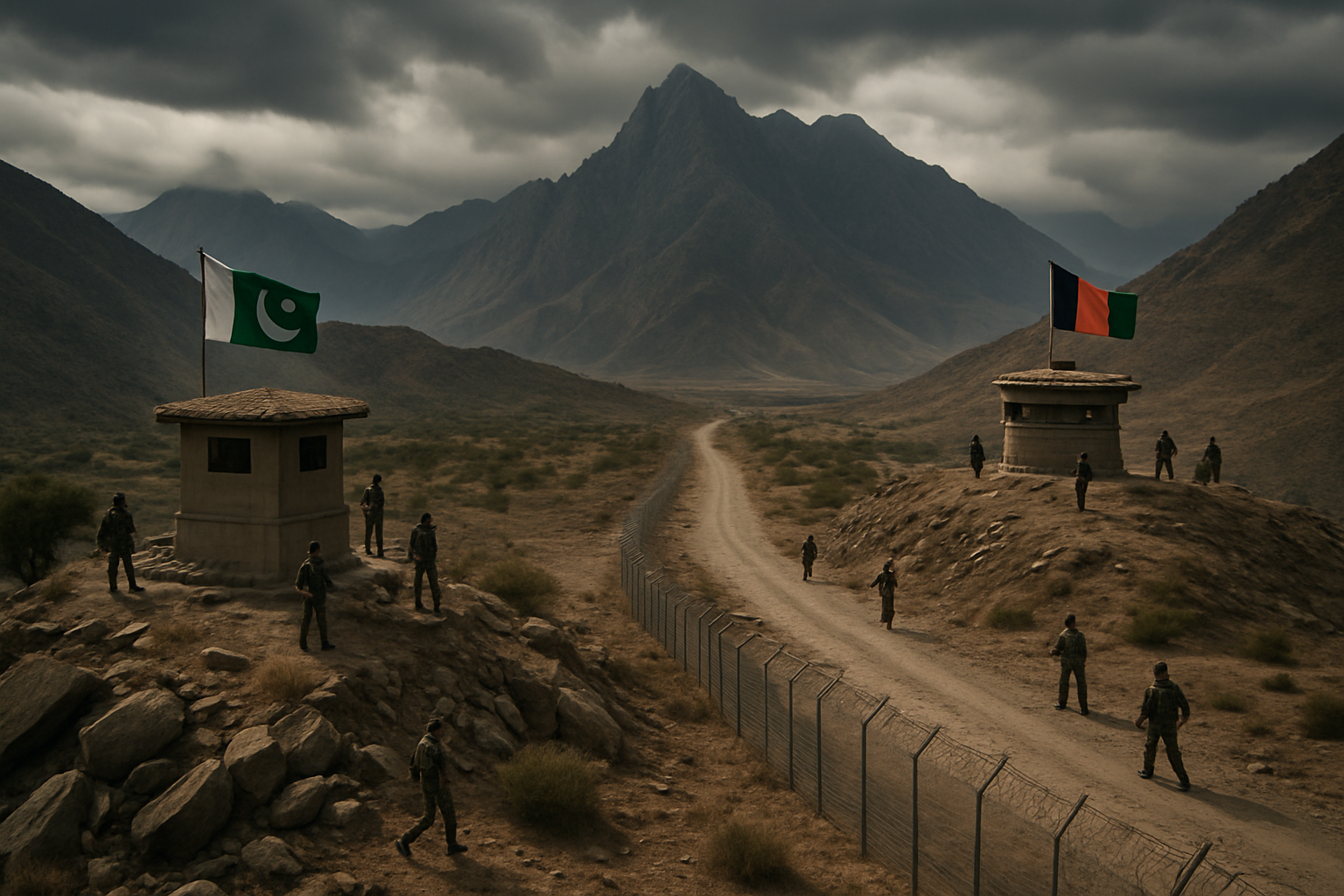
At the heart of the conflict lies the disputed 2,640-kilometer Durand Line, the colonial-era border established in 1893 that Afghanistan has never formally recognized. The Afghan government views this boundary as an artificial division of Pashtun tribal territories.
Pakistan maintains that the TTP operates "with impunity from Afghan soil," while the Taliban denies providing sanctuary to militant groups. The porous mountainous terrain along this border has historically provided refuge for various militant organizations, complicating security efforts by both nations.
Regional and Global Implications
The crisis represents a critical test of the post-2021 South Asian security architecture, with potentially far-reaching consequences for regional stability. Pakistan acknowledges that it has lost traditional influence in Afghanistan to wealthier regional powers including Turkey, the UAE, Qatar, Saudi Arabia, and China, forcing it to increasingly rely on military solutions.
The involvement of nuclear-armed Pakistan adds a dangerous dimension that requires careful international monitoring to prevent escalation beyond conventional operations. Chinese warnings to the UN Security Council about the presence of ISIS-K, al-Qaeda, and ETIM in Afghanistan contradict Taliban claims of having defeated terrorism.
"This represents the most serious Pakistan-Afghanistan confrontation in decades, testing whether diplomatic frameworks can manage the intersection of territorial sovereignty and transnational terrorism in the 21st century."
— Regional Security Analyst
India's Strategic Position
India's condemnation of Pakistan's military actions reflects its broader strategic concerns about regional stability and its complex relationship with both Pakistan and Afghanistan. New Delhi has historically maintained that military solutions cannot address the root causes of terrorism and instability in the region.
The Indian government's statement also reflects its ongoing efforts to position itself as a responsible regional power that advocates for diplomatic solutions and respect for international law. However, Pakistan's accusation of hypocrisy stems from India's own history of cross-border operations and its complex involvement in Afghan affairs.
Looking Forward
As the crisis enters its fourth week, the international community faces mounting pressure to develop effective conflict prevention mechanisms before the confrontation escalates into a broader regional war. The success or failure of current diplomatic efforts will likely serve as a template for managing similar challenges where counter-terrorism concerns intersect with territorial sovereignty disputes.
The Taliban maintains that the "path of talks remains open," seeking "mutual understanding and respect," while Pakistan has stated there is "no rush" to end its military campaign. This suggests that the current stalemate may persist without significant international intervention or a breakthrough in addressing the underlying security challenges that triggered the crisis.
The situation underscores the complex nature of modern regional conflicts, where historical grievances, territorial disputes, cross-border terrorism, and competing national interests combine to create challenges that require innovative diplomatic frameworks balancing security concerns with respect for sovereignty and civilian protection.