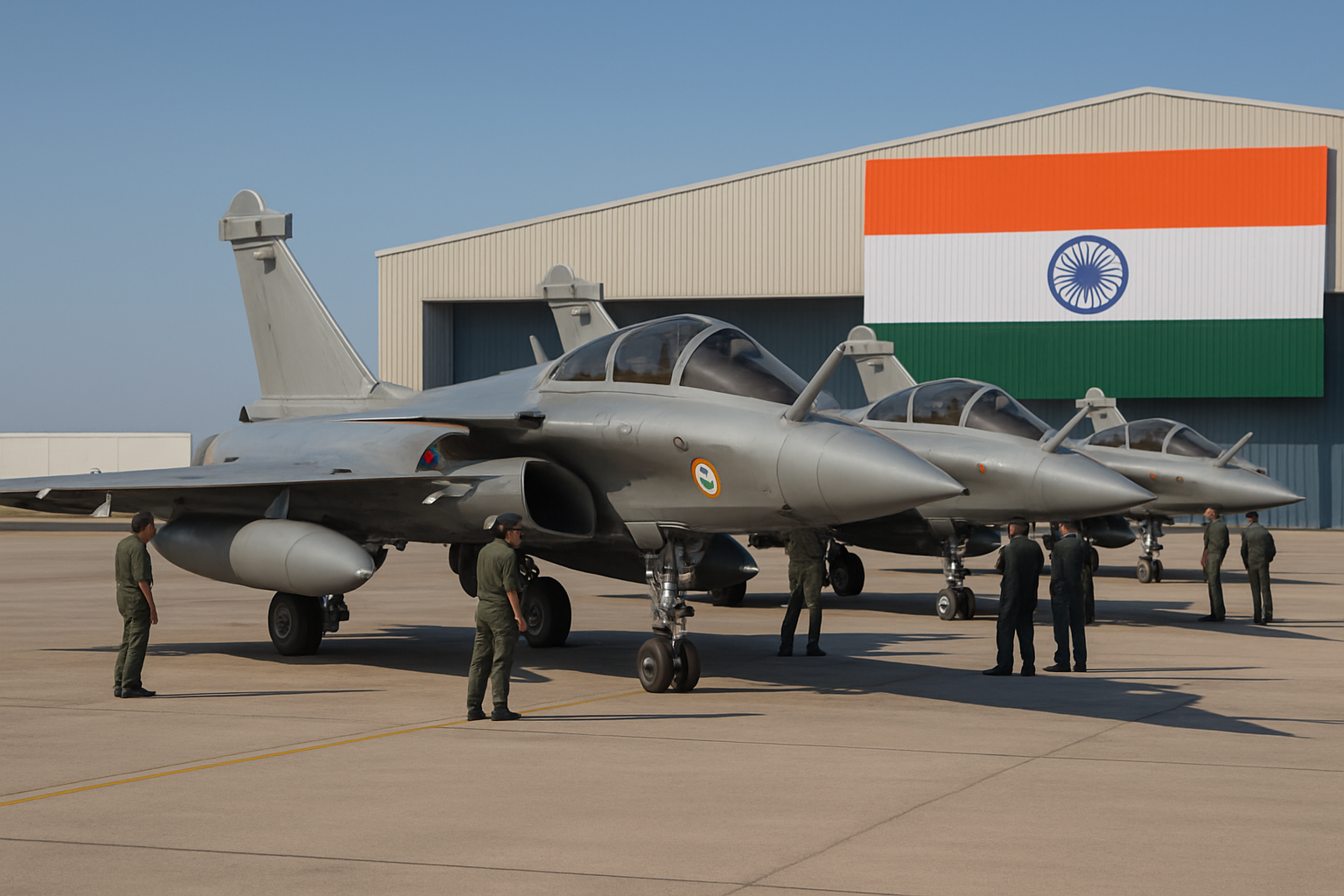
India has approved the acquisition of 114 additional French Rafale fighter jets in what officials are calling a "historic" defense deal worth approximately $39 billion (₹3.25 lakh crore), marking one of the largest military aircraft purchases in recent history.
The approval was announced Thursday by India's Defence Acquisition Council, just days before French President Emmanuel Macron's scheduled visit to New Delhi between February 17-19, 2026. According to sources within India's defense ministry, the green light from New Delhi covers the purchase of 114 French combat aircraft, representing a massive expansion of India's existing Rafale fleet.
Strategic Partnership Deepens
The Élysée Palace has welcomed the decision as a "very important milestone" toward finalizing what officials describe as a "historic contract." This latest procurement builds upon India's earlier acquisition of 36 Rafale jets, which have already been inducted into the Indian Air Force (IAF) and proven their capabilities in various operational scenarios.
The timing of the announcement is particularly significant, coming ahead of President Macron's upcoming summit in the Asian nation. French officials view this as a culmination of years of deepening defense cooperation between the two strategic partners, positioning France as India's preferred supplier for advanced military aviation technology.
Make in India Initiative Central to Deal
A crucial aspect of this procurement is its alignment with India's "Make in India" initiative, with approximately 80% of the manufacturing expected to take place domestically. This represents a major shift from traditional defense imports, emphasizing technology transfer and local production capabilities.
The domestic manufacturing component is designed to create thousands of jobs in India's aerospace sector while positioning the country as a regional defense technology hub. This approach reflects India's broader strategy of achieving technological self-reliance in defense production while reducing dependence on foreign suppliers.
Defense Ministry sources emphasized that this procurement will "significantly boost deterrence capabilities" across the entire conflict spectrum, addressing India's evolving security challenges in a complex regional environment.
Multi Role Fighter Aircraft Program
The Rafale acquisition forms the cornerstone of the Indian Air Force's Multi Role Fighter Aircraft (MRFA) program, which represents a comprehensive modernization strategy for India's air power capabilities. The program is designed to enhance both air dominance and long-range offensive strike capacity, critical capabilities given the regional security dynamics.
This procurement addresses the IAF's long-standing requirement for modern, multi-role combat aircraft capable of operating in diverse mission profiles. The Rafale's proven track record in various international operations, combined with its advanced avionics and weapon systems, makes it well-suited to India's operational requirements.
Economic and Industrial Impact
The ₹3.25 lakh crore investment represents one of the largest defense procurements in India's history, comparable to major infrastructure projects. The economic impact extends beyond the immediate purchase, with significant implications for India's defense industrial base and technological capabilities.
The technology transfer requirements associated with domestic manufacturing will provide Indian companies with access to advanced aerospace technologies, potentially creating spillover effects into civilian aviation and related industries. This aligns with India's broader goal of becoming a net exporter of defense equipment rather than remaining primarily an importer.
Regional Security Context
The Rafale procurement occurs against the backdrop of evolving regional security challenges, with India seeking to maintain strategic autonomy while strengthening partnerships with key allies. The enhanced air power capabilities provided by an expanded Rafale fleet will contribute to India's ability to address security concerns across its vast borders.
Defense analysts note that the Rafale's advanced capabilities, including beyond-visual-range combat, precision strike, and intelligence gathering, make it particularly valuable for modern warfare scenarios. The aircraft's proven interoperability with NATO systems also enhances India's ability to cooperate with international partners in joint operations.
Franco-Indian Defense Cooperation Model
This agreement represents the successful evolution of Franco-Indian defense cooperation from a traditional buyer-seller relationship to a comprehensive strategic partnership. The emphasis on technology transfer, domestic manufacturing, and long-term industrial cooperation provides a model for other defense partnerships.
France's willingness to share advanced technologies and support domestic production capabilities distinguishes this partnership from more restrictive defense relationships. This approach has enabled India to build indigenous capabilities while accessing cutting-edge military technologies.
Implementation Timeline and Challenges
While the Defence Acquisition Council's approval represents a crucial first step, the complex procurement process still requires multiple stages of approval and negotiation. The domestic manufacturing requirements will necessitate significant infrastructure development and technology absorption, processes that typically take several years to fully implement.
Industry experts anticipate that the first domestically manufactured aircraft may begin rolling off production lines within 3-4 years of contract finalization, with the complete delivery schedule extending over the subsequent decade. This timeline reflects the complexity of establishing advanced manufacturing capabilities while maintaining quality standards.
Looking Forward
The Rafale deal symbolizes India's proactive approach to defense modernization and technological advancement in an increasingly complex security environment. Success in this program could pave the way for additional large-scale defense partnerships, further strengthening India's position as a major defense technology producer.
As President Macron prepares for his visit to New Delhi, this approval provides significant momentum for broader Indo-French cooperation across multiple domains, including civilian nuclear energy, space technology, and maritime security. The defense partnership serves as a foundation for a comprehensive strategic relationship between two major democratic powers.
The historic nature of this agreement lies not only in its scale but in its approach to combining immediate capability enhancement with long-term industrial development, creating a sustainable model for defense cooperation in the 21st century.