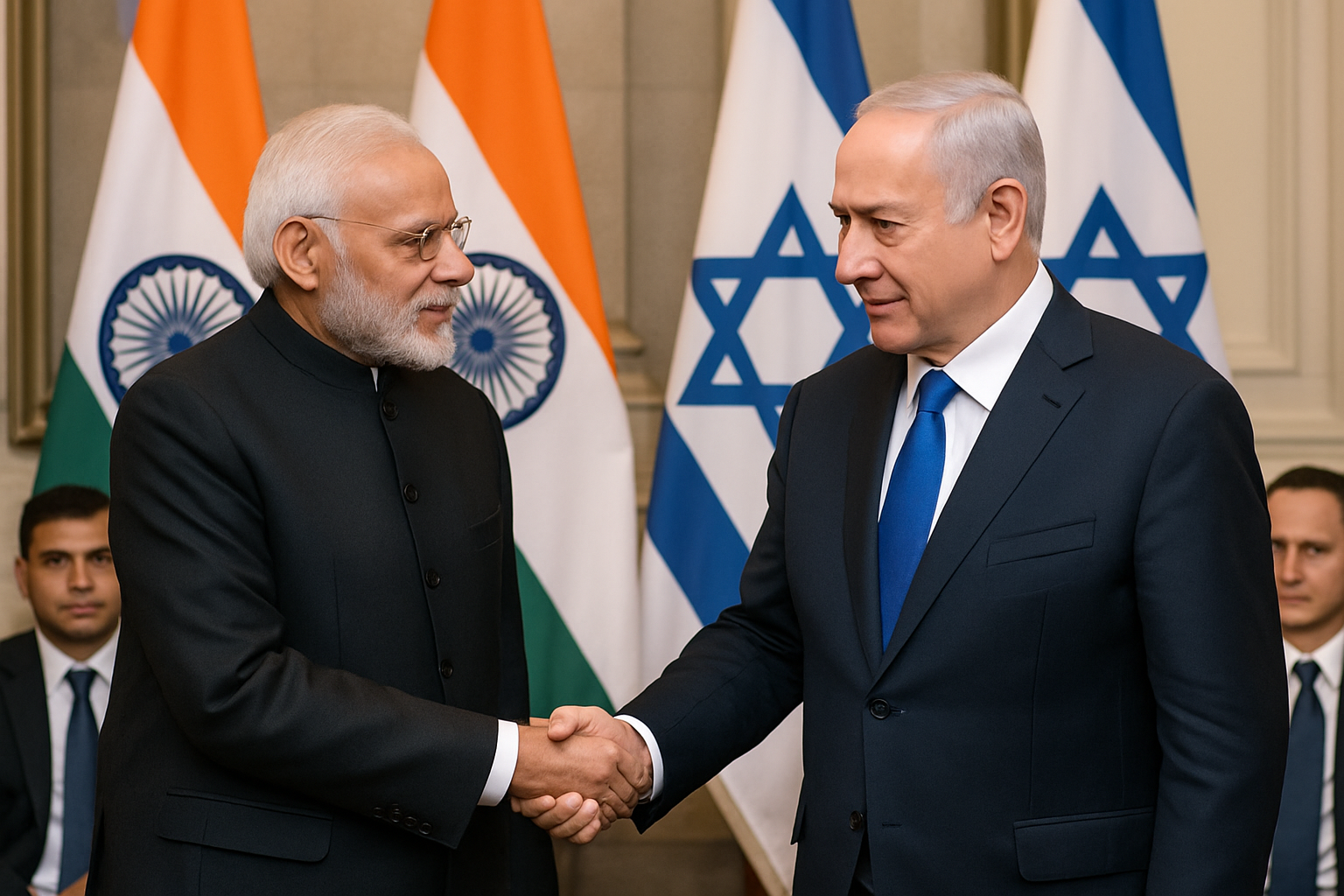
Indian Prime Minister Narendra Modi concluded a landmark two-day visit to Israel on February 26, 2026, signing 16 comprehensive memorandums of understanding that officials from both nations described as elevating their relationship to a "special strategic partnership" with far-reaching implications for regional security and global trade.
Modi's historic visit, which included the first-ever address by an Indian Prime Minister to the Israeli Knesset, represents a dramatic evolution in India-Israel relations from what began as functional cooperation to what both leaders now characterize as a comprehensive strategic alliance with regional and international dimensions.
Comprehensive Framework for Enhanced Cooperation
The agreements signed during Modi's visit encompass critical areas including joint defense technology development, production partnerships, and ambitious plans for a free trade agreement between the two nations. At a joint press conference with Israeli Prime Minister Benjamin Netanyahu in Jerusalem, Modi announced that India and Israel would pursue "joint development, production and transfer of technology in defence" while working toward finalizing a "mutually beneficial free trade agreement."
Central to the new partnership framework is an innovative concept called "horizon scanning," which Indian foreign ministry statements indicate will enhance India's strategic capabilities through strengthened strategic foresight, risk assessment, and technology planning via joint research, capacity building, and AI-driven analytical tools.
The economic dimensions of the partnership are equally significant. Israel has committed to allowing 50,000 additional Indian workers into the country over the next five years, particularly in manufacturing sectors, according to Indian foreign ministry statements. This represents a substantial expansion of labor mobility between the two nations and reflects Israel's confidence in Indian technical expertise.
Defense Technology and Security Cooperation
The defense cooperation aspects of the new agreements are particularly noteworthy given the evolving security landscape both nations face. Modi emphasized during his Jerusalem press conference that both countries "are clear that there is no place for terrorism in the world, in any form" and pledged that India and Israel would "oppose it shoulder to shoulder."
"India and Israel are clear that there is no place for terrorism in the world, in any form... We will oppose it shoulder to shoulder. We will always oppose it in the future."
— Narendra Modi, Indian Prime Minister
This security cooperation builds on India's recent approval of a historic $39 billion defense procurement program, including 114 additional French Rafale fighter jets with 80% domestic manufacturing under the Make in India initiative. The timing of these developments suggests India is pursuing a multi-partner approach to defense modernization while deepening strategic ties with key democratic allies.
The partnership also reflects both nations' shared concerns about regional security challenges and their commitment to democratic values in an increasingly complex global environment. Modi's address to the Knesset, described by diplomatic observers as a "milestone," underscored the democratic foundation of the bilateral relationship.
Economic Integration and Trade Expansion
The planned free trade agreement represents a potential transformation of India-Israel economic relations. Current bilateral trade, while growing, has significant expansion potential given both countries' advanced technology sectors, agricultural innovations, and complementary economic strengths.
Israel's commitment to expanding Indian worker access, particularly in manufacturing, aligns with India's broader strategy of positioning its workforce as a key asset in global supply chains. The 50,000 additional worker slots over five years represents not just economic opportunity but also people-to-people connections that could deepen the strategic relationship.
The agreements also encompass cooperation in emerging technology sectors, including artificial intelligence applications for strategic planning and risk assessment. This technological dimension reflects both nations' recognition that 21st-century partnerships must extend beyond traditional diplomatic and military cooperation to include cutting-edge innovation partnerships.
Regional and Global Implications
The elevation of India-Israel ties occurs within a broader context of shifting regional dynamics and global partnerships. Modi's visit took place as both nations navigate complex relationships with traditional partners while deepening cooperation with new allies.
For India, the strengthened Israel partnership complements recent diplomatic successes including the interim trade framework with the United States and strategic partnerships across the Indo-Pacific region. The relationship provides India with access to advanced defense technologies and positions both nations as democratic partners facing similar security challenges.
Israeli officials have characterized the partnership as essential for Israel's regional security strategy, while Indian leaders view it as supporting broader objectives including technological self-reliance and diversified defense capabilities.
Multilateral Cooperation Frameworks
During his Knesset address, Modi referenced multilateral projects including the India-Middle East-Europe Corridor (IMEC) and the I2U2 grouping (India, Israel, UAE, United States), demonstrating how bilateral cooperation serves broader regional integration objectives.
These multilateral frameworks suggest that India-Israel cooperation is not intended as exclusive partnership but rather as contribution to broader democratic alliance systems addressing shared challenges including climate change, technological innovation, and regional security.
The IMEC corridor, in particular, represents ambitious infrastructure connectivity linking India to European markets through Middle Eastern partners, potentially reshaping trade patterns and strategic relationships across multiple regions.
Implementation Challenges and Opportunities
The success of the elevated partnership will depend on effective implementation of the 16 agreements signed during Modi's visit. Both governments have committed to regular consultation mechanisms and monitoring frameworks to ensure that high-level political commitments translate into practical cooperation.
Key implementation challenges include coordinating complex technology transfer arrangements, managing expanded labor mobility programs, and negotiating the technical details of a comprehensive free trade agreement. However, both nations bring substantial institutional capacity and political commitment to these endeavors.
The partnership also benefits from strong people-to-people connections, including significant Indian communities in Israel and growing Israeli investment in Indian technology sectors. These foundational relationships provide resilience for the strategic partnership across political cycles and changing circumstances.
Future Trajectory
The February 2026 agreements represent a culmination of years of growing cooperation but also establish frameworks for sustained expansion of India-Israel relations. The "special strategic partnership" designation suggests both nations view their relationship as enduring and comprehensive rather than transactional or limited to specific sectors.
As both nations face evolving security environments and technological challenges, their partnership provides platforms for addressing shared concerns through democratic cooperation and innovation. The success of this model could influence broader patterns of international cooperation among democratic partners worldwide.
The partnership's emphasis on technology cooperation, particularly in artificial intelligence and strategic planning tools, positions both nations at the forefront of developing democratic alternatives to authoritarian approaches to technological governance and international relations.
Modi's historic Knesset address and the comprehensive agreements signed during his visit mark not just a bilateral milestone but potentially a template for how democratic nations can deepen cooperation across multiple domains while maintaining their commitment to international law and peaceful resolution of conflicts.