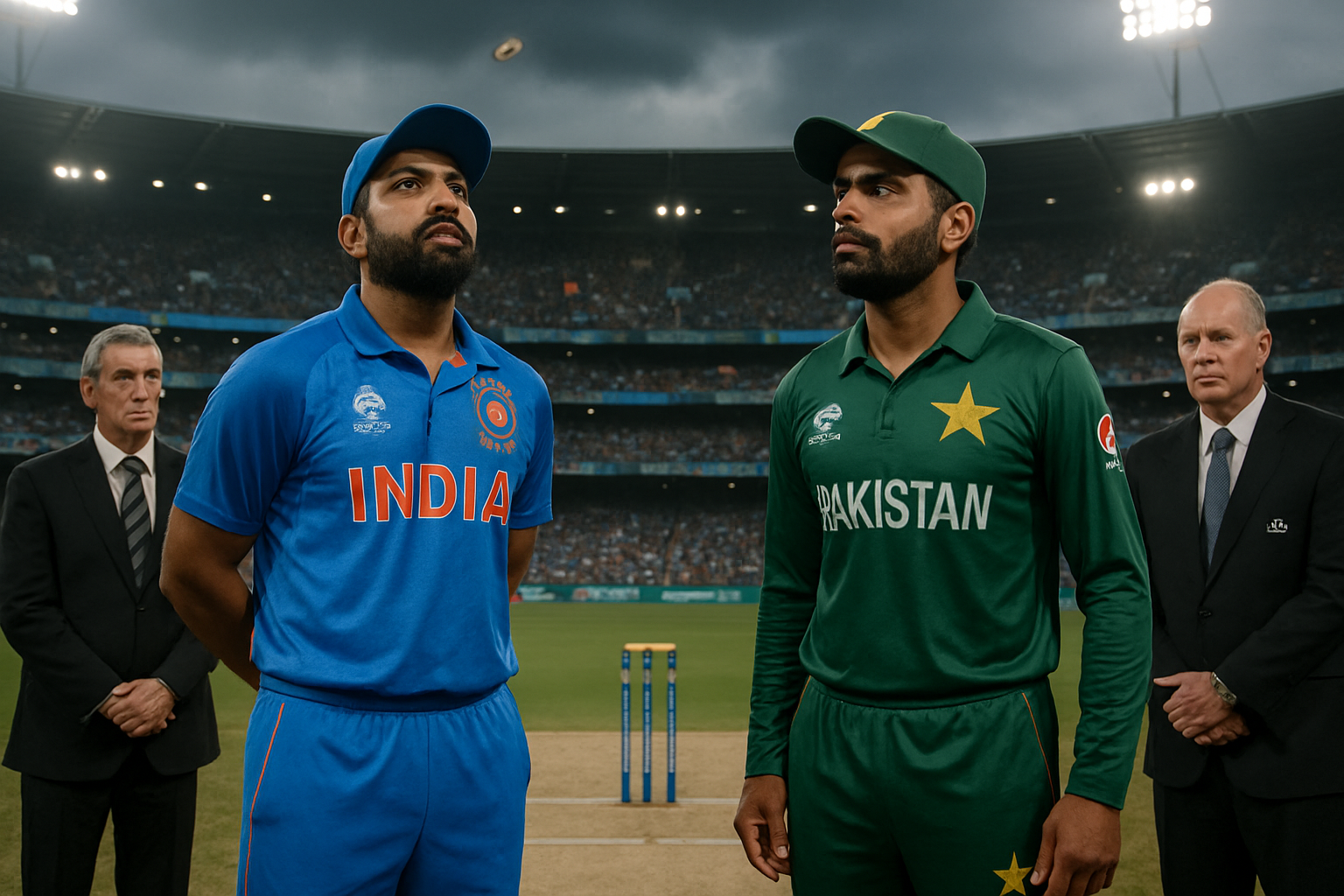
Cricket's most intense rivalry took center stage in Colombo on Sunday evening, but the customary sportsmanship gesture that typically marks the beginning of international matches was notably absent as India captain Suryakumar Yadav and Pakistan skipper Salman Agha maintained their no-handshake stance at the T20 World Cup toss.
The high-voltage Group A encounter at the R. Premadasa Stadium proceeded without the traditional pre-match handshake, continuing a diplomatic protest that first emerged during the 2025 Asia Cup in the United Arab Emirates. Pakistan won the toss and elected to bowl first in what became one of the most-watched cricket matches globally, drawing an estimated 400 million viewers despite the underlying political tensions.
This manifestation of strained India-Pakistan relations on the cricket field represents a significant departure from cricket's traditional emphasis on sportsmanship and the "spirit of cricket" that has long been celebrated as transcending political boundaries. The match itself came to fruition only after a dramatic reversal of Pakistan's initial boycott decision, which had threatened to overshadow the entire tournament.
A Pattern of Diplomatic Distance
The no-handshake policy first appeared during the 2025 Asia Cup, where India and Pakistan met three times, and Yadav consistently refused the traditional gesture on each occasion. The stance has drawn criticism from cricket purists and former players worldwide, with many arguing that sport should remain separate from political disputes.
During a press conference before the match, Yadav had remained non-committal about whether he would shake hands, suggesting fans "wait for the match." His actions at the toss confirmed the continuation of this policy, despite calls from various quarters, including former England captain Nasser Hussain, for maintaining cricket's traditional values.
The incident extends beyond mere symbolism. After winning the 2025 Asia Cup final against Pakistan, the Indian team notably refused to accept the trophy from Asia Cricket Council and Pakistan Cricket Board officials, further illustrating the depth of the diplomatic rift affecting cricket relations between the two nations.
Tournament Context and Stakes
Both teams entered Sunday's encounter unbeaten in the group stage, with India leading Group A standings on superior net run rate despite both sides having secured four points. India had registered victories against the United States and Namibia, while Pakistan defeated the Netherlands and the United States in their opening fixtures.
The match's significance was amplified by the dramatic circumstances that nearly prevented it from taking place. Pakistan had initially announced a boycott of the fixture on February 1, 2026, citing solidarity with Bangladesh and accusing India of involvement in Balochistan attacks that claimed 48 lives before Pakistani forces eliminated 145 militants in a 40-hour counter-operation.
"The India game is not in our control. It was the government's decision and if we have to play them in the semi-final or the final, we will go back to them and act on their advice."
— Salman Agha, Pakistan Captain (speaking earlier in the tournament)
The Boycott Crisis and Resolution
The path to Sunday's match was fraught with uncertainty. Pakistan's government had initially instructed the team to forfeit two crucial Group A points rather than face India, representing the first time in cricket history that a team had officially boycotted a World Cup match while continuing to participate in the rest of the tournament.
The crisis threatened to create a dangerous precedent for international cricket governance, with the International Cricket Council expressing "serious concerns" about selective participation and warning of potential strict action, including tournament exclusion.
Resolution came through intensive diplomatic negotiations involving multiple stakeholders. A crucial phone conversation between Pakistani Prime Minister Shehbaz Sharif and Sri Lankan President Anura Kumara Dissanayake on February 10 proved pivotal in reversing the boycott decision. Additional mediation efforts by Bangladesh Cricket Board President Aminul Islam and formal requests from Sri Lanka, UAE, and other member nations helped facilitate the breakthrough.
Security and Spectacle
The match proceeded under heightened security measures befitting the significance of the rare India-Pakistan encounter. The 35,000-capacity stadium was sold out, generating a massive tourism boost for Sri Lanka, with hotels reporting full occupancy and tens of millions in direct economic impact through accommodation, hospitality, and related services.
The playing conditions saw Pakistan field the following XI: Sahibzada Farhan (wicket-keeper), Saim Ayub, Salman Agha (captain), Babar Azam, Shadab Khan, Usman Khan (wicket-keeper), Mohammad Nawaz, Faheem Ashraf, Shaheen Shah Afridi, Usman Tariq, and Abrar Ahmed.
India's lineup featured: Ishan Kishan (wicket-keeper), Abhishek Sharma, Tilak Varma, Suryakumar Yadav (captain), Hardik Pandya, Shivam Dube, Rinku Singh, Axar Patel, Kuldeep Yadav, Varun Chakravarthy, and Arshdeep Singh.
Historical Context and Future Implications
The no-handshake stance represents more than symbolic protest; it reflects the broader casualty that bilateral cricket relations have suffered due to deteriorating India-Pakistan political relations. Regular bilateral series between the two nations have been effectively suspended for years, with encounters now limited to major ICC events played at neutral venues.
Pakistan Cricket Board Chairman Mohsin Naqvi had met with the team and management in Colombo before the match, encouraging players and conveying best wishes for the encounter against their arch-rivals. The presence of senior PCB officials, including Chief Operating Officer Sameer Ahmed and PSL CEO Salman Naseer, underscored the political significance attached to the fixture.
The match's successful staging, despite the diplomatic tensions, demonstrates cricket's unique capacity for transcending geopolitical boundaries while simultaneously highlighting how political considerations continue to influence sporting relations in South Asia.
Looking Ahead: Cricket Diplomacy's Future
The resolution of the boycott crisis has established a precedent for managing political challenges in international cricket through diplomatic engagement rather than punitive measures. However, the persistence of the no-handshake policy suggests that while matches can proceed, the underlying tensions continue to manifest in subtle but significant ways.
As both teams progress through the tournament, questions remain about potential future encounters. Should India and Pakistan meet again in the knockout stages, the same diplomatic sensitivities that nearly derailed this group match could resurface, particularly given Captain Agha's earlier statement about seeking government approval for any semifinal or final meeting.
The broader implications extend beyond cricket, as the sport has historically served as a bridge between the two nations during periods of political tension. The current state of affairs suggests that cricket's traditional role as a diplomatic soft power tool has become another casualty of the complex geopolitical dynamics affecting South Asian relations.
Sunday's match, while successfully staged, serves as a reminder that in the subcontinent, cricket remains far more than just a sport—it continues to be a reflection of the political temperatures between two nuclear-armed neighbors whose shared passion for the game cannot entirely overcome their political differences.