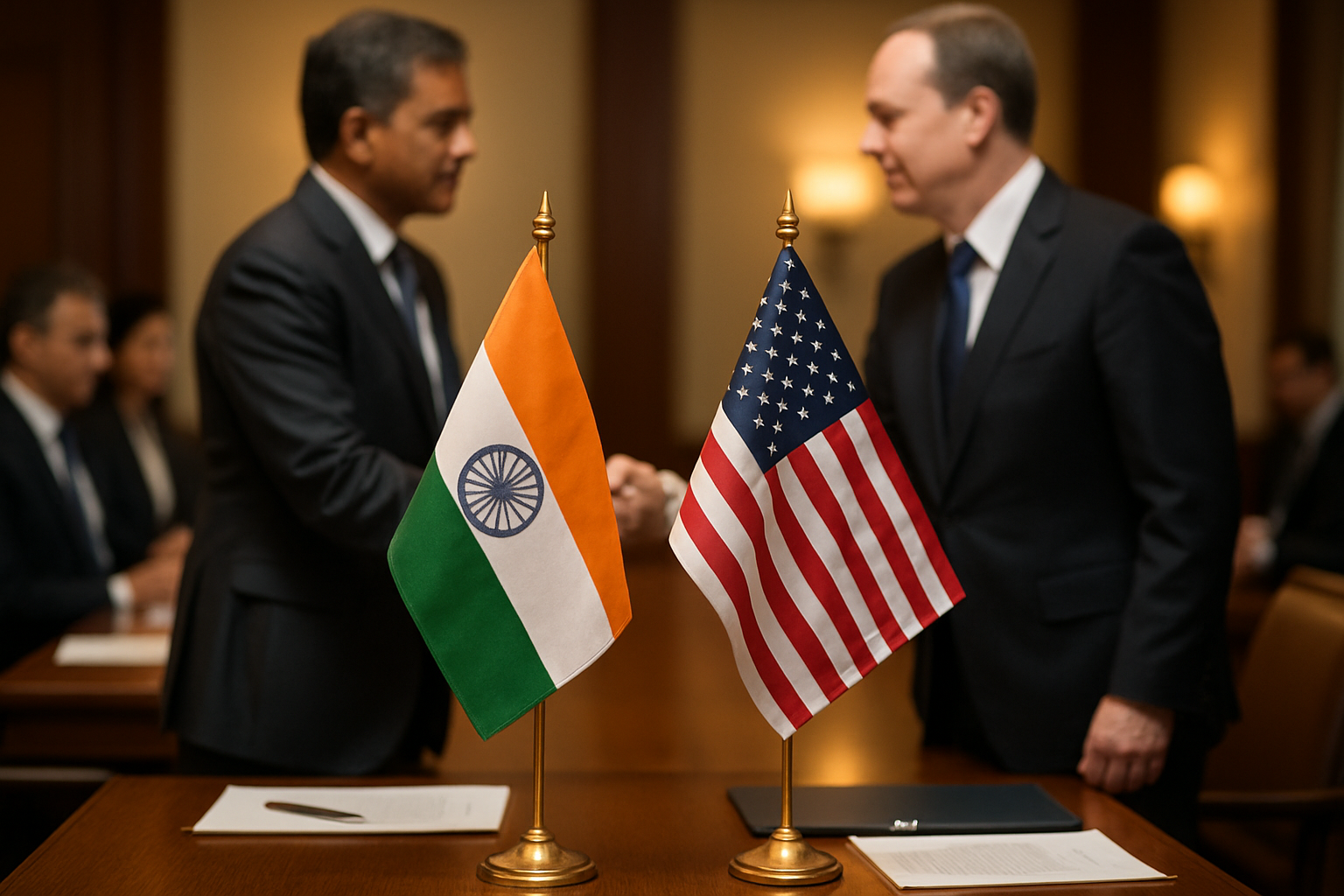
India and the United States have struck a landmark trade agreement that dramatically reduces American tariffs on Indian goods from 50% to 18%, marking the most significant bilateral trade breakthrough between the world's largest democracies in decades.
The comprehensive deal, announced on February 3, 2026, represents a major diplomatic victory for the Trump administration and Indian Prime Minister Narendra Modi's government, potentially reshaping economic relations worth billions of dollars annually. Under the agreement, India has committed to purchasing up to $500 billion in American products, including petroleum, defense systems, and commercial aircraft.
Tariff Reductions and Market Access
The most immediate impact of the agreement involves the dramatic reduction of US tariffs on Indian industrial goods. Commerce Minister Piyush Goyal confirmed that while sensitive sectors including agriculture and dairy will maintain protections, the industrial market will see unprecedented opening.
According to US Trade Representative statements, tariffs on industrial goods will fall to zero from the current 13.5% base rate, while the punitive 50% tariff imposed by the Trump administration in August 2025 over India's purchase of Russian oil has been reduced to 18%. This makes India's tariff burden significantly lower than China's 34% and Pakistan's 19%.
"This is a historic moment that will benefit both nations and create jobs on both sides of the Pacific. We're talking about a fundamental reset of our economic relationship."
— US Trade Representative (via Times of India)
The relief was palpable in Asia's third-largest economy, where businesses had struggled under what were previously the highest tariffs imposed on any nation by the United States. The reduction from the peak 50% rate represents a dramatic reversal of the "maximum pressure" approach that had characterized US-India trade relations during the height of tensions over Russian oil purchases.
Strategic Purchases and Defense Cooperation
Perhaps the most ambitious component of the agreement involves India's commitment to dramatically scale up purchases of American defense systems, commercial aircraft, and energy products. The $500 billion target represents a ten-fold increase from current bilateral trade levels of approximately $50 billion annually.
The defense component includes expanded purchases of military aircraft, advanced weapons systems, and strategic technologies that align with India's ongoing military modernization efforts. This reflects broader geopolitical cooperation between the two nations amid shared concerns about regional security challenges.
Energy cooperation features prominently in the deal, with India agreeing to diversify its energy imports and increase purchases of American petroleum products. This addresses longstanding US concerns about India's reliance on discounted Russian oil, which Washington argued was indirectly supporting Moscow's war effort in Ukraine.
Economic Impact and Market Response
Financial markets responded enthusiastically to the trade deal announcement, with Indian investors gaining an estimated ₹12.10 lakh crore (approximately $145 billion) in a single trading session. The positive market reaction reflects expectations that reduced trade barriers will boost economic growth and create new opportunities for Indian exporters.
However, significant questions remain about implementation timelines and technical details. The scale of the proposed trade increase would require substantial modifications to supply chains, energy infrastructure, and procurement processes on both sides.
Agricultural Protections and Political Sensitivities
Despite the comprehensive nature of the agreement, India successfully maintained protections for its politically sensitive agricultural and dairy sectors. This represents a crucial victory for the Modi government, which faced significant domestic pressure to shield farmers from foreign competition.
The protection of agricultural markets addresses concerns from India's opposition Congress party, which had demanded full disclosure of any commitments affecting farmers. The agricultural exclusion ensures that the deal can proceed without triggering the rural protests that have historically complicated trade negotiations.
Unresolved Issues and Implementation Challenges
While the broad framework has been announced, crucial implementation details remain unclear. Commerce Minister Piyush Goyal acknowledged during his press conference that many specifics are still being finalized, leading to questions about enforcement mechanisms and timelines.
The agreement's most controversial aspect involves conflicting accounts about India's commitments regarding Russian oil imports. While some US sources suggested India had agreed to completely end its 1.5 million barrels per day of Russian oil purchases, Indian officials have not confirmed this commitment, creating uncertainty about this critical component.
Energy analysts note that replacing Russian imports would require significant adjustments to India's refinery infrastructure, which is currently configured for the heavy, sour crude that Russia supplies. Venezuelan oil has been suggested as a potential replacement with similar characteristics.
Historical Context and Geopolitical Significance
The agreement represents a dramatic turnaround from the deteriorating trade relations that characterized much of 2025. Trump had imposed the punitive 50% tariff rate specifically targeting India's purchase of discounted Russian oil, arguing that such transactions provided Moscow with resources to continue its war in Ukraine.
The breakthrough builds on extensive diplomatic engagement between the Trump and Modi administrations, reflecting shared strategic interests in countering Chinese influence in the Indo-Pacific region. Both leaders have positioned the deal as advancing broader geopolitical cooperation beyond purely economic considerations.
Regional and Global Implications
The India-US trade agreement has significant implications for global trade patterns and regional economic dynamics. By offering India preferential terms compared to China and other regional competitors, the deal reinforces Washington's strategy of building economic partnerships with democratic allies.
European observers have noted the agreement's potential to influence broader Indo-Pacific economic architecture, particularly as other nations consider their own trade relationships with both Washington and New Delhi.
Looking Forward: Implementation and Challenges
The success of this historic agreement will ultimately depend on effective implementation of its ambitious commitments. The ten-fold increase in bilateral trade represents an unprecedented challenge that will require sustained political will and technical expertise from both governments.
Key implementation challenges include developing new supply chain infrastructure, ensuring compliance with complex procurement requirements, and managing the political sensitivities around energy diversification. Both sides will need to demonstrate concrete progress in the coming months to maintain momentum.
The agreement also sets a precedent for how the Trump administration approaches trade negotiations with strategic partners, potentially influencing future deals with other Indo-Pacific allies. As global trade relationships continue evolving amid geopolitical tensions, the India-US agreement represents a significant milestone in the reconfiguration of international economic partnerships.
With both nations committed to building on this foundation, the agreement signals a new chapter in India-US relations that extends far beyond traditional trade considerations to encompass broader strategic cooperation in an increasingly complex global environment.