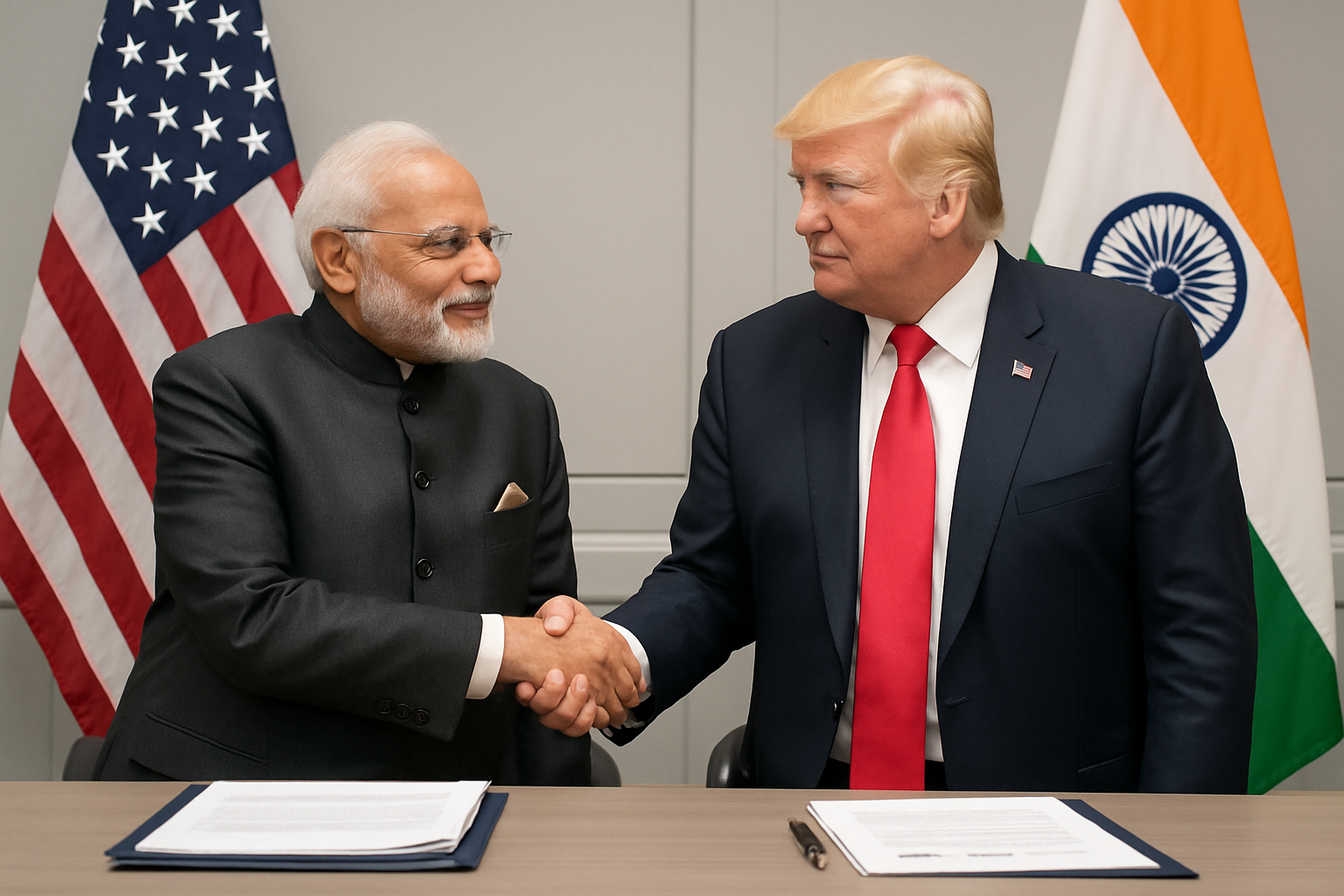
The United States and India unveiled a groundbreaking interim trade framework on Friday that dramatically reduces tariffs, reshapes energy partnerships, and establishes the foundation for a comprehensive bilateral trade agreement between the world's largest and oldest democracies.
The framework, announced through a joint statement from both governments, reduces US "reciprocal" duties on Indian products from 25% to 18% and commits India to substantial purchases of American energy and industrial goods. The agreement represents a major diplomatic and economic breakthrough for the Trump administration, which has prioritized bilateral trade deals as a cornerstone of its foreign policy.
Tariff Relief and Trade Commitments
Under the agreement, US tariffs on Indian goods will be cut to 18% from the current 25%, providing immediate relief to Indian exporters across multiple sectors. The reduction addresses punitive tariffs that had been imposed in two phases - the baseline tariff structure and additional penalties related to India's energy procurement policies.
President Trump signed an executive order on Friday removing the additional 25% tariff that had been imposed on Indian goods as punishment for the country's purchases of Russian oil. The order specified that India had "committed to stop directly or indirectly importing" Russian energy, though US officials will monitor compliance and recommend reinstating tariffs if purchases resume.
In exchange, India has committed to large-scale purchases of US energy and industrial goods, though specific dollar amounts and timelines were not detailed in the preliminary framework. The agreement builds on previous commitments where India pledged to purchase $500 billion in US products over the coming years, representing a ten-fold increase from current bilateral trade levels.
Energy Partnership and Russian Oil Resolution
The most significant geopolitical element of the framework addresses the contentious issue of India's Russian energy imports. Trump had previously criticized India's purchase of approximately 1.5 million barrels per day of Russian oil, arguing it fueled Moscow's war effort in Ukraine.
"This is a great deal for both countries and shows that when we negotiate fairly, everyone wins"
— Donald Trump, US President
While the agreement resolves the immediate tariff dispute, the specific timeline and extent of India's commitment to end Russian oil imports remains subject to ongoing negotiation. Indian officials have emphasized their commitment to energy diversification while maintaining energy security for the nation's 1.4 billion people.
The resolution removes a major diplomatic friction point that had complicated US-India strategic partnership development over the past two years. Energy cooperation will now focus on American natural gas, crude oil, and renewable energy technologies.
Agricultural and Industrial Provisions
The framework includes significant provisions for agricultural trade, with India agreeing to eliminate or reduce tariffs on a wide range of US agricultural products including dried distillers' grains, red sorghum, tree nuts, fruits, soybean oil, wine, and spirits.
However, Indian Commerce Minister Piyush Goyal confirmed that key agricultural sectors including cereals, maize, soybeans, and genetically modified foods will remain protected under the agreement. This protection addresses domestic political concerns and maintains India's food security sovereignty while pursuing broader economic cooperation.
Prime Minister Narendra Modi hailed the agreement, describing it as contributing to global economic growth and deepening ties between the two nations. Modi emphasized that the framework would create new opportunities for Indian exporters while supporting the government's "Make in India" initiative through expanded US market access.
Strategic Technology and Investment Cooperation
Beyond traditional trade, the framework establishes enhanced cooperation on standards and conformity assessment, creates adjustment provisions for future tariff modifications, and strengthens investment and technology partnerships with a focus on innovation sectors.
The agreement includes provisions for aircraft and components, with tariffs eliminated according to White House joint statements. This could significantly benefit India's growing aerospace sector and support technology transfer initiatives.
The framework also addresses critical minerals cooperation, aligning with broader US efforts to diversify supply chains away from Chinese dominance in strategic materials essential for renewable energy and advanced manufacturing.
Implementation Timeline and Congressional Approval
The interim framework maximizes executive authorities to provide immediate benefits, though broader aspects may require congressional approval for full implementation. Both governments have established regular consultation mechanisms to monitor progress and address implementation challenges.
Trade experts note that the agreement represents a framework rather than a fully operational trade deal, with key details regarding enforcement mechanisms, specific timelines, and technical implementation requirements still under negotiation.
"This framework establishes the foundation for what could become one of the most important bilateral trade relationships of the 21st century"
— Piyush Goyal, Indian Commerce Minister
The success of the interim agreement will be crucial for maintaining momentum toward the comprehensive bilateral trade agreement that both nations have committed to negotiate based on this framework foundation.
Regional and Global Implications
The India-US framework occurs within a broader context of strategic competition with China and efforts to realign global supply chains. The agreement positions India as a key alternative manufacturing hub while strengthening democratic partnerships in the Indo-Pacific region.
The timing coincides with India's negotiations for free trade agreements with other major partners, including recent agreements with the Gulf Cooperation Council nations covering the UAE, Saudi Arabia, Qatar, Kuwait, Bahrain, and Oman.
Regional observers note that the agreement could serve as a template for future US bilateral trade relationships in Asia, particularly as the Trump administration continues its pattern of preferring bilateral over multilateral trade arrangements.
Economic Impact and Market Response
The framework announcement has generated positive responses from business communities in both countries, with particular enthusiasm from Indian exporters who have faced significant tariff barriers in recent years.
The agreement provides Indian manufacturers and farmers with improved market access to the world's largest economy while offering American companies expanded opportunities in India's rapidly growing market of 1.4 billion consumers.
However, some opposition voices in India have criticized the agreement as potentially favoring Washington's interests, reflecting ongoing domestic political debates about trade liberalization and economic sovereignty.
Next Steps and Future Negotiations
The interim framework establishes the groundwork for continued negotiations toward a comprehensive bilateral trade agreement. Both governments have reaffirmed their commitment to these broader discussions while noting that substantial additional negotiations will be required to complete a full pact.
Implementation will require massive supply chain restructuring and energy infrastructure modifications on both sides, representing significant technical and logistical challenges over the coming months.
Success depends on sustained political will from both governments, effective technical execution, and the ability to navigate complex domestic political considerations in both democracies.
The India-US interim trade framework represents a historic milestone in bilateral relations, potentially reshaping economic partnerships between the world's two largest democracies while addressing critical geopolitical challenges in energy security and supply chain resilience.