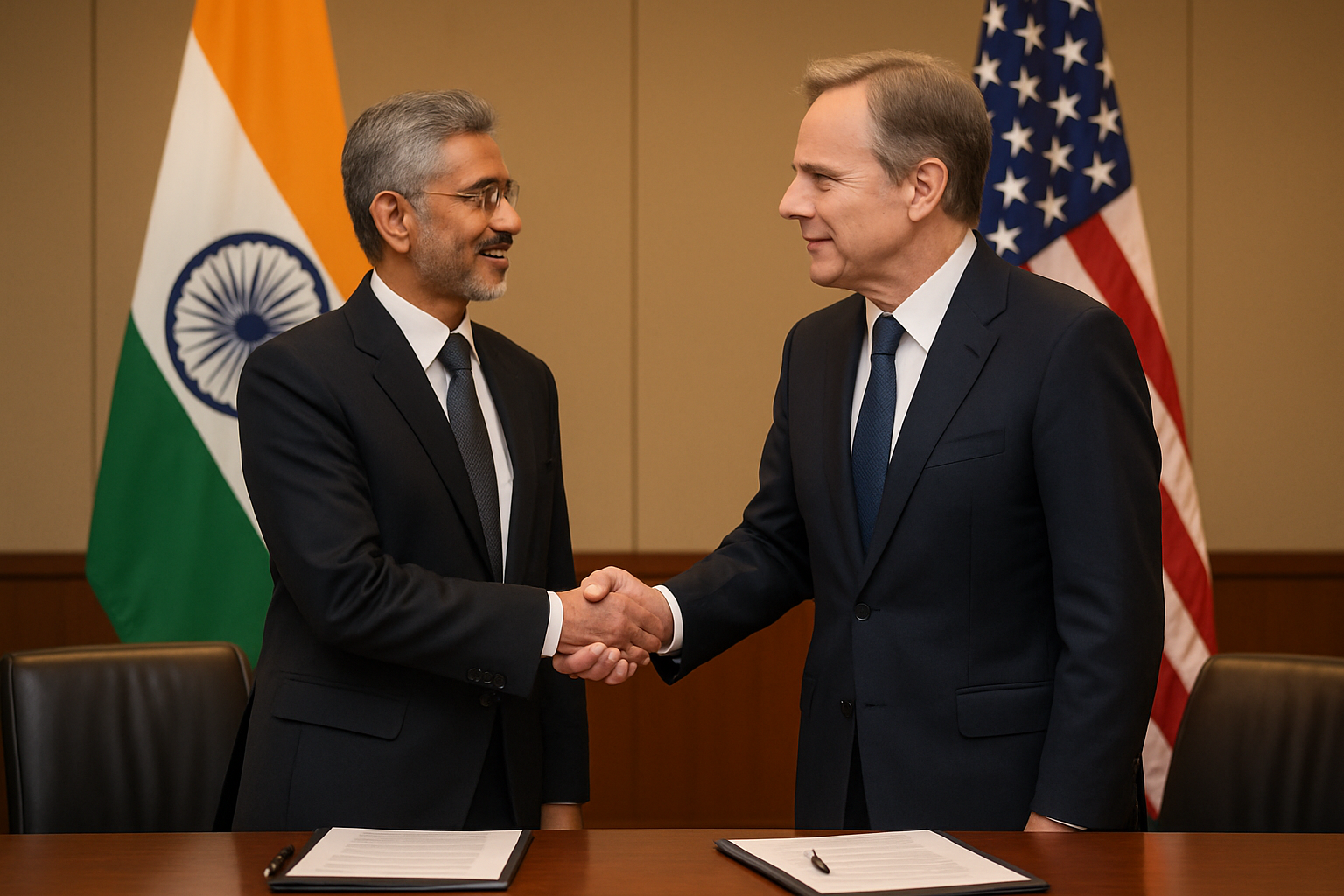
India and the United States have made significant progress on their bilateral trade agreement, with Indian officials confirming that sensitive agricultural sectors including cereals, dairy, and genetically modified foods will remain protected under the deal currently being finalized.
Commerce Minister Piyush Goyal announced that cereals, maize, soybeans, and genetically modified food products may be excluded from the bilateral trade agreement, which has been under negotiation since February 2025. The minister emphasized that Prime Minister Narendra Modi had secured "a very good deal for India" that was superior to agreements the US had offered to competing countries.
The announcement comes as Indian and American officials engage in intensive negotiations to draft a joint statement expected to be completed within the coming weeks. The deal builds upon the preliminary framework announced by former President Donald Trump, which reportedly reduces US tariffs on Indian goods from 50% to 18% while securing commitments from India for substantial American product purchases.
High-Level Diplomatic Engagement
External Affairs Minister S. Jaishankar held crucial meetings with US Secretary of State Marco Rubio in Washington, focusing on critical minerals exploration and expanding economic opportunities between the two nations. The discussions covered bilateral cooperation on defense, nuclear energy, and strategic materials essential for technological advancement.
"We discussed our bilateral cooperation on critical minerals exploration and work together to unlock new economic opportunities between our two countries."
— Marco Rubio, US Secretary of State
Following their meeting, Jaishankar expressed his satisfaction with the talks, stating he was "delighted" to meet with Rubio and highlighting conversations that covered the India-US "bilateral cooperation agenda, regional and global issues." Both officials welcomed the trade deal progress and committed to strengthening ties through the Quad partnership.
Agricultural Sector Protections
The decision to shield India's agricultural and dairy sectors reflects the Modi government's commitment to protecting domestic farmers and food security interests. This protection mechanism addresses longstanding concerns from Indian agricultural stakeholders about potential competition from heavily subsidized American agricultural products.
The exclusion of genetically modified foods from the trade agreement particularly resonates with Indian consumer preferences and regulatory frameworks that have historically maintained strict oversight of GM products. This approach ensures that India retains sovereignty over its food safety standards while pursuing broader economic cooperation.
Critical Minerals and Strategic Materials
The focus on critical minerals cooperation emerges as a crucial component of the evolving India-US partnership. With global supply chains increasingly vulnerable to geopolitical tensions and China's dominance in rare earth processing, the bilateral collaboration aims to diversify supply sources and enhance technological independence.
This strategic dimension aligns with broader US efforts to reduce dependence on Chinese-controlled critical materials, as evidenced by concurrent European Union negotiations with Washington on rare earth elements cooperation. India's growing industrial capacity and resource potential position it as a key partner in this global rebalancing.
Unresolved Energy Questions
Despite the positive momentum on trade negotiations, significant questions remain regarding India's energy import policies. While Trump administration officials have claimed that Modi agreed to cease Russian oil purchases, Indian officials have made no explicit confirmations about ending the substantial crude oil trade with Moscow.
India currently imports approximately 1.5 million barrels of Russian oil daily, making it a significant component of the country's energy security strategy. The absence of clear commitments on this issue suggests that energy diversification remains a complex negotiation point requiring careful balancing of economic and geopolitical considerations.
Regional Trade Context
The India-US trade deal negotiations occur against a backdrop of India's expanding trade relationships across Asia. Recent data shows that bilateral trade between India and China reached a record $155 billion in 2025, marking over 12% year-on-year growth, according to Chinese Ambassador Xu Feihong.
This achievement demonstrates India's ability to maintain diverse trade partnerships while pursuing strategic alignment with the United States. The approach reflects India's commitment to its traditional non-aligned foreign policy framework while deepening cooperation with key partners on specific strategic interests.
Implementation Timeline and Challenges
With Indian and American negotiators working to finalize the joint statement in the coming weeks, attention now turns to implementation mechanisms and enforcement procedures. The complexity of the agreement, spanning agriculture protection, critical minerals, defense cooperation, and energy considerations, requires sophisticated coordination between multiple government agencies.
Commerce Minister Goyal's characterization of the deal as "the best in the region" suggests confidence in the negotiated terms, though specific details regarding timelines, enforcement mechanisms, and dispute resolution procedures await formal announcement.
The successful completion of this trade agreement would represent a significant milestone in India-US strategic partnership, balancing economic opportunity with protection of sensitive domestic sectors while advancing shared geopolitical objectives in an increasingly multipolar global economy.