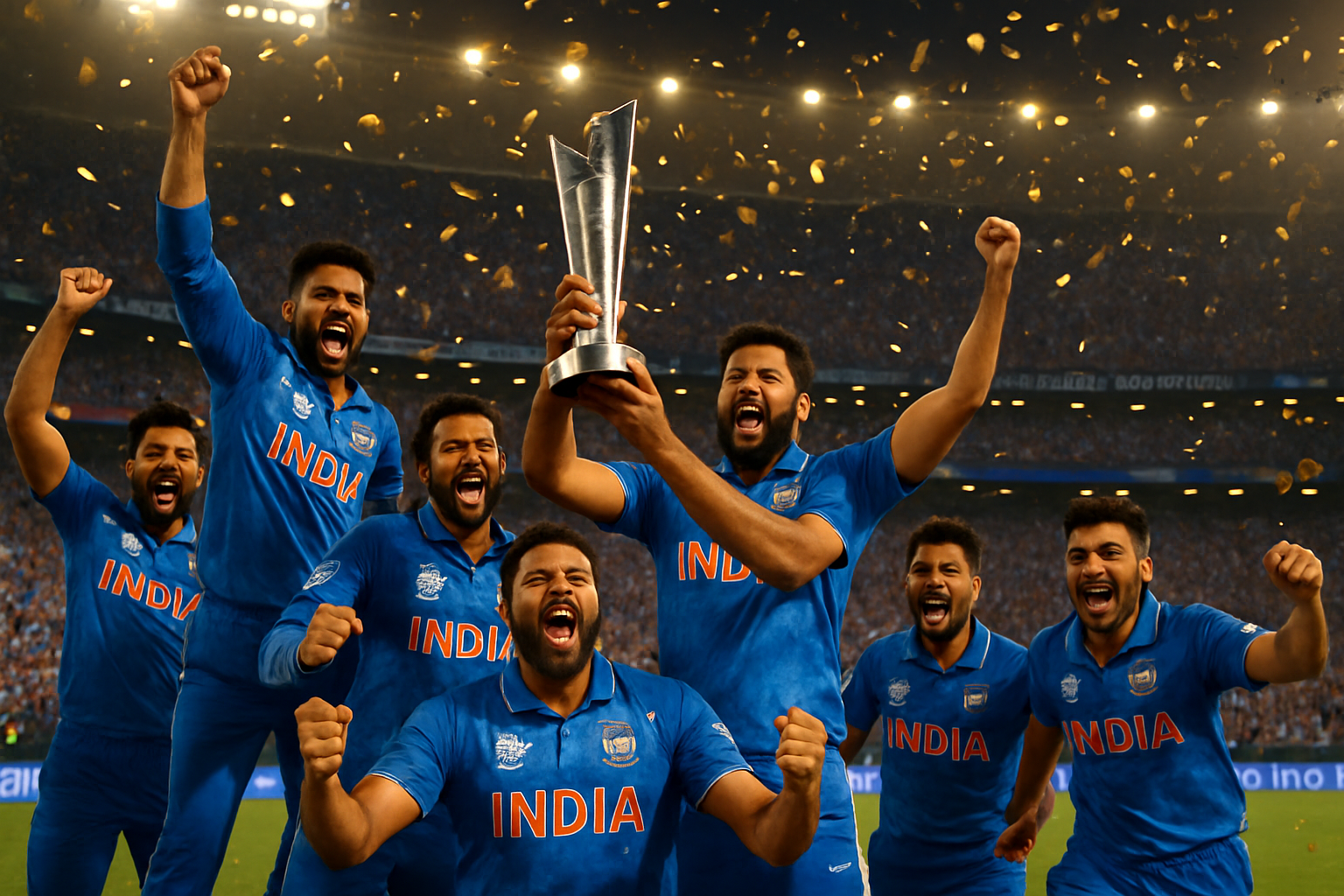
India etched their name deeper into cricket history on Sunday as the first side to lift the men's T20 World Cup for a third time with a ruthless 96-run demolition of New Zealand in a lopsided final at the Narendra Modi Stadium in Ahmedabad.
More than 86,000 predominantly Indian supporters packed into the world's largest cricket ground witnessed their team cantering to victory with almost comical ease, becoming the first team to retain the title in the process. The victory will taste particularly sweet for India since it came at the same venue where they were beaten by Australia in the final of the 50-overs World Cup three years ago.
Record-Breaking Batting Display
India were in the box seat after each of their top three batters hammered blistering half-centuries, propelling the total to a mammoth 255-5 – the highest-ever T20 World Cup final total. Opener Sanju Samson produced his third successive 80-plus score with a brilliant 89 off 46 balls, earning him both the Player of the Match and Player of the Tournament awards.
Samson's explosive knock included eight sixes and was supported by Abhishek Sharma's rapid 52 off 21 balls and Ishan Kishan's 54 off 25 deliveries. The triumvirate's batting display showcased the depth and power that has made India virtually unbeatable in the T20 format.
"This is a historic moment for the entire Indian cricket team and for cricket lovers across the country."
— Suryakumar Yadav, India Captain
New Zealand's Valiant Chase Falls Short
Despite the daunting target, New Zealand showed fighting spirit in their pursuit. Tim Seifert top-scored with 52 off 26 balls, while captain Mitchell Santner contributed 43 runs. However, their efforts proved insufficient as India's bowling attack, led by Jasprit Bumrah's devastating 4-15, systematically dismantled the Kiwi batting order.
New Zealand managed just 159 all out in 19 overs, falling 96 runs short of what would have been their first-ever T20 World Cup title. The margin of defeat was among the largest in T20 World Cup final history, underlining India's comprehensive dominance.
First Successful Title Defense
India's triumph represents a watershed moment in T20 cricket history. No team had previously managed to successfully defend their T20 World Cup title, making this victory particularly significant. The achievement adds to India's T20 World Cup victories in 2007 and 2025, establishing them as the most successful nation in the tournament's history.
The victory also exorcises the demons of their 2023 ODI World Cup final defeat at the same venue, providing redemption on home soil in front of a capacity crowd that was estimated to have generated atmosphere equivalent to 100,000 spectators.
Tournament Statistics Highlight India's Dominance
Throughout the tournament, India demonstrated consistent excellence. Sanju Samson finished as the tournament's leading run-scorer with multiple match-winning performances, while Jasprit Bumrah's bowling proved decisive in crucial moments. The team's ability to perform under pressure, particularly in knockout games, showcased the mental fortitude required for championship success.
New Zealand's Continued Near-Misses
For New Zealand, this defeat extends their streak of major white-ball final losses, as they remain without an ICC white-ball title despite reaching multiple finals. The Black Caps had impressed throughout the tournament, particularly in their semifinal victory over South Africa where Finn Allen scored the fastest century in T20 World Cup history – an unbeaten 100 off just 33 balls.
Captain Mitchell Santner's pre-match declaration that his team would "not mind breaking a few hearts" ultimately proved prophetic, though it was New Zealand hearts that were broken by India's clinical performance.
Global Audience and Significance
The final was watched by an estimated 400 million people globally, making it one of the most-viewed cricket matches in history. The match proceeded smoothly despite various logistical challenges that had affected the broader tournament, including political tensions and venue changes across the India-Sri Lanka hosting arrangement.
The success of the tournament, culminating in this historic final, demonstrates cricket's continued growth as a global sport and the T20 format's appeal to audiences worldwide.
Looking Ahead
India's victory establishes them as the dominant force in T20 international cricket and positions them as strong favorites for future tournaments. The successful defense of their title, combined with their recent success across formats, suggests a golden era for Indian cricket.
For the sport itself, the tournament showcased the competitive balance that makes T20 cricket compelling, with associate nations like Afghanistan and Zimbabwe providing competitive challenges to traditional powerhouses. The format continues to democratize cricket, giving smaller nations opportunities to compete against and occasionally defeat established cricket superpowers.
As India celebrated their historic third T20 World Cup title with scenes of jubilation across the nation, the victory serves as a testament to their systematic approach to cricket development and the depth of talent available to their national team. The achievement will be remembered as a defining moment in cricket history and a highlight of India's sporting legacy.