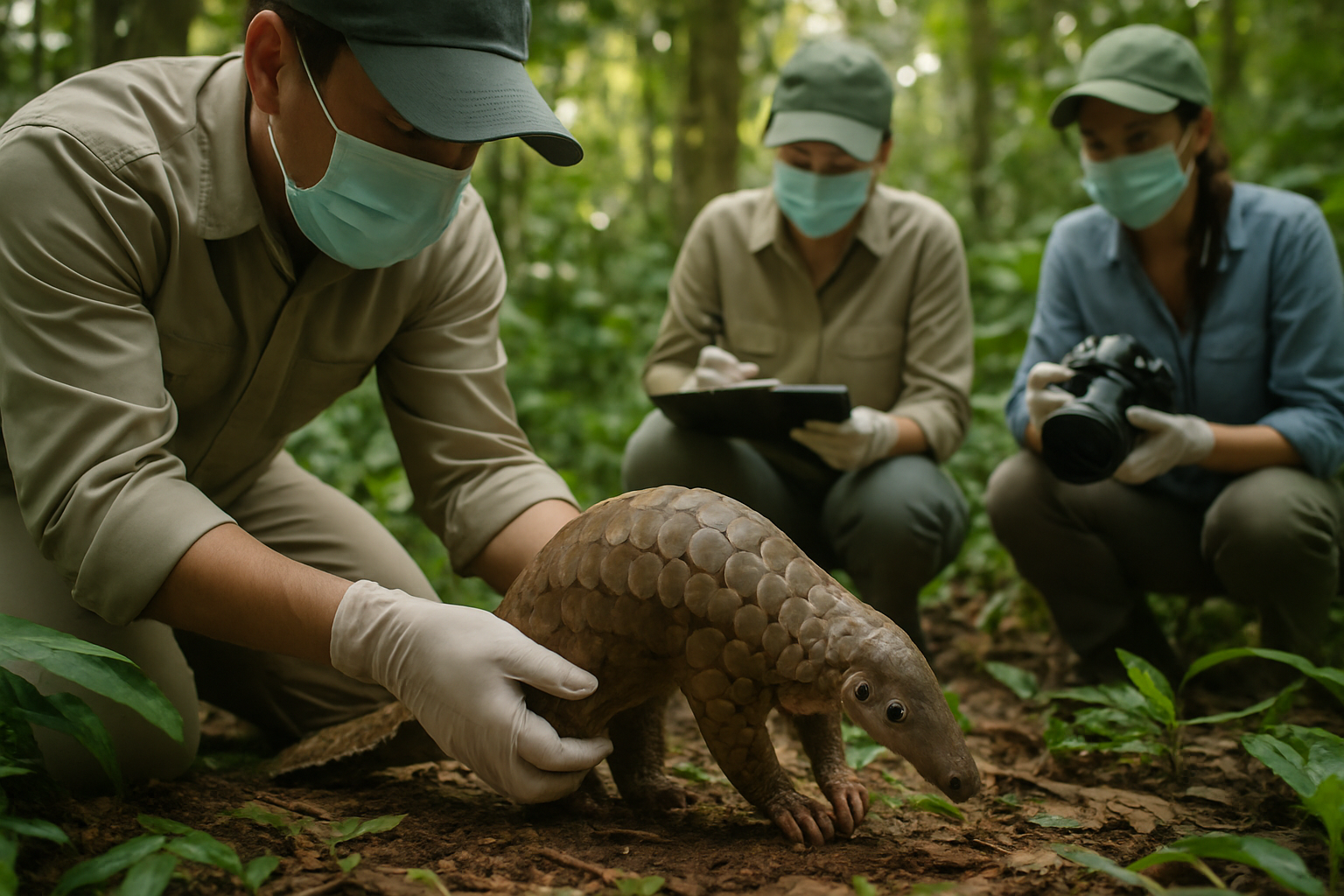
Indonesia's Balai Konservasi Sumber Daya Alam (BKSDA) Resort Sampit successfully rescued and released a young female pangolin back into its natural habitat in Central Kalimantan, demonstrating the country's strengthening wildlife conservation capabilities amid mounting global biodiversity pressures.
The rescue operation, conducted in collaboration with local communities in Kotawaringin Timur, represents a significant victory for endangered species protection in Indonesia. The Malayan pangolin (Manis javanica), one of the world's most trafficked mammals, was safely returned to its forest habitat following standard rehabilitation protocols.
Community-Based Conservation Success
The successful pangolin rescue highlights Indonesia's evolving approach to wildlife conservation, which increasingly emphasizes collaboration between government agencies and local communities. BKSDA Resort Sampit's partnership with area residents demonstrates how grassroots engagement can significantly enhance conservation outcomes.
Pangolins face severe threats across Southeast Asia due to illegal trafficking for their scales and meat. The International Union for Conservation of Nature lists all eight pangolin species as threatened with extinction, making every successful rescue operation critically important for species survival.
Regional Conservation Leadership
Indonesia's conservation efforts align with broader Southeast Asian environmental initiatives documented throughout February 2026. The country's approach combines traditional ecological knowledge with modern conservation science, creating sustainable models for biodiversity protection.
Recent developments include enhanced monitoring systems, community education programs, and strengthened enforcement against wildlife trafficking. These initiatives support Indonesia's commitment to protecting its extraordinary biodiversity while addressing climate change impacts on natural ecosystems.
Agricultural Sustainability Integration
Simultaneously, Indonesia is advancing sustainable agricultural practices that complement wildlife conservation efforts. In Aceh Tamiang, local officials are promoting responsible poultry farming through organized UMKM (Micro, Small, and Medium Enterprises) schemes designed to boost rural economies while maintaining environmental standards.
Deputy Chairman Syaiful Bahri of the Aceh Tamiang District People's Representative Council emphasizes systematic empowerment approaches that balance economic development with ecological protection. The initiative aims to develop egg-laying chicken farming as an alternative livelihood that reduces pressure on natural resources.
"Planned UMKM empowerment schemes provide sustainable economic alternatives for rural communities while supporting environmental conservation goals."
— Syaiful Bahri, Aceh Tamiang DPRK Deputy Chairman
Climate Change Adaptation Strategies
These conservation and agricultural initiatives occur within the broader context of accelerating climate change. January 2026 marked the hottest month in recorded history, continuing an 18-month streak of temperatures exceeding 1.5°C above pre-industrial levels. This unprecedented warming creates additional pressures on Indonesia's ecosystems and agricultural systems.
Indonesia's integrated approach addresses both immediate conservation needs and long-term climate adaptation requirements. By combining wildlife protection with sustainable agriculture, the country demonstrates how environmental and economic objectives can be aligned effectively.
International Conservation Context
Indonesia's efforts contribute to growing global momentum for comprehensive environmental protection. Recent international developments include marine conservation breakthroughs across multiple countries, renewable energy expansion initiatives, and innovative approaches to ecosystem service management.
The country's leadership in Southeast Asian conservation provides templates for other nations facing similar biodiversity challenges. Success factors include community engagement, technological integration, and economic incentives that make conservation financially viable for local populations.
Future Conservation Prospects
The pangolin rescue represents broader trends toward sophisticated conservation strategies that combine enforcement with community-based protection. Indonesia's National Amil Zakat Agency (Baznas) continues supporting rural communities through programs that reduce economic pressures contributing to wildlife trafficking.
Looking forward, Indonesia's conservation model emphasizes sustainable development that protects biodiversity while providing economic opportunities for local communities. This approach recognizes that effective conservation requires addressing underlying social and economic factors driving environmental degradation.
The successful pangolin release and ongoing agricultural sustainability initiatives demonstrate Indonesia's capacity to lead regional conservation efforts while adapting to climate change challenges. These coordinated efforts provide hope for preserving Southeast Asia's extraordinary biodiversity for future generations.