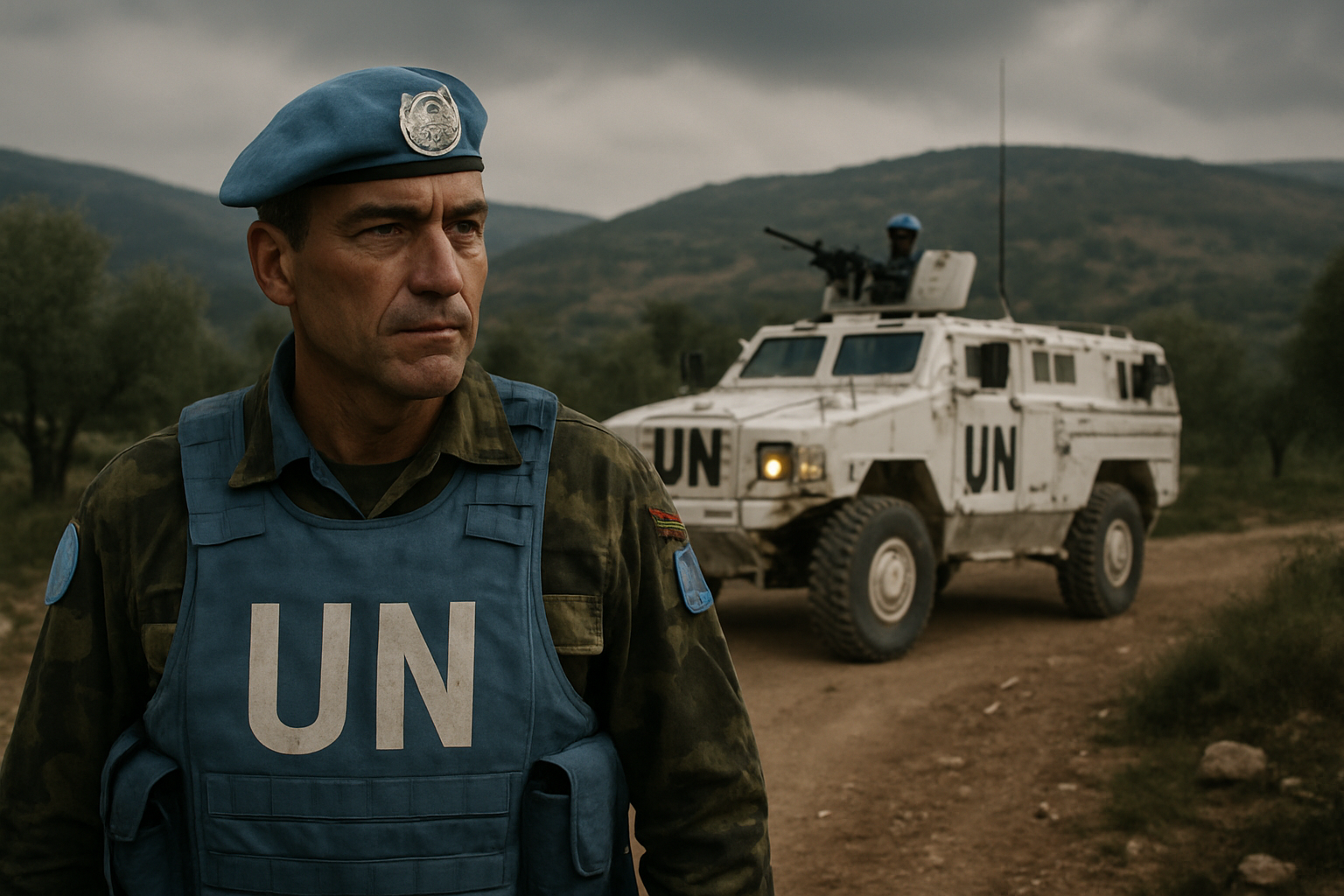
An Indonesian member of the United Nations Interim Force in Lebanon (UNIFIL) was killed Sunday evening when a projectile exploded at a peacekeeping position near the southern Lebanese village of Adchit al-Qusayr, marking another tragic reminder of the mounting dangers facing international peacekeepers in the volatile region.
The UN peacekeeping mission in Lebanon confirmed the death in a statement released early Monday morning, adding that another peacekeeper was critically injured in the incident. Indonesia's foreign ministry subsequently confirmed that the deceased was one of its citizens and that three additional Indonesian peacekeepers were wounded by "indirect artillery fire" in the vicinity of their contingent's position.
The incident occurred during a period of heightened tensions in the region, where Lebanese and Israeli forces have been engaged in periodic exchanges that have repeatedly tested the fragile ceasefire arrangements established in November 2024.
UNIFIL's Precarious Position
The United Nations Interim Force in Lebanon, established in 1978, has long operated in one of the world's most challenging peacekeeping environments. The force's mandate includes monitoring the cessation of hostilities, accompanying Lebanese Armed Forces in the south, and providing humanitarian assistance to the civilian population.
UNIFIL spokeswoman Kandice Ardiel described the current security situation as "precarious and volatile," emphasizing how the deteriorating conditions affect both peacekeepers and civilians who have been forced to evacuate from affected areas in southern Lebanon.
The Indonesian peacekeeper's death adds to a growing list of casualties among international forces stationed in Lebanon. Just weeks earlier, a UNIFIL base near Mais al-Jabal was struck, leaving one peacekeeper wounded in what officials described as an increasingly dangerous operational environment.
Regional Context and Escalating Tensions
The tragedy unfolds against the backdrop of a broader Middle Eastern crisis that has fundamentally altered the security landscape. The November 2024 US-French brokered ceasefire between Israel and Hezbollah, which had held for over a year, completely collapsed in March 2026 following the death of Iranian Supreme Leader Ali Khamenei and the subsequent regional escalation.
The breakdown has had devastating consequences for Lebanon, with over 800,000 people displaced and more than 826 killed according to Lebanese health authorities. The systematic targeting of medical personnel has been particularly alarming, with 26 paramedics killed and 51 wounded since March 2, including a devastating attack on the Burj Qalaouiyah healthcare center that killed 12 medical workers.
This systematic targeting of protected personnel under the Geneva Conventions has raised serious concerns about potential war crimes and the erosion of international humanitarian law in the region.
Indonesian Commitment to Peacekeeping
Indonesia has been a significant contributor to UN peacekeeping operations worldwide, with thousands of its military and police personnel serving in various missions across the globe. The country's commitment to international peace and security through multilateral institutions reflects its broader foreign policy principles of active participation in global governance.
Indonesian peacekeepers in Lebanon have been working alongside forces from other contributing nations to maintain stability in one of the world's most complex peacekeeping environments. Their duties include monitoring the Blue Line that demarcates the border between Lebanon and Israel, conducting patrols, and supporting humanitarian operations for affected civilians.
Challenges Facing International Peacekeepers
The death of the Indonesian peacekeeper highlights the extraordinary challenges facing UNIFIL forces operating in southern Lebanon. Unlike traditional peacekeeping missions deployed between consenting parties, UNIFIL operates in an environment where the fundamental conflict remains unresolved and where external actors continue to influence local dynamics.
The force has repeatedly found itself caught between opposing sides, with peacekeepers coming under fire from various directions. The current security environment has been complicated by the presence of sophisticated weaponry and the involvement of non-state actors with advanced military capabilities.
"The situation has become precarious and volatile, affecting not only our peacekeepers but also the civilian population that has been forced to evacuate from areas in southern Lebanon."
— Kandice Ardiel, UNIFIL Spokeswoman
International Response and Diplomatic Efforts
The international community has responded to the deteriorating situation with renewed diplomatic efforts. French President Emmanuel Macron has offered to host direct Israel-Lebanon talks in Paris, marking the first such negotiations since the November 2024 ceasefire collapse. These talks represent a potential pathway toward de-escalation, though the fundamental issues underlying the conflict remain unresolved.
UN Secretary-General António Guterres has described the regional situation as representing "the greatest test of multilateral cooperation in the modern era," emphasizing the template-setting implications for international crisis management in the 21st century.
The crisis has also strained traditional regional coalitions, with countries like Egypt warning of "comprehensive chaos" spreading across the region if the current trajectory continues.
Broader Regional Implications
The killing of the Indonesian peacekeeper occurs within the context of the most serious Middle Eastern crisis since the end of the Cold War. The regional conflict that began with the Iran-Israel confrontation in March 2026 has expanded to include multiple theaters, affecting global energy markets, aviation networks, and international supply chains.
The humanitarian toll has been staggering, with hundreds of thousands displaced across the region and civilian casualties mounting daily. The systematic targeting of medical personnel and journalists has raised particular concern among international human rights organizations.
Emergency shelters across Lebanon are at breaking point, with thousands of displaced families sleeping on Beirut's streets as traditional support systems—schools, religious institutions, and community centers—reach capacity.
The Future of International Peacekeeping
The Indonesian peacekeeper's death raises fundamental questions about the future of international peacekeeping in complex conflict environments. As UN forces increasingly operate in areas where traditional ceasefire agreements have broken down and where sophisticated military technologies are employed by various actors, the risks to peacekeeping personnel continue to escalate.
The incident underscores the need for renewed international commitment to protecting peacekeeping forces and ensuring they have the resources and mandate necessary to fulfill their critical mission. It also highlights the importance of addressing root causes of conflicts rather than simply managing their symptoms through peacekeeping deployments.
Looking Ahead
As investigations into the circumstances surrounding the Indonesian peacekeeper's death continue, the international community faces critical decisions about how to respond to the deteriorating security environment in Lebanon and the broader region.
The coming days and weeks will be crucial in determining whether diplomatic initiatives can succeed in containing the crisis or if the region will spiral toward an even broader and more devastating conflict. The stakes extend far beyond the Middle East, with implications for international law, global energy security, and the credibility of multilateral institutions in addressing 21st-century security challenges.
The sacrifice of the Indonesian peacekeeper serves as a stark reminder of the human cost of international service and the ongoing need for sustained international commitment to peace and security in regions where such values are under constant threat. As the UN flag flies at half-staff at UNIFIL headquarters, the international community must grapple with how to honor such sacrifices while working toward the sustainable peace that remains elusive in this troubled region.