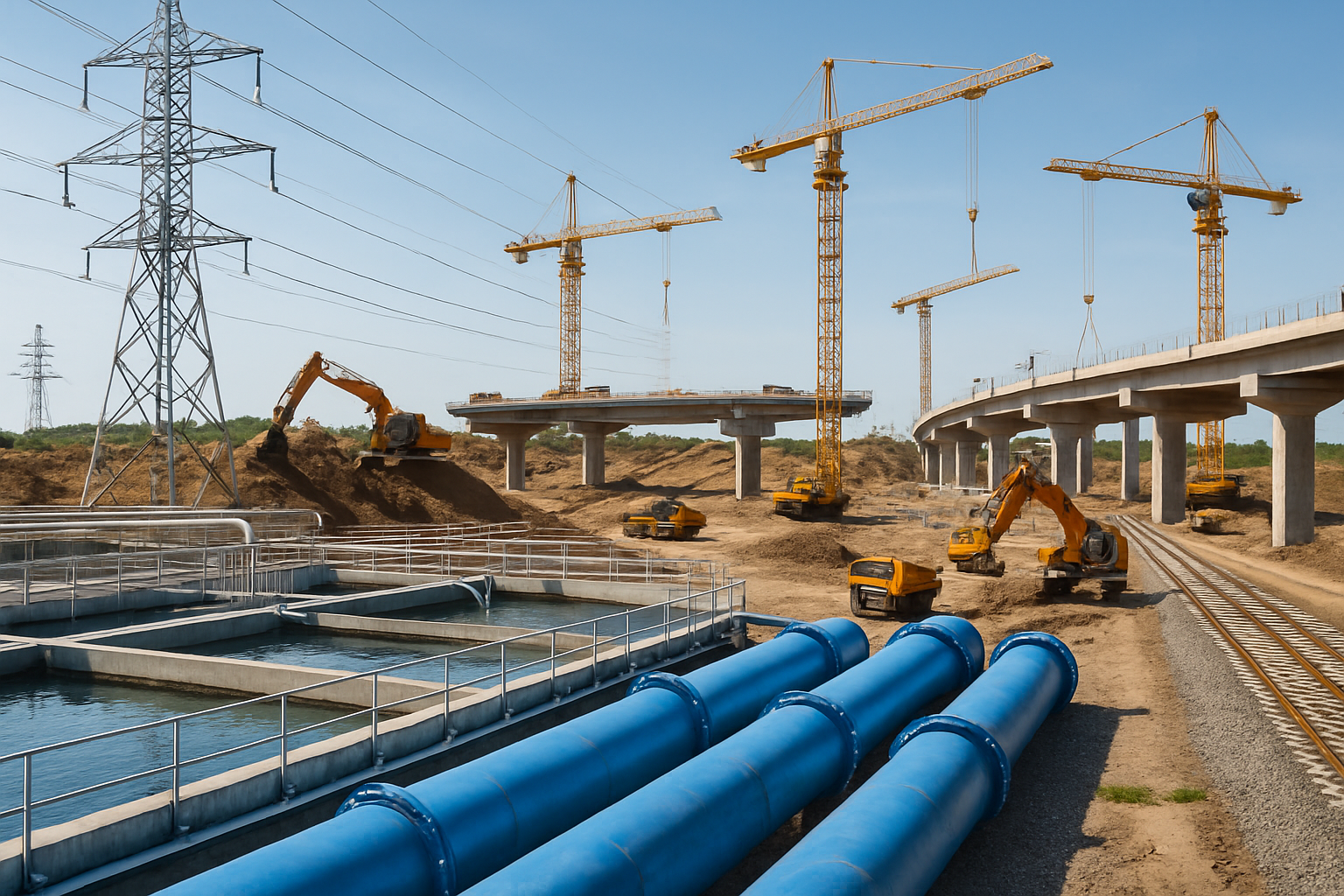
February 2026 has witnessed an unprecedented surge in infrastructure development projects across five nations, representing diverse approaches to modernization ranging from urban transformation and transportation connectivity to strategic defense infrastructure, as governments worldwide accelerate post-pandemic recovery through massive infrastructure investment.
The global infrastructure renaissance, now exceeding $570 billion in coordinated investment, gained significant momentum this month with major announcements spanning Cyprus, East Timor, India, and Papua New Guinea, each demonstrating unique solutions to regional development challenges while contributing to broader patterns of international cooperation and technological innovation.
Cyprus Advances Ambitious Urban Transformation
Cyprus leads the month's developments with Nicosia municipality's ambitious plan to transform the State Fair site in Engomi into the island's largest urban park. Mayor Charalambos Prountzos announced the €50 million project, which would convert the 240,000-square-metre fairground into a comprehensive green space featuring two lakes and vast parkland areas.
The project represents a sophisticated approach to urban development, with buildings occupying just 10% of the total site while the remaining 90% transforms into accessible parkland. The initiative includes renovation of eight exhibition pavilions from the original 55 structures, with pavilion restoration alone requiring €25 million investment.
"This represents the largest urban park development in Cyprus history, creating a green lung for Nicosia while preserving important architectural heritage."
— Mayor Charalambos Prountzos, Nicosia
The Cyprus project aligns with broader Mediterranean urban planning trends emphasizing sustainability and climate adaptation, building on successful models from Croatia's urban renewal initiatives and integrated approaches to heritage preservation within modern development frameworks.
East Timor Strengthens Market Infrastructure and International Partnerships
East Timor demonstrated coordinated infrastructure development through two significant initiatives launched in early February 2026. The IX Constitutional Government announced construction of new Municipal Markets in Ermera and Baucau, with groundbreaking ceremonies on February 6 and 12 respectively, under the Ministry of Commerce and Industry's comprehensive market modernization program.
Vice-Prime Minister and Coordinating Minister for Social Affairs Mariano Assanami Sabino presided over both ceremonies, representing Prime Minister Kay Rala Xanana Gusmão in emphasizing the strategic importance of market infrastructure for economic development and community welfare.
Simultaneously, East Timor secured crucial international partnership support through Japan's commitment to healthcare and educational infrastructure. Health Minister Élia A. A. dos Reis Amaral and Education Ministry Director-General Apolinário Serpa Rosa witnessed grant contract signings at the Japanese Embassy in Díli on February 10, securing funding for a health post in Ainaro municipality and a primary school in Ataúro.
Ambassador Yamamoto Yasushi formalized agreements with local organizations Haburas Dezenvolve Talento (HADEZTA) and Associação Hanoin ba Futuru, demonstrating Japan's sustained commitment to East Timor's development through targeted community-level interventions combining health, education, and capacity-building initiatives.
India Advances Strategic Transportation Infrastructure
India's infrastructure developments in February 2026 focus on strategic transportation connectivity, particularly the groundbreaking 35.76-kilometer underground railway line through the Siliguri Corridor. This strategically vital project addresses security and connectivity challenges in the narrow land bridge connecting India's northeast region to the rest of the country.
The underground railway, known locally as the "Chicken's Neck" project due to the corridor's geographic shape, utilizes modern tunneling technology to enhance secure and reliable connectivity to India's northeastern states. The project incorporates advanced engineering solutions designed to improve both civilian transportation efficiency and defense logistics capabilities.
The strategic significance extends beyond transportation, as the project aims to improve disaster response capabilities in the region while reducing vulnerability of this critical transport corridor. The underground design provides weather resistance and security advantages compared to traditional surface railways, particularly important given the corridor's strategic importance and challenging geography.
This initiative aligns with India's broader "Viksit Bharat 2047" vision and the $133 billion Union Budget infrastructure allocation, representing coordinated national development strategy emphasizing both economic development and strategic security through infrastructure modernization.
Papua New Guinea Balances Aviation Development with Funding Challenges
Papua New Guinea's infrastructure developments reveal both progress and persistent challenges in the Pacific nation's connectivity initiatives. PNG Air strengthened its fleet reliability through the arrival of new ATR aircraft, building on the airline's achievement of improved on-time performance as part of broader aviation infrastructure modernization.
However, Works Secretary Gibson Holemba simultaneously highlighted critical funding shortfalls affecting the Connect PNG program, designed to enhance connectivity between Papua New Guinea's remote communities and urban centers. The program's severe underfunding occurs despite its vital importance for national integration across PNG's challenging geography of 800+ languages distributed through remote mountain valleys and scattered islands.
The connectivity challenges reflect broader infrastructure dilemmas facing Pacific island nations, where geographic isolation and limited resources create complex prioritization decisions between urban infrastructure development and remote area connectivity essential for national unity and economic integration.
"Connect PNG remains severely underfunded despite its crucial role in national development and community integration across our diverse geography."
— Gibson Holemba, Works Secretary, Papua New Guinea
These developments occur within the broader Civil Aviation Development Investment Program (CADIP) Phase 3, building on successful upgrades to Mt. Hagen Kagamuga Airport under CADIP-1, demonstrating PNG's systematic approach to aviation infrastructure despite funding constraints.
Global Context and Strategic Significance
February 2026's infrastructure developments occur within an unprecedented global investment surge exceeding $570 billion, representing coordinated international recognition of infrastructure as essential foundation for post-pandemic recovery, climate adaptation, and sustainable economic development.
The projects demonstrate diverse financing approaches: Cyprus utilizes municipal investment for urban transformation; East Timor combines domestic government funding with Japanese international cooperation; India pursues strategic national infrastructure through substantial budget allocation; Papua New Guinea advances public-private partnerships while addressing funding gaps through international development programs.
Technology integration represents a common thread across all projects, with smart city systems, climate-resilient design, and digital monitoring becoming standard requirements for modern infrastructure development. Environmental sustainability considerations influence planning from initial design phases, reflecting evolved understanding of infrastructure's long-term environmental and economic impact.
Regional integration benefits extend beyond national borders, with projects supporting broader connectivity initiatives including Pacific aviation networks, South Asian strategic corridors, and international cooperation frameworks that strengthen both bilateral relationships and multilateral development objectives.
Implementation Challenges and Innovation Responses
The month's infrastructure developments highlight both common challenges and innovative solutions emerging across different regions. Financing coordination remains critical, with successful projects demonstrating sophisticated approaches combining domestic resources, international partnerships, and private sector collaboration.
Environmental compliance and community engagement represent increasingly important success factors, with projects incorporating extensive consultation processes and adaptive management strategies. Climate resilience considerations influence design standards, reflecting recognition that infrastructure must serve future climate conditions rather than historical patterns.
Supply chain management presents ongoing challenges, particularly for technology-intensive projects requiring specialized equipment and materials. International cooperation helps address these constraints through knowledge sharing, technical assistance, and coordinated procurement strategies.
Economic Multiplier Effects and Future Outlook
The infrastructure investments demonstrate significant economic multiplier effects through job creation, enhanced connectivity, and improved competitiveness. Cyprus's urban park creates permanent employment in maintenance and tourism while improving property values and quality of life. East Timor's market infrastructure supports local commerce and food security while the Japanese partnerships build institutional capacity for future development.
India's strategic railway investment improves regional economic integration while strengthening defense capabilities and disaster preparedness. Papua New Guinea's aviation improvements enhance tourism potential and business connectivity despite ongoing funding challenges requiring sustained international cooperation.
Looking forward, these February 2026 developments establish important precedents for infrastructure planning that balances immediate development needs with long-term sustainability requirements. The projects demonstrate infrastructure's evolution from simple physical construction toward integrated systems supporting economic development, environmental protection, and social connectivity simultaneously.
Success in these initiatives could catalyze additional investment and international cooperation, creating positive development cycles that strengthen both individual national capabilities and broader regional integration frameworks. The diverse approaches represented across these five nations provide valuable lessons for infrastructure development in different geographic, economic, and political contexts worldwide.
As global infrastructure investment continues accelerating through 2026, the February developments across Cyprus, East Timor, India, and Papua New Guinea demonstrate both the potential and challenges of coordinated international development, establishing foundations for sustainable prosperity through strategic infrastructure investment combined with environmental responsibility and international cooperation.