The global art exhibition landscape is experiencing a revolutionary transformation as cultural institutions embrace unconventional spaces and international collaboration to make heritage accessible to broader audiences, with Estonia's underground parking garage sculpture showcase and Spain's comprehensive Pakistani cultural exhibition leading this innovative movement.
In Tallinn, Estonia, the capital's Freedom Square has witnessed an unprecedented cultural experiment as a subterranean parking facility has been transformed into the country's first "drive-in" art exhibition. This groundbreaking initiative transforms mundane urban infrastructure into an accessible cultural space, allowing visitors to experience sculptures while navigating through the underground garage.
Redefining Exhibition Spaces
The Estonian drive-in exhibition represents a fundamental shift in how cultural institutions approach accessibility and space utilization. By converting an existing parking structure into an art venue, organizers have eliminated traditional barriers to cultural participation, including mobility constraints, weather dependencies, and the formal atmosphere that can intimidate first-time museum visitors.
This innovative approach aligns with global trends documented throughout February 2026, where cultural institutions worldwide are reimagining traditional exhibition formats. The parking garage exhibition demonstrates how everyday spaces can be elevated through artistic intervention, creating unexpected encounters between art and daily life.
"Cultural spaces should meet people where they are, not require them to adapt to institutional expectations."
— Cultural Innovation Specialist, Freedom Square Project
International Cultural Exchange Through Heritage Exhibitions
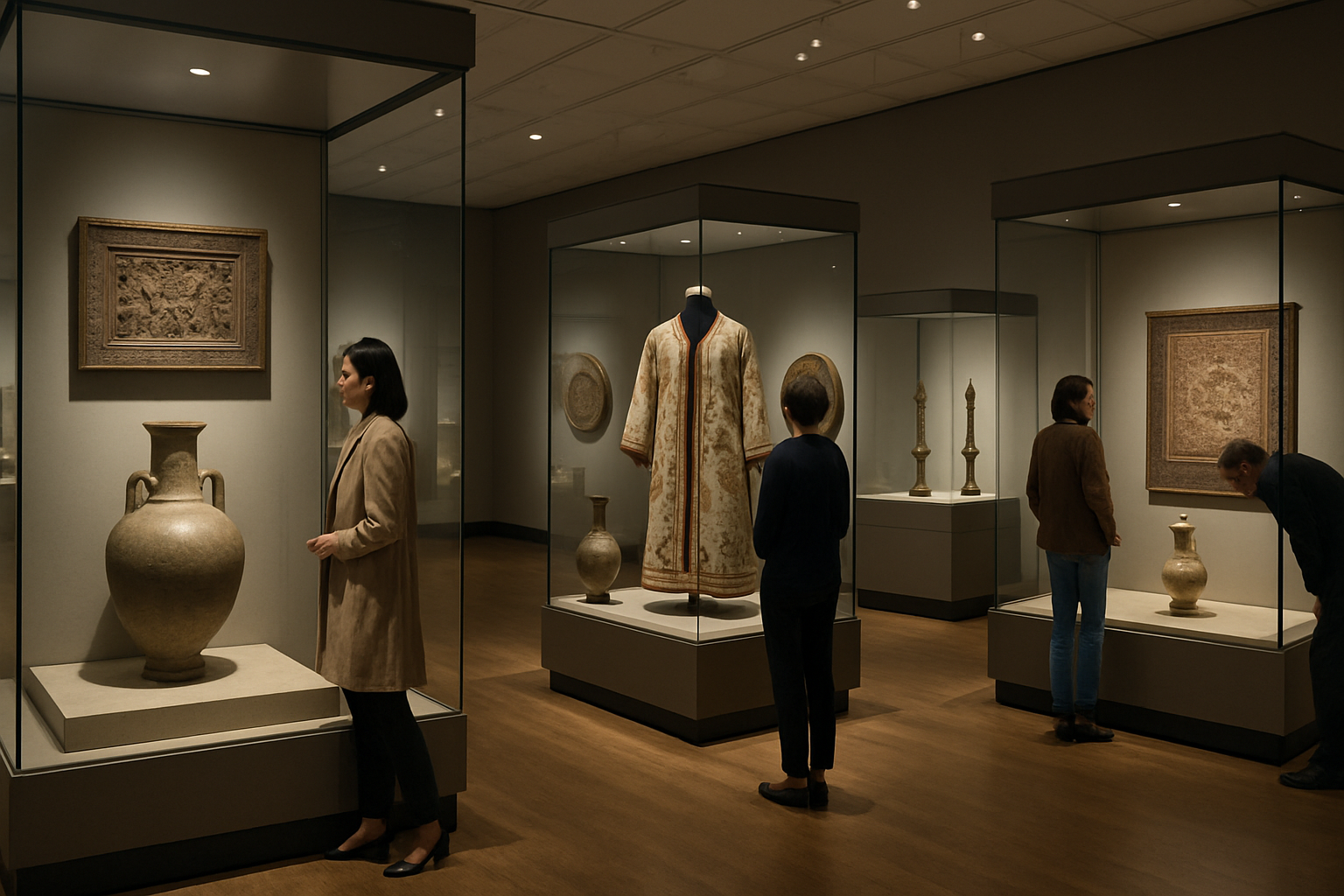
Simultaneously, Spain's Cádiz Province is hosting "Pakistan: A Culture to Discover," a comprehensive exhibition at El Claustro de Exposiciones Del Palacio Provincial. Inaugurated by First Vice President Juancho Ortiz, Councillor for Culture Vanesa Beltrán, and Pakistani Ambassador Dr. Zahoor Ahmed, this exhibition runs from February 17 to March 13, 2026, showcasing Pakistan's rich cultural heritage to European audiences.
The Pakistani cultural showcase demonstrates sophisticated cultural diplomacy, utilizing traditional exhibition formats to build cross-cultural understanding. Organized by the Embassy of Pakistan in Madrid in collaboration with the Cádiz Provincial Council, the exhibition represents months of careful curation and international cooperation.
Technology and Tradition Synthesis
Both exhibitions exemplify the successful integration of innovation with cultural preservation that has characterized the February 2026 Cultural Renaissance. Estonia's drive-in format utilizes existing urban infrastructure creatively, while Spain's Pakistani exhibition employs traditional museum spaces to present authentic cultural artifacts and contemporary expressions.
These initiatives build upon documented global trends where technology and innovation enhance rather than replace authentic cultural expression. From Singapore's WonderBot 2.0 heritage education system to Malta's Biennale securing international contemporary artists, cultural institutions worldwide are finding sophisticated ways to balance tradition with accessibility.
Economic and Social Impact
The economic implications of innovative exhibition strategies extend beyond immediate visitor revenue. Estonia's drive-in exhibition creates new tourism opportunities while requiring minimal infrastructure investment. The creative use of existing parking facilities demonstrates cost-effective cultural programming that could be replicated in urban centers globally.
Spain's Pakistani exhibition serves multiple economic functions, strengthening bilateral relations between Spain and Pakistan while positioning Cádiz as an international cultural destination. Such cultural exchanges often generate tourism revenue, educational partnerships, and long-term diplomatic benefits that extend far beyond the exhibition period.
Community Engagement and Accessibility
Both exhibitions prioritize community accessibility through different methodologies. Estonia's drive-in format accommodates visitors with mobility challenges, families with young children, and those preferring informal cultural encounters. The parking garage setting removes intimidation factors often associated with traditional museums while maintaining serious artistic presentation.
The Pakistani cultural exhibition in Cádiz focuses on educational outreach, providing Spanish audiences with comprehensive insights into Pakistani heritage through carefully curated displays. This approach builds cultural bridges through understanding and appreciation rather than mere spectacle.
Global Cultural Renaissance Context
These exhibitions contribute to the broader February 2026 Cultural Renaissance, a period characterized by unprecedented international cultural cooperation and innovative programming approaches. From Azerbaijan's role as a cultural bridge between Eastern and Western traditions to Rwanda's development as a creative innovation hub, nations worldwide are leveraging culture as strategic infrastructure.
The success factors identified across these initiatives include community engagement with authentic cultural expression, strategic technology integration enhancing traditional elements, economic viability through cultural tourism, and institutional support for sustainable cultural development. Both Estonia and Spain demonstrate these principles through different but complementary approaches.
Future Implications for Cultural Programming
The Estonian parking garage exhibition and Spanish Pakistani showcase establish important precedents for 21st-century cultural programming. They demonstrate that effective cultural initiatives can emerge from creative space utilization and international cooperation, respectively, while maintaining authentic artistic and heritage values.
These models suggest that future cultural development will increasingly emphasize accessibility, innovation, and international collaboration. As documented across multiple 2026 cultural initiatives, success requires balancing preservation with innovation, local authenticity with global appeal, and artistic excellence with community access.
The continuing global cultural renaissance indicates that February 2026 may represent a watershed moment when communities worldwide recognized culture as essential infrastructure equivalent to transportation, communication, and healthcare systems. Both the Estonian drive-in exhibition and Spanish Pakistani showcase contribute practical models for cultural development that honor the past while embracing future possibilities.