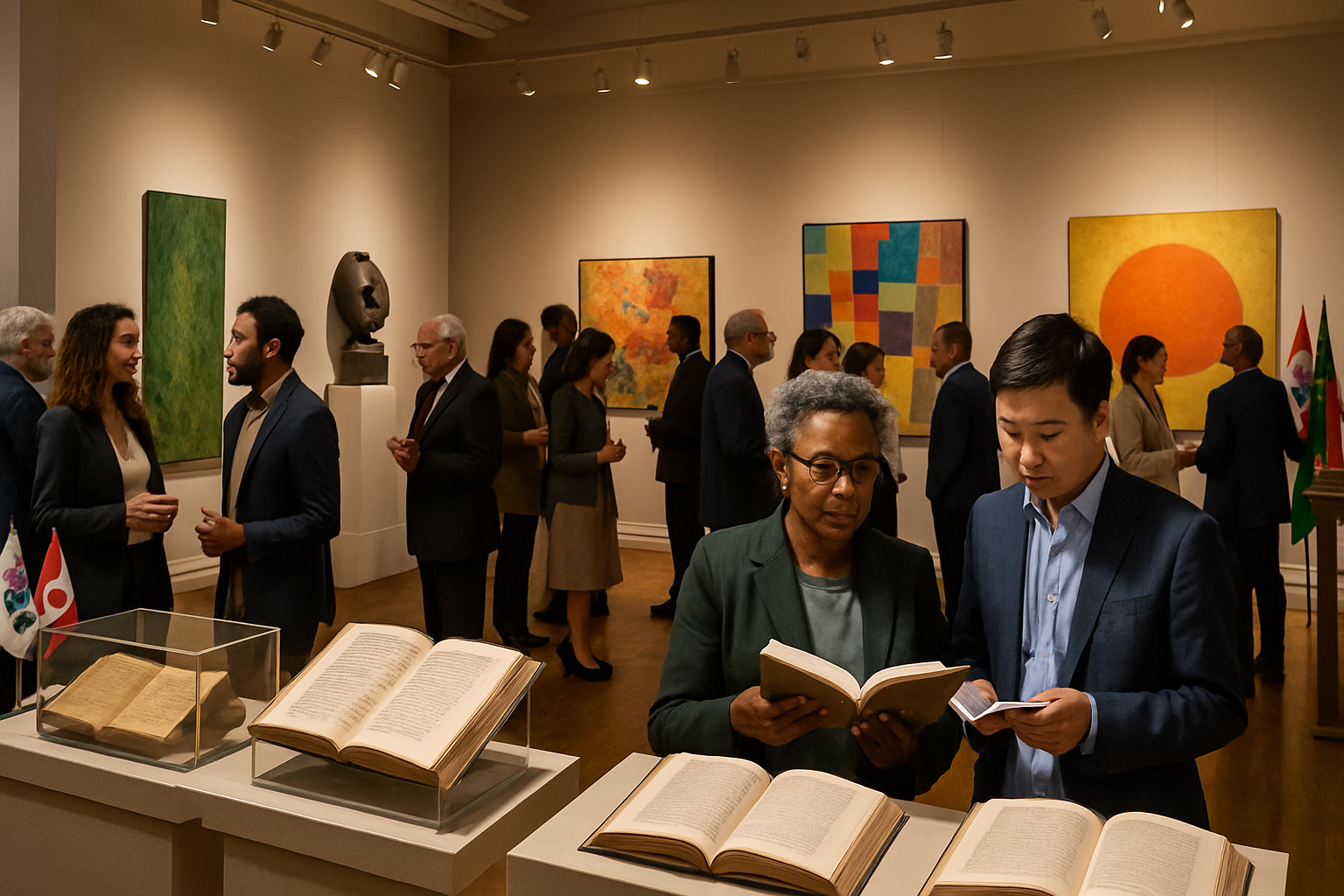
A transformative cultural renaissance is sweeping across Europe and beyond, with Bulgaria, France, Greece, and Romania leading an unprecedented wave of international artistic collaboration that demonstrates the enduring power of cultural exchange in fostering global understanding.
This remarkable cultural revival, building on the documented February 2026 Cultural Renaissance, represents a sophisticated synthesis of traditional heritage preservation and contemporary innovation that is reshaping how nations approach cultural diplomacy and artistic expression.
Bulgarian Cultural Bridge Building
In Sofia, the art world is witnessing a poignant moment as Tatyana Micheva, widow of renowned artist Petar Michev-Pedro, organized the first exhibition of her late husband's works since his death in 2024. The exhibition at Art Club "Diplomat" drew art connoisseurs, business leaders, and media professionals who celebrated Pedro's artistic legacy with standing ovations.
"It was very difficult for me, but he used to say that his paintings should reach people so they could enjoy them. Because each one was created with so much love – he never painted when he was sad," Tatyana Micheva shared with the audience during the opening ceremony alongside manager Lyuben Stanev.
Simultaneously, the Sofia City Art Gallery hosted an international celebration for Maria Konakchieva, a decades-long public relations director for the French Institute in Bulgaria. The elegant gathering, attended by Her Excellency Marie Dumoulin, French Ambassador to Bulgaria, cultural attaché Edouard Moreno, sculptor Axel Morel, and colleagues from Paris, exemplified the deep cultural ties between France and Bulgaria.
The celebration was further enhanced by the special arrival of Gilles Labor, former cultural attaché, who traveled from France specifically for the birthday celebration, demonstrating the lasting personal connections that underpin successful cultural diplomacy.
French Literary Theory Renaissance
France's contribution to the current cultural renaissance extends beyond diplomatic celebrations to groundbreaking intellectual discourse. Laura Mulvey, the pioneering theorist who first exposed the patriarchal unconscious of major Hollywood films in 1975, recently reflected on the unexpected fortune of her "male gaze" concept in an extensive interview with Mediapart.
"The 'great auteur' has gone out of fashion. We're seeing a shift toward more collaborative and diverse voices in cinema."
— Laura Mulvey, Film Theorist
Mulvey's observations on gender asymmetries in cinema and her militant films of the 1970s provide crucial context for understanding how cultural criticism has evolved to embrace more inclusive perspectives, reflecting broader changes in artistic expression and cultural values.
Greece's International Literary Presence
Greece is asserting its cultural leadership through strategic international participation, most notably at the London Book Fair 2026. From March 10-12, Greece will expand its global footprint at the Olympia London exhibition and conference center, showcasing the nation's rich literary heritage to international publishers, authors, and cultural institutions.
This participation represents more than commercial engagement; it demonstrates Greece's commitment to positioning its contemporary literary voices alongside its classical heritage, creating bridges between ancient wisdom and modern artistic expression.
Romania's Literary Tourism Innovation
Romania is pioneering an innovative approach to cultural preservation through its ambitious plan to transform the border region between Ireland and Northern Ireland into the world's first UNESCO Literary Region. This groundbreaking initiative seeks to rebrand an area once associated with smugglers, paramilitaries, and conflict as "Northern Ireland's Literary Territories."
The initiative represents a profound transformation of historical narrative, turning landscapes once marked by division into spaces of literary pilgrimage and cultural celebration. This approach demonstrates how cultural programming can serve as a healing force, transforming communities while preserving their complex histories.
Economic and Social Impact
The current cultural renaissance extends far beyond artistic appreciation, generating substantial economic multiplier effects through tourism development, creative industry employment, and enhanced international relationships. Countries investing in authentic cultural programming report significant returns through enhanced global recognition, strengthened diplomatic ties, and positioning as attractive cultural investment destinations.
Bulgaria's international exhibitions and French cultural celebrations create lasting infrastructure including performance networks, artistic collaborations, and community organizations that remain active year-round. Greece's London Book Fair participation builds long-term publishing relationships that extend far beyond the immediate event, while Romania's literary tourism initiative promises to transform entire regional economies.
Technology and Tradition Synthesis
A defining characteristic of the current cultural renaissance is the sophisticated integration of technological innovation with traditional cultural forms. Rather than competing with authentic expression, digital tools are being leveraged to amplify and preserve cultural heritage while making it accessible to global audiences.
The success of these initiatives demonstrates that technology serves most effectively as an enhancement tool rather than a replacement for human cultural connections. This mature approach to cultural innovation allows communities to maintain ownership of their traditions while sharing them with international audiences.
International Cooperation Framework
The coordination evident across these diverse cultural initiatives suggests a new model for international cultural cooperation. Unlike previous approaches that often resulted in cultural homogenization, the current renaissance emphasizes authentic local expression within frameworks that facilitate global sharing and understanding.
This approach enables smaller nations and regions to compete effectively in global cultural markets through creative programming and authentic expression, rather than attempting to imitate established cultural centers. The success of Bulgaria's intimate art exhibitions alongside Greece's major international fair participation demonstrates that cultural impact doesn't require massive scale – it requires authenticity and strategic vision.
Community-Centered Programming
Perhaps most significantly, the current cultural renaissance prioritizes community engagement over elite cultural consumption. From Bulgaria's emotional art openings to Romania's grassroots literary tourism development, these initiatives demonstrate that successful cultural programming must serve local communities first while building bridges to international audiences.
This community-centered approach ensures sustainability by creating genuine local investment in cultural preservation and development. When communities feel ownership of their cultural initiatives, they become more resilient and more attractive to international partners seeking authentic collaborative relationships.
Looking Forward: The Future of Cultural Diplomacy
The developments across Bulgaria, France, Greece, and Romania provide practical templates for 21st-century cultural stewardship that successfully synthesizes tradition with innovation, local authenticity with global cooperation, and economic viability with cultural integrity.
These initiatives demonstrate that culture serves as essential infrastructure equivalent to transportation, communication, and healthcare systems – fundamental to human flourishing and international peace. The success across such diverse contexts provides evidence that thoughtful, community-centered programming can create lasting positive impacts that honor the past while embracing future possibilities.
As this cultural renaissance continues to unfold, it offers hope that authentic artistic expression, meaningful international collaboration, and respect for cultural heritage can provide pathways through our interconnected world's challenges while celebrating the diversity that makes human culture so extraordinarily rich.