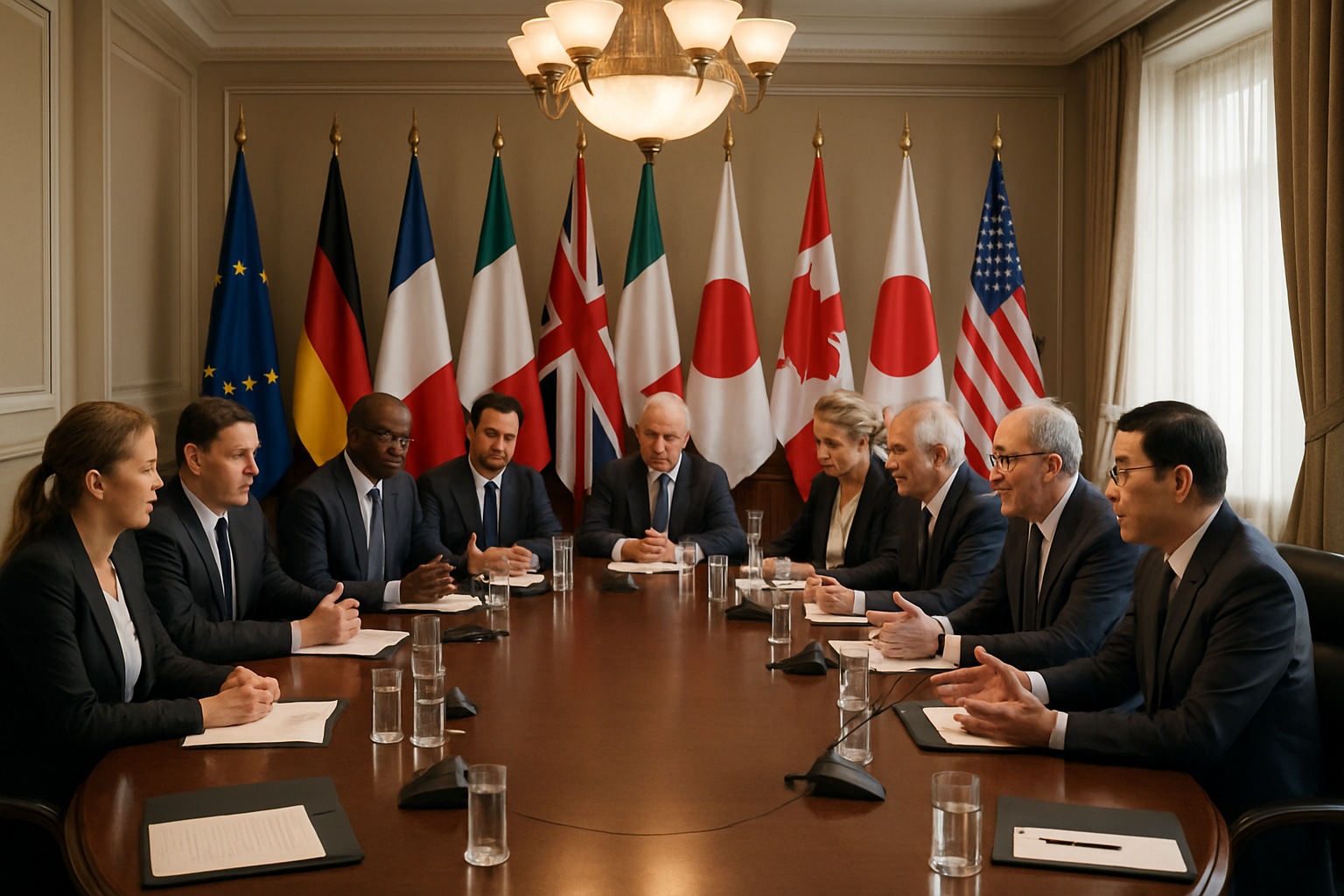
International diplomatic activity reached a crescendo this week as nations across continents engaged in high-level consultations, strategic partnerships, and multilateral cooperation initiatives, signaling a decisive shift toward collaborative approaches to global challenges.
The latest developments span from Central Asia to the Mediterranean, reflecting a renewed emphasis on diplomatic engagement at a time when global tensions demand innovative solutions to complex international problems.
Afghanistan-Oman Relations Strengthen Through Regional Dialogue
In a significant development for regional stability, Afghanistan's Foreign Minister Amir Khan Muttaqi engaged in productive telephone discussions with Oman's Foreign Minister Badr bin Hamad Al Busaidi. The conversation focused on bilateral relations between the two nations and recent regional developments, marking an important diplomatic exchange in the current geopolitical landscape.
Both foreign ministers described the latest developments in their respective regions as crucial to understanding the evolving dynamics of Middle Eastern and Central Asian politics. The dialogue represents Afghanistan's continued engagement with regional partners despite the complex international environment it faces.
"These consultations reflect our commitment to maintaining positive diplomatic relations and addressing regional challenges through dialogue."
— Senior Diplomatic Source
This engagement comes at a particularly significant time as Afghanistan seeks to maintain constructive relationships with neighboring countries while navigating its current international position. Oman, known for its diplomatic neutrality and mediation expertise, continues to play a valuable role in regional diplomacy.
Azerbaijan Emerges as Central Hub for International Engagement
Azerbaijan demonstrated its growing importance as a diplomatic crossroads with two significant high-level engagements this week. The country received correspondence from Sudan's Transitional Sovereignty Council President Abdel-Fattah Al-Burhan, who sent a formal letter to Azerbaijan President Ilham Aliyev, strengthening ties between the two nations.
In a more prominent development, President José Ramos-Horta of Timor-Leste arrived in Azerbaijan for an official visit, highlighting the country's expanding global diplomatic footprint. This visit represents a significant engagement between the South Caucasus region and Southeast Asia, demonstrating Azerbaijan's role as a bridge between different geographical and political spheres.
The presence of high-ranking officials from both Africa and Asia in Baku underscores Azerbaijan's strategic positioning as a hub for international dialogue. The country's energy resources, geographic location, and diplomatic initiatives have made it an attractive partner for nations seeking to diversify their international relationships.
Monaco Expands Diplomatic Network with Strategic Accreditations
Monaco reinforced its position as a significant player in international diplomacy through the accreditation of four new ambassadors and the reception of Quebec's newly appointed Delegate General. The ceremony, marked by a working lunch at the prestigious Hôtel Hermitage, demonstrated the principality's commitment to expanding its global diplomatic presence.
Isabelle Berro-Amadéi, Minister-Counsellor for External Relations and Cooperation, hosted the diplomatic gathering, receiving credentials from ambassadors representing diverse regions: Rubén Estuardo Najera Contreras from Guatemala, Sanjeev Kumar Singla from India, Sir Thomas Drew KCMG from the United Kingdom, and Dr Teeko Tozay Yorlay from Liberia.
The simultaneous accreditation of representatives from Latin America, Asia, Europe, and Africa reflects Monaco's strategic approach to maintaining relationships across all major global regions. This diplomatic diversity enables the principality to serve as a neutral meeting ground for international dialogue.
Additionally, Henri-Paul Rousseau presented his letters of appointment as Quebec's new Delegate General, having met with the Sovereign earlier that morning. This appointment strengthens the cultural and economic ties between Monaco and the French-speaking region of Canada, demonstrating the principality's attention to sub-national diplomatic relationships.
Multilateral Cooperation in an Era of Global Challenges
These diplomatic developments occur against the backdrop of significant international challenges that require coordinated responses. The historical context provided by ongoing regional tensions, economic uncertainties, and security concerns makes this diplomatic activity particularly noteworthy.
Recent memory includes complex negotiations around various international crises, where traditional diplomatic frameworks have been tested. The current wave of bilateral and multilateral engagement suggests that nations are seeking to strengthen their diplomatic foundations ahead of potential future challenges.
Regional Security and Economic Cooperation
The diplomatic engagements reflect broader trends in international relations where nations are prioritizing relationship-building as a foundation for addressing security and economic challenges. Afghanistan's regional outreach, Azerbaijan's positioning as an international hub, and Monaco's diversified diplomatic portfolio all contribute to a more interconnected global diplomatic network.
For Afghanistan, maintaining positive relationships with countries like Oman provides important channels for regional dialogue and potential cooperation on issues ranging from trade to humanitarian concerns. Oman's historical role as a mediator in regional disputes makes this relationship particularly valuable.
Azerbaijan's hosting of leaders from different continents demonstrates the country's growing confidence in its international role. The visits from Sudan and Timor-Leste officials suggest that Azerbaijan is successfully positioning itself as an accessible and reliable partner for nations seeking to expand their diplomatic and economic relationships.
The Strategic Value of Small-State Diplomacy
Monaco's approach to international relations exemplifies the strategic value that smaller states can provide in the global diplomatic ecosystem. By maintaining relationships with a diverse array of countries, Monaco creates opportunities for informal dialogue and relationship-building that might be more difficult to achieve in larger, more formal diplomatic settings.
The principality's ability to host diplomatic representatives from countries as diverse as Guatemala, India, the United Kingdom, and Liberia in a single ceremony demonstrates the continuing relevance of neutral, welcoming diplomatic venues in international relations.
Looking Forward: Implications for International Cooperation
These recent diplomatic developments suggest several important trends in contemporary international relations. First, there is a clear emphasis on maintaining and expanding bilateral relationships even amid broader global tensions. Second, countries are seeking to diversify their diplomatic portfolios to reduce dependence on any single relationship or regional bloc.
Third, the role of smaller and medium-sized countries as diplomatic facilitators and neutral venues continues to be valued by the international community. Afghanistan's engagement with Oman, Azerbaijan's hosting of diverse visitors, and Monaco's multi-regional approach all contribute to a more flexible and resilient global diplomatic network.
The timing of these diplomatic initiatives suggests that nations are preparing for a period that may require enhanced international cooperation. By strengthening bilateral relationships now, countries are building the foundation for potential future collaboration on challenges that may require multilateral solutions.
Conclusion: A More Connected Diplomatic World
The convergence of these diplomatic activities across different regions and involving countries of varying sizes and influence levels demonstrates the continued vitality of international diplomacy. As global challenges become increasingly complex and interconnected, the value of maintaining strong diplomatic relationships becomes ever more apparent.
Whether through Afghanistan's regional consultations, Azerbaijan's positioning as an international meeting point, or Monaco's expansion of its diplomatic network, these developments contribute to a more connected and potentially more cooperative international system. The success of these diplomatic initiatives may well influence how nations approach international cooperation in the months and years ahead.