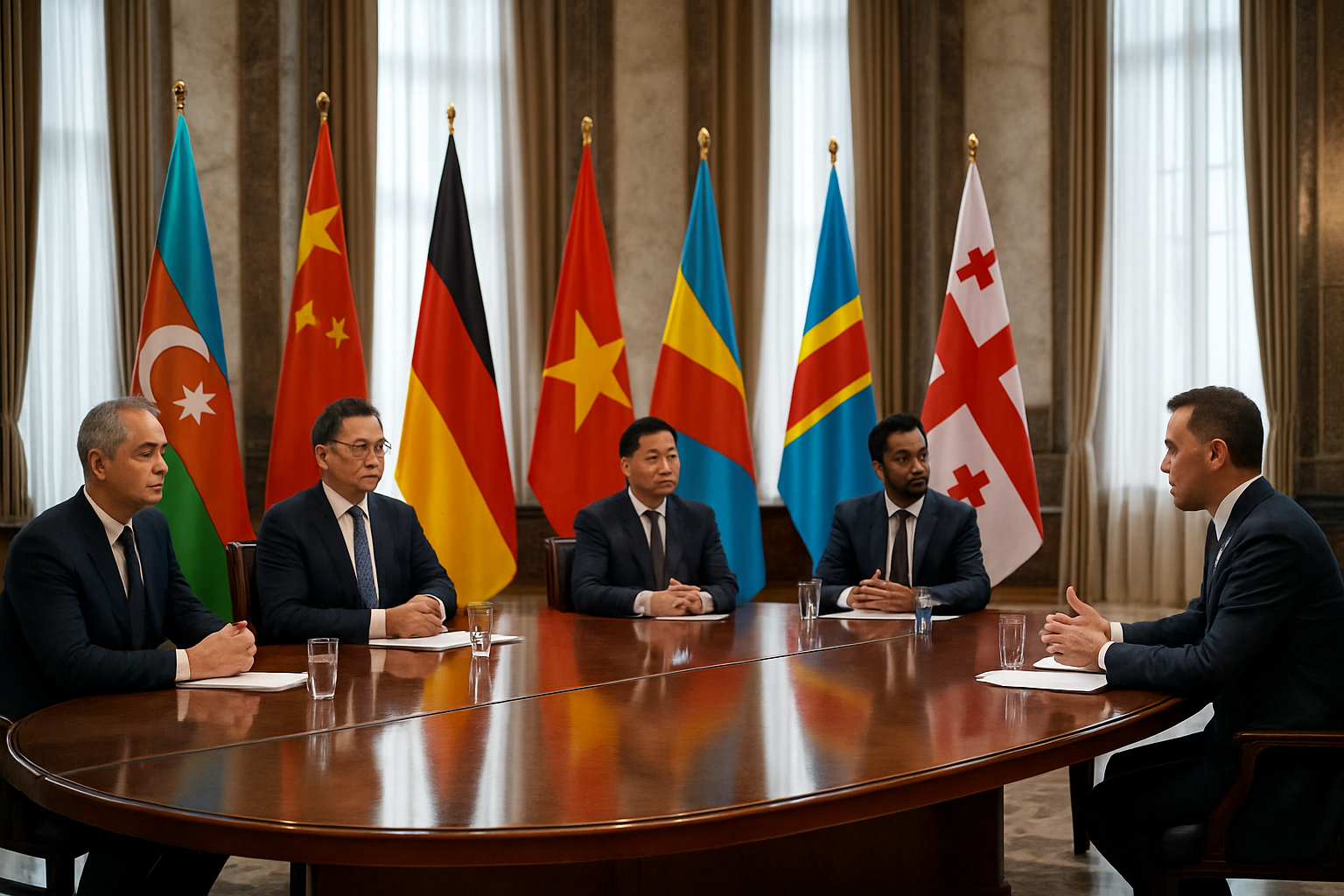
International diplomatic activity surged across multiple continents this week, with key developments in bilateral relations between Azerbaijan and Germany, groundbreaking strategic dialogue between China and Vietnam, and new media cooperation frameworks between the Democratic Republic of Congo and China, all occurring against the backdrop of ongoing global tensions and shifting geopolitical dynamics.
Azerbaijan-Germany Relations Strengthen Amid Regional Complexities
President Ilham Aliyev of Azerbaijan held a significant telephone conversation with German Federal Chancellor Friedrich Merz on March 17, marking another milestone in the evolving relationship between the two nations. This diplomatic engagement occurs within a complex regional context, as Azerbaijan has positioned itself as a crucial energy coordinator and diplomatic bridge between Europe and Asia.
The timing of this high-level communication is particularly noteworthy given Azerbaijan's strategic importance in European energy security. With the country serving as a key alternative to Russian energy supplies through initiatives like the Shah Deniz gas field development, which has attracted $3.4 billion in BP investment, Azerbaijan's diplomatic relationships with European partners have taken on increased significance.
Historical context reveals that Azerbaijan has been systematically building its diplomatic capital across multiple regions. Recent memory analysis shows the country has hosted visits from leaders ranging from Sudan's Transitional Sovereignty Council President to Timor-Leste's President José Ramos-Horta, highlighting Baku's role as a diplomatic crossroads connecting Africa, Asia, and the South Caucasus region.
China-Vietnam "3+3" Strategic Dialogue Achieves Breakthrough
In a significant development for regional security cooperation, Chinese Foreign Minister Wang Yi announced that China and Vietnam reached "broad consensus" at the first ministerial meeting of the China-Vietnam "3+3" strategic dialogue on diplomacy, defense, and public security held in Hanoi on March 16.
This new diplomatic framework represents an evolution in China's approach to regional partnerships, moving beyond traditional bilateral economic cooperation to encompass comprehensive security dialogue. The "3+3" format, covering three key areas of state interaction, signals both nations' commitment to addressing complex regional challenges through institutionalized cooperation.
Wang Yi's assessment of the dialogue as achieving "broad consensus" suggests substantial progress on previously contentious issues. Given Vietnam's strategic position in Southeast Asia and its complex relationship with China regarding South China Sea disputes, this diplomatic breakthrough could have far-reaching implications for regional stability.
The dialogue occurs within the context of China's broader diplomatic initiatives across Asia-Pacific. Recent developments have seen China expanding zero-tariff access to 53 African countries starting May 1, 2026, as part of a comprehensive approach to South-South cooperation that may serve as a model for similar arrangements with Asian partners.
DRC-China Media Cooperation Launches New Phase
The Democratic Republic of Congo and China launched an innovative diplomatic initiative through the first DRC-China Media Forum, organized jointly by the Congolese Press Agency (ACP) and China's Xinhua news agency from March 18-19 in Kinshasa. This represents a sophisticated approach to public diplomacy that extends beyond traditional government-to-government relations.
According to ACP Director General Bienvenu-Marie Bakumanya, the forum aims to "transform the national and international narrative around the partnership between the two countries." This media-focused diplomatic strategy reflects both nations' understanding that modern international relations require comprehensive communication strategies that reach beyond official diplomatic channels.
The DRC-China partnership has significant economic dimensions, particularly in critical minerals extraction where both countries see mutual benefit. The DRC's vast mineral wealth, including substantial copper and cobalt reserves essential for renewable energy technologies, positions it as a crucial partner in global supply chain diversification efforts.
Regional Context and Global Implications
These diplomatic developments unfold against a complex international backdrop. Memory analysis reveals that March 2026 has been characterized by unprecedented global tensions, including the ongoing Middle East crisis that has led to massive international evacuations and energy market disruptions affecting global oil prices and aviation networks.
The Azerbaijan-Germany dialogue occurs as European nations seek to diversify energy partnerships and strengthen ties with reliable suppliers outside traditional frameworks. Germany's engagement with Azerbaijan reflects broader European strategic autonomy initiatives that have gained urgency amid geopolitical volatility.
Similarly, the China-Vietnam breakthrough comes at a time when regional powers are seeking stable frameworks for cooperation amid broader great power competition. The institutionalization of the "3+3" dialogue suggests both nations recognize the need for sustained diplomatic mechanisms to manage complex regional dynamics.
Evolving Diplomatic Methodologies
The variety of diplomatic approaches represented in these developments illustrates the evolution of 21st-century international relations. From traditional bilateral consultations between Azerbaijan and Germany to innovative trilateral security dialogue formats like China-Vietnam "3+3" discussions, and creative public diplomacy through media forums, nations are experimenting with diverse engagement methods.
This diversification of diplomatic tools reflects the complexity of contemporary global challenges that require multiple approaches simultaneously. Economic cooperation, security dialogue, energy partnerships, and public diplomacy must all function in concert to address the multifaceted nature of modern international relations.
Historical precedent suggests that successful diplomatic initiatives during periods of global tension often become templates for broader international engagement. The current period of experimentation with diplomatic formats may establish new norms for international cooperation in an increasingly multipolar world.
Strategic Implications and Future Prospects
The convergence of these diplomatic activities suggests a broader trend toward proactive relationship-building as nations prepare for an extended period of global uncertainty. Countries are diversifying their diplomatic portfolios, reducing dependence on single relationships or regional blocs while strengthening bilateral foundations that could support future multilateral solutions.
For Azerbaijan, continued engagement with major European partners like Germany reinforces its position as an energy bridge between East and West. The country's diplomatic strategy of maintaining relationships across different geopolitical spheres provides options during periods of regional tension.
The China-Vietnam dialogue represents a potential model for managing great power relationships in regions where multiple interests intersect. If successful, this framework could influence similar arrangements between China and other Southeast Asian partners, contributing to regional stability.
The DRC-China media initiative demonstrates how middle powers can leverage partnership opportunities with major powers while maintaining their sovereignty and developing their own strategic narratives. This approach may inspire similar initiatives across Africa and other regions seeking to balance engagement with major powers against maintaining strategic autonomy.
Contemporary Diplomatic Innovation
These developments collectively illustrate the dynamic nature of contemporary diplomacy, where traditional formats coexist with innovative approaches designed to address 21st-century challenges. The emphasis on sustained relationship-building, practical cooperation, and creative engagement methods reflects lessons learned from previous diplomatic successes and failures.
The success or failure of these initiatives will likely influence broader diplomatic approaches worldwide, as the international community seeks effective mechanisms for cooperation in an increasingly complex and interconnected world. The coming months will reveal whether these diplomatic investments translate into concrete progress on regional challenges and global cooperation.
As nations navigate competing priorities of sovereignty maintenance, economic development, and security cooperation, the diplomatic innovations currently underway may establish new precedents for international engagement in the multipolar era that appears to be emerging from current global transitions.