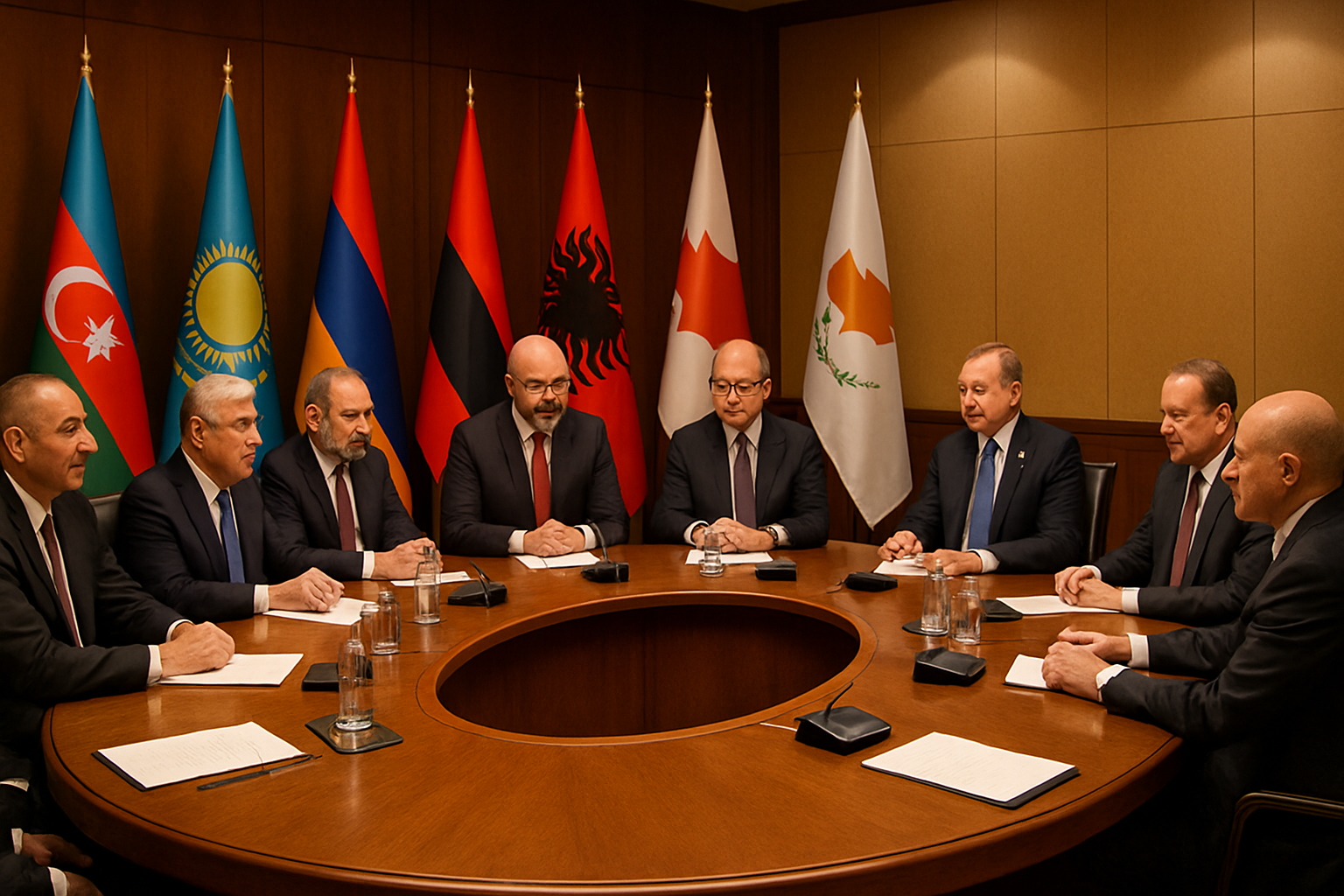
February 2026 has witnessed a remarkable surge in diplomatic activity across multiple regions, with Azerbaijan and Kazakhstan expanding bilateral cooperation, Armenia and Albania strengthening political dialogue, and Cyprus actively pursuing UN-mediated reunification talks, reflecting a broader pattern of international engagement and multilateral diplomacy.
Azerbaijan-Kazakhstan Strategic Partnership Deepens
The diplomatic meeting held in Almaty has marked a significant milestone in Azerbaijan-Kazakhstan relations, with both nations expressing commitment to expanding cooperation across multiple sectors. This development builds upon a foundation of shared cultural heritage and common strategic interests in the Central Asian and Caucasus regions.
The Almaty discussions represent more than routine bilateral engagement. According to sources familiar with the meetings, both countries are exploring enhanced cooperation in energy, transportation, and economic development. This aligns with Azerbaijan's broader strategy of positioning itself as a key regional hub connecting Europe and Asia.
Energy and Economic Cooperation Framework
The US Chamber of Commerce has recognized Azerbaijan as a key regional energy coordinator with strategic East-West hub positioning. Current US-Azerbaijan trade stands at $74.9 million annually, with significant potential for expansion given Azerbaijan's $27.2 billion in global exports. The Kazakhstan partnership could facilitate broader Central Asian integration, creating new corridors for energy and trade.
Recent developments include the Center of Analysis of International Relations (CAIR) hosting the "C6: One Region, One Shared Future – Strengthening Strategic Dialogue" conference in Baku. CAIR Chairman Farid Shafiyev declared that "Central Asia is not merely a neighbor for Azerbaijan, but a natural partner," emphasizing the strategic importance of these relationships.
Armenia-Albania Political Dialogue Activation
In a separate but equally significant development, Armenia's Deputy Foreign Minister Robert Abisoghomonyan met with Albania's Deputy Minister for Europe and Foreign Affairs, Megjid Finoi, in Geneva. This high-level consultation represents a conscious effort to activate political dialogue and consultations between the two nations.
The Geneva meeting, conducted on the sidelines of broader international discussions, demonstrates Armenia's continued commitment to expanding its diplomatic network beyond traditional partnerships. Albania, as a NATO member and EU candidate country, offers Armenia important connections to Euro-Atlantic institutions.
Balkan-Caucasus Diplomatic Bridge
The Armenia-Albania dialogue is particularly noteworthy given the historical context of both nations navigating complex regional relationships. Albania's support for various international initiatives, including its participation in peacekeeping missions and its "special relationship with the US," provides a valuable diplomatic perspective for Armenian foreign policy planning.
This engagement reflects a broader pattern of smaller nations seeking to diversify their diplomatic partnerships and create new avenues for international cooperation. The consultation mechanism established between the two countries could serve as a model for similar arrangements in other regions.
Cyprus Pursues UN-Mediated Reunification
Perhaps the most ambitious diplomatic initiative comes from Cyprus, where President Nikos Christodoulides has written directly to UN Secretary-General António Guterres, seeking a meeting in the second half of March. This direct appeal represents a significant escalation in Cyprus's efforts to restart reunification talks.
Christodoulides is pushing back against suggestions that Cyprus's EU Council Presidency in the first half of 2026 or upcoming parliamentary elections could delay the resumption of reunification negotiations. In his letter to Guterres, the Cypriot president made clear that neither the EU presidency nor the electoral calendar would affect Cyprus's commitment to immediate resumption of substantive negotiations.
UN Framework and International Support
The letter serves a dual purpose: arranging a face-to-face meeting with Guterres and demonstrating that the reasons cited by UN envoy María Ángela Holguín for not convening an informal multilateral meeting do not hold water. This direct diplomatic approach reflects Cyprus's frustration with the pace of international engagement on the reunification issue.
The Cyprus initiative gains additional significance in the context of broader regional diplomatic activity. Recent memory from our analysis shows that Greece and Turkey concluded a historic diplomatic breakthrough in February 2026, with Prime Minister Kyriakos Mitsotakis telling President Recep Tayyip Erdogan of a "window of opportunity" for Cyprus solution, citing UN Secretary-General Guterres initiatives creating conditions for dialogue restart.
"It is time to lift any threat that comes from the past in our relations. If not now, when?"
— Kyriakos Mitsotakis, Greek Prime Minister, addressing Turkey on February 11, 2026
Broader Context of International Diplomatic Relations
These developments occur against the backdrop of significant international diplomatic shifts in early 2026. The Trump administration's Board of Peace initiative, involving 27 member nations and $17 billion in Gaza reconstruction commitments, has created new templates for international cooperation while also generating controversy about traditional multilateral frameworks.
European strategic autonomy discussions have accelerated, with unprecedented nuclear deterrent conversations between France and Germany marking a potential shift in transatlantic relations. The February 2026 Munich Security Conference, themed "Era of Disruptive Politics," reflected the most sobering assessment of international order challenges in the conference's 62-year history.
Regional Integration Patterns
The diplomatic activities across Azerbaijan, Armenia, and Cyprus reflect broader patterns of regional integration and multilateral engagement. Nations are actively seeking to diversify their partnerships, create new cooperation mechanisms, and establish frameworks for sustained dialogue.
This trend is particularly evident in the energy sector, where Azerbaijan's positioning as a regional coordinator aligns with broader European efforts to diversify energy sources. The country's role in facilitating Central Asian access to global markets through projects like the Uzbekistan-Afghanistan-Pakistan railway demonstrates the interconnected nature of contemporary diplomatic initiatives.
Implications for Global Diplomatic Architecture
The February 2026 diplomatic momentum represents more than isolated bilateral or multilateral initiatives. These developments reflect fundamental questions about 21st-century international cooperation, the role of smaller nations in global governance, and the balance between traditional multilateral frameworks and innovative diplomatic approaches.
The success of these various initiatives – from the Azerbaijan-Kazakhstan cooperation expansion to the Armenia-Albania dialogue activation and Cyprus's UN push – will provide important precedents for how nations can effectively pursue their strategic interests while contributing to broader regional stability and international cooperation.
Innovation in Diplomatic Practice
What emerges from this analysis is a picture of diplomatic innovation, where nations are not waiting for traditional frameworks to provide solutions but are actively creating new mechanisms for engagement. The direct letter from Cyprus to the UN Secretary-General, the strategic partnership deepening between Azerbaijan and Kazakhstan, and the consultations between Armenia and Albania all demonstrate proactive approaches to international relations.
These initiatives also highlight the importance of personal relationships and direct communication in diplomacy. The Almaty meeting, Geneva consultation, and direct presidential correspondence all represent efforts to move beyond formal diplomatic channels and create substantive dialogue opportunities.
Looking Forward: Sustainable Diplomatic Frameworks
The coming months will be crucial in determining whether this February 2026 diplomatic momentum translates into sustainable cooperation frameworks. The success of these initiatives depends on several factors: the ability to translate political commitments into concrete outcomes, the maintenance of diplomatic momentum despite changing political circumstances, and the development of institutional mechanisms that can sustain cooperation over time.
For Azerbaijan and Kazakhstan, the challenge will be implementing the cooperation agreements discussed in Almaty while navigating broader regional dynamics and great power competition. For Armenia and Albania, sustaining political dialogue will require identifying concrete areas of mutual interest and benefit.
Cyprus faces perhaps the greatest challenge, as reunification requires not only UN support but also the cooperation of all parties to the conflict and the broader international community. The direct approach to Guterres represents a calculated risk that could either accelerate the process or expose the limitations of current diplomatic frameworks.
As international relations continue to evolve in 2026, these diplomatic initiatives provide important insights into how nations can effectively pursue their strategic interests while contributing to broader patterns of international cooperation and regional stability. The success or failure of these efforts will undoubtedly influence diplomatic practice and international engagement strategies for years to come.