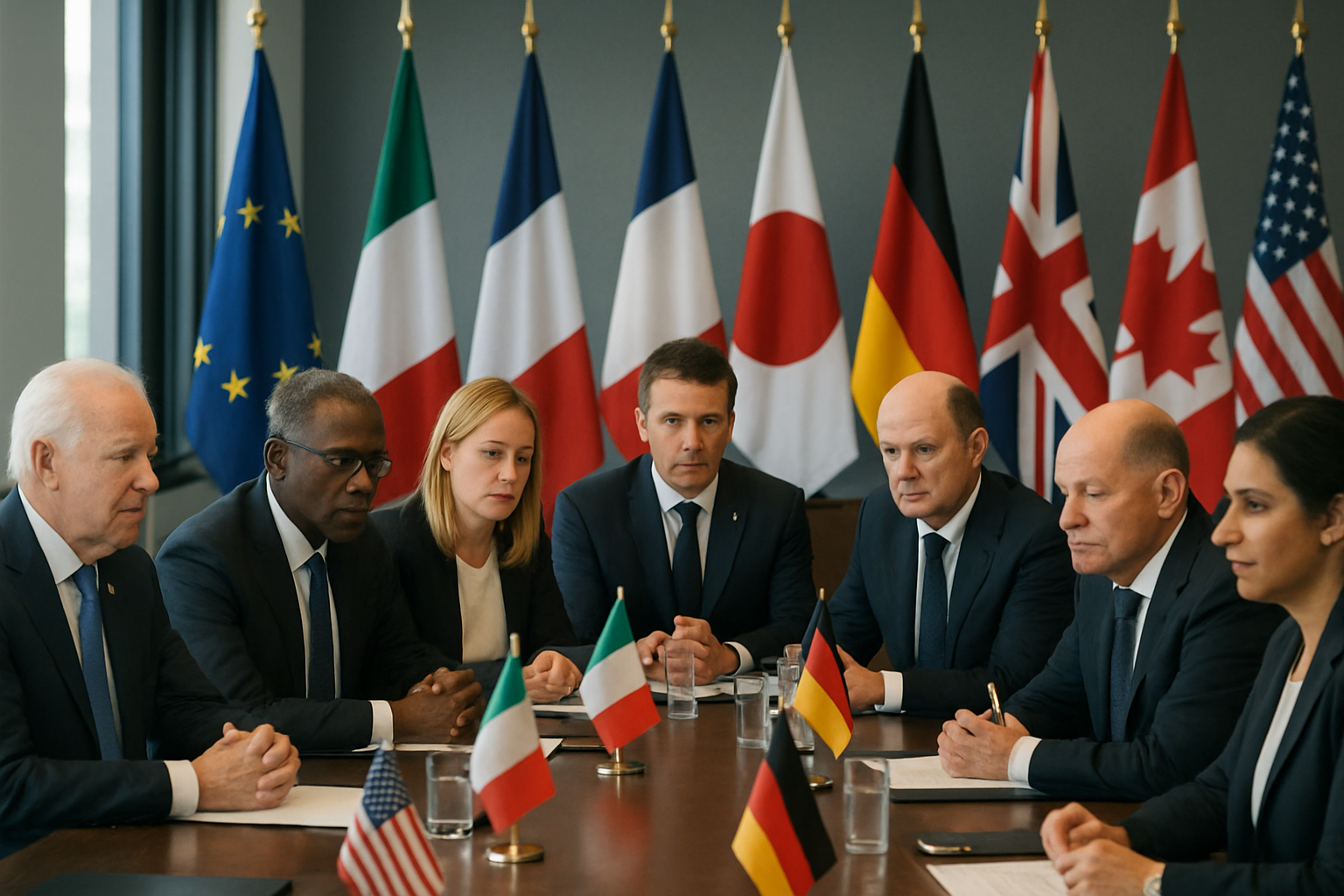
International diplomatic relations face unprecedented strain as major developments across Europe and Eastern Partnership countries reveal deep divisions over foreign policy approaches, with European Commission leadership declaring an end to the traditional world order while regional conflicts threaten established diplomatic frameworks.
EU Leadership Declares End of Old World Order
European Commission President Ursula von der Leyen announced a fundamental foreign policy shift on March 9, declaring that Europe can no longer serve as "guardian of the old world order" and must adopt a more "realistic" foreign policy approach. This historic departure from traditional EU multilateral diplomacy comes as the international rules-based system "has disappeared and will not return," according to von der Leyen's watershed assessment.
The declaration reflects growing European frustration with actors systematically violating international law, particularly as Ukraine enters its fifth year of conflict with Russian territorial acceleration and systematic civilian infrastructure attacks. The timing coincides with the complete breakdown of Iran nuclear diplomacy despite earlier progress in Geneva talks, highlighting the limitations of traditional diplomatic frameworks.
Armenia-EU Democratic Reform Cooperation
Despite broader European strategic shifts, specific bilateral partnerships continue to advance. Armenian Prime Minister Nikol Pashinyan met with EU Commissioner for Internal Affairs and Migration Magnus Brunner in Yerevan on March 12, discussing the EU's continued assistance in implementing democratic reforms in Armenia.
This engagement demonstrates the EU's commitment to supporting democratic transitions in Eastern Partnership countries, even as broader European foreign policy undergoes fundamental reassessment. The meeting focused on practical cooperation mechanisms for strengthening Armenian democratic institutions and rule of law frameworks.
US-Armenia Relations Under Scrutiny
However, Armenian-American relations face significant criticism following Vice President J.D. Vance's recent South Caucasus visit. According to analysis from The Armenian Weekly, Vance "arrived with a reputation as a fearless defender of persecuted Christians" but "left with that reputation in shreds" due to what critics characterize as insufficient support for Armenian hostages and political prisoners held in Azerbaijan.
"On this first real test on the global stage, he fell short — failing Christian Armenians and Christians worldwide."
— The Armenian Weekly Editorial Assessment
The criticism centers on Vance's failure to demand immediate release of Armenian hostages and prisoners of war held in Baku, many allegedly subjected to torture. Critics argue that in pursuing President Trump's peace agenda, the Vice President rewarded Azerbaijan's aggression while deepening Armenian security vulnerabilities.
Baltic-Australian Security Partnership
Estonian Foreign Minister Margus Tsahkna's meeting with Australian Foreign Minister Penny Wong in Canberra on March 12 highlights the evolving nature of international security partnerships. The discussions focused on closely linked security challenges facing both Baltic and Pacific regions, demonstrating how traditional geographic boundaries are becoming less relevant in contemporary security cooperation.
This Baltic-Pacific partnership reflects broader trends toward flexible, issue-based diplomatic alliances that transcend traditional alliance structures. Estonia's experience managing Russian pressure provides valuable insights for Australia's Indo-Pacific security challenges, while Australian strategic perspectives offer Estonia additional frameworks for understanding great power competition.
Moldova's Transnistrian Diplomacy
Deputy Prime Minister Valeriu Chiveri's March 12 meeting with EU Special Representative Marta Kos in Brussels addressed the ongoing Transnistrian settlement process, highlighting one of Europe's most persistent frozen conflicts. The discussions focused on reintegration policies and enhanced EU-Moldova cooperation mechanisms.
The Transnistrian issue represents a critical test case for European conflict resolution capabilities, particularly given the region's strategic importance and Russian military presence. Moldova's approach combines patient diplomatic engagement with practical reintegration measures, offering potential templates for addressing other territorial disputes.
Ukraine-Romania Strategic Partnership
Presidents Volodymyr Zelensky and Romania's Nicușor Dan signed a declaration on strategic partnership in Bucharest on March 12, along with several accompanying agreements. This partnership deepens Romania's role as a crucial supporter of Ukrainian sovereignty and territorial integrity.
The timing proves significant as Ukraine-Russia peace talks face indefinite postponement due to the Iran crisis, according to President Zelensky's recent statements. The Romanian partnership provides Ukraine with additional diplomatic and potentially security support during this critical period of suspended negotiations.
Nuclear Governance Crisis Deepens
The broader diplomatic context includes the unprecedented nuclear governance crisis following the February 5, 2026 expiration of the New START treaty—the first time in over 50 years without US-Russia nuclear constraints. UN Secretary-General António Guterres has warned of a "grave turning point" with nuclear risks at their highest levels in decades.
This nuclear governance vacuum provides additional impetus for European strategic autonomy discussions, including unprecedented conversations about expanding France's nuclear deterrent beyond national scope—the first serious discussions of this nature since the Cold War's end.
Implications for 21st Century Diplomacy
These developments collectively illustrate the emergence of new diplomatic paradigms adapted to multipolar competition and institutional fragmentation. Von der Leyen's acknowledgment that the old world order has "disappeared and will not return" may prove prophetic in defining international stability for the coming decade.
The challenge facing diplomatic institutions involves balancing "realistic" policy approaches with European values while maintaining international cooperation capabilities under unprecedented pressure. Success in this transformation will determine whether institutional adaptation can preserve security and democratic principles, or whether continued fragmentation will characterize Western unity.

Regional Patterns and Future Trajectories
The March 12, 2026 diplomatic developments reveal several emerging patterns: increased bilateral partnerships as alternatives to multilateral frameworks, growing emphasis on practical cooperation over idealistic principles, and regional security partnerships that transcend traditional geographic boundaries.
These innovations suggest that successful 21st-century diplomacy may require greater flexibility, pragmatic engagement with complex realities, and adaptation to multipolar competition while preserving democratic solidarity. The stakes extend far beyond individual bilateral relationships to fundamental questions about international order, institutional resilience, and conflict prevention mechanisms.
Whether this transformation strengthens or fragments Western unity remains the critical question affecting democratic societies and institutional resilience worldwide. The coming months will test whether European strategic autonomy can be operationalized within existing alliance frameworks or whether more fundamental restructuring of international cooperation mechanisms will prove necessary.