The international community is grappling with its most serious diplomatic crisis since the Cold War as global powers respond to the catastrophic escalation in the Middle East following the confirmation of Iran's Supreme Leader Ali Khamenei's death during coordinated US-Israeli military strikes.
The crisis reached a watershed moment on March 1, 2026, when Iranian state media officially confirmed that Supreme Leader Ayatollah Ali Khamenei died "at his place of work" in Tehran during "Operation Epic Fury" - the largest coordinated US-Israeli military operation since the 2003 Iraq invasion. The 86-year-old leader's death ends 37 years of rule and has triggered massive diplomatic mobilization worldwide.
UN Security Council Emergency Response
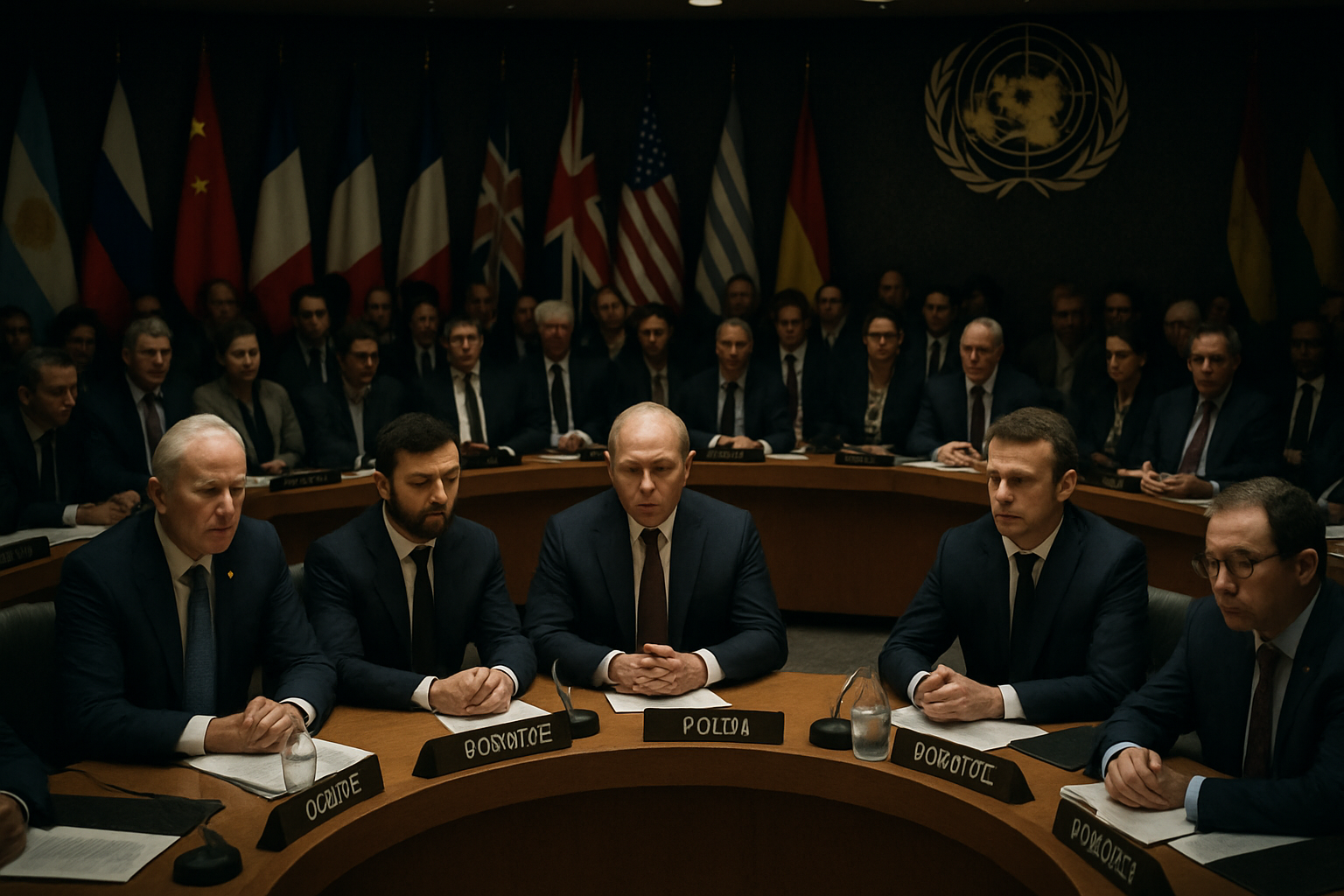
The United Nations Security Council convened an emergency session following formal requests from France, China, Russia, Colombia, and Bahrain. UN Secretary-General António Guterres declared the military actions a "serious threat to international peace and security," warning that the operations could "trigger a chain of events no one can control in the world's most unstable region."
Russian Foreign Minister Sergey Lavrov delivered a scathing condemnation, describing the US-Israeli strikes as "reckless actions by Washington and West Jerusalem" that constitute direct violations of international law. Moscow confirmed its readiness to contribute to resolving the Iran situation while demanding immediate cessation of attacks against "a sovereign UN member state."
"This represents a critical test of multilateral diplomacy in addressing rapidly evolving conflicts. The international community faces an urgent challenge to prevent further escalation."
— António Guterres, UN Secretary-General
European Union Unified Stance
The European Union activated unprecedented crisis response measures, with Commission President Ursula von der Leyen and Council President António Costa issuing a rare joint statement demanding "maximum restraint" from all parties. The EU's response represents one of the most significant diplomatic mobilizations in the bloc's history.
Von der Leyen called for a "credible transition" in Iran following Khamenei's death, while warning that the "risk of escalation threatens Europe's security architecture." EU High Representative Kaja Kallas described the Supreme Leader's death as a "turning point" that creates uncertainty surrounding succession while acknowledging opportunities for a different Iran with "greater freedom."
Cyprus activated its national "ESTIA" evacuation plan for European and third-country nationals - the first implementation since the protocol was established. Multiple EU member states have issued urgent travel warnings and ordered embassy evacuations across the region.
China's Unprecedented Condemnation
China delivered its strongest criticism of US foreign policy in years, with the Foreign Ministry describing the assassination as a "serious violation of Iran's sovereignty and security" and calling the act an "insult to the objectives and principles of the UN Charter and basic norms of international relations."
In an official statement, Beijing declared it "strongly opposes and strongly condemns this" while renewing calls for "immediate cessation of military operations." Chinese Foreign Minister Wang Yi told his Russian counterpart Lavrov that the attacks were "unacceptable" and urged immediate ceasefire and talks.
Regional Coalition Under Severe Strain
The unprecedented coalition of Saudi Arabia, UAE, Qatar, and Egypt that had been supporting diplomatic efforts now faces severe strain as Iranian retaliatory strikes targeted member territories. Egyptian President Abdel Fattah el-Sisi condemned attacks on "sisterly Arab countries," warning of "comprehensive chaos" spreading across the region.
The Gulf states have been caught between their alliance with the United States and the reality of Iranian missile strikes hitting their territories. UAE suffered one civilian death in Abu Dhabi from missile debris, while Kuwait's airport was struck by Iranian drones, causing injuries to employees.
Global Aviation and Economic Crisis
The crisis has triggered the most extensive aviation disruption since COVID-19, with over 18,000 flights cancelled worldwide. Iran, Iraq, Israel, UAE, Qatar, Syria, Kuwait, and Bahrain simultaneously closed their airspace, effectively severing critical Europe-Asia transit routes.
Dubai International Airport, the world's busiest, remains completely shut down after sustaining missile damage. Major carriers including Emirates, Air France-KLM, Wizz Air, and Bulgaria Air have suspended operations affecting hundreds of thousands of passengers globally.
Energy markets are experiencing severe volatility, with oil prices rising on concerns about the Strait of Hormuz, through which 40% of global oil transit passes. Iran has warned that shipping will "not be allowed" through this strategic chokepoint, while natural gas prices have surged 24% in Europe and 78% in the United States.
Nuclear Diplomacy Collapse
The military escalation represents a catastrophic breakdown of nuclear negotiations that had achieved a "broad agreement on guiding principles" - the most significant progress since the JCPOA collapse in 2018. Despite Swiss-Omani mediation and a framework for continuing discussions, fundamental disagreements over scope proved insurmountable.
Iran had excluded ballistic missiles and regional proxies as "red lines" from nuclear-only talks, while the US demanded comprehensive agreements including missiles, armed groups, and human rights issues. Iran continues enriching uranium at 60% purity, approaching the 90% weapons-grade threshold, with intelligence estimates suggesting they possess sufficient material for multiple weapons if weaponized.
Massive Evacuation Operations
Governments worldwide are implementing emergency evacuation protocols for their citizens. Sweden and Serbia have ordered immediate evacuations from Iran citing "extremely uncertain" security conditions. The United States authorized non-essential embassy personnel to depart Israel, with Ambassador Mike Huckabee advising staff to leave "TODAY."
Estonia has advised 3,000 nationals in the Middle East to contact authorities immediately, while Kenya is coordinating evacuations for over 66,000 nationals in Qatar and up to 40,000 in the UAE. Thailand has activated urgent evacuation preparations with embassy safety protocols in effect.
Nuclear Governance Crisis Context
The Middle East crisis occurs against the backdrop of a broader nuclear governance breakdown. The New START treaty expired on February 5, marking the first time in over 50 years that the US and Russia lack nuclear constraints. Combined with China's nuclear expansion, UN Secretary-General Guterres has warned that nuclear risks are at their "highest level in decades."
First US Military Casualties
US Central Command officially announced that three American service members were killed and five wounded during Operation Epic Fury, marking the first confirmed US military deaths in the largest Middle East operation since 2003. This represents a significant escalation that could influence domestic US political support for continued operations.
Iranian Constitutional Succession
Iran has activated constitutional succession protocols with a three-member transitional council comprising President Masoud Pezeshkian, judiciary head Gholamhossein Mohseni Ejei, and Guardian Council jurist Ahmad Jannati. The Assembly of Experts, consisting of 88 clerics, must select a permanent successor within the constitutional framework.
Intelligence assessments suggest a Revolutionary Guards member is likely to be chosen as the next Supreme Leader, indicating potential hardline military influence over Iran's future direction. The country has declared 40 days of mourning and seven days of national holidays.
Spontaneous Public Reactions
The response within Iran has been mixed, with spontaneous celebrations reported in Tehran including dancing at bus stops, car parades, and crowds chanting "tyrant no more." Iranian diaspora communities in Rome and Oslo have also held celebrations. However, pro-government demonstrations in southern Iran are calling for vengeance against the attackers.
Template-Setting Implications for 21st Century Diplomacy
The rapid transition from diplomatic breakthrough to military confrontation demonstrates the fragility of modern crisis management in the multipolar era. The international community's response to this crisis is establishing templates for future conflict resolution approaches.
Success in containing the escalation could provide a framework for addressing nuclear crises in the 21st century, while failure may accelerate the use of military solutions, reshape Middle Eastern geopolitics for decades, and undermine diplomatic credibility for resolving international disputes.
Stakes for International Order
The current crisis represents the most dangerous moment since the Cold War's end, testing multiple fundamental principles simultaneously: regional war prevention, global energy security, nuclear governance credibility, and international law enforcement mechanisms.
The coming phase will determine whether this remains a contained regional confrontation or escalates into a broader Middle Eastern war with global implications for energy markets, supply chains, and the fundamental principles governing the post-World War II international order.
As diplomatic channels strain and military positions harden worldwide, the international community faces its greatest test of multilateral cooperation and crisis management in the modern era. The decisions made in the coming days and weeks will reverberate through international relations for decades to come.