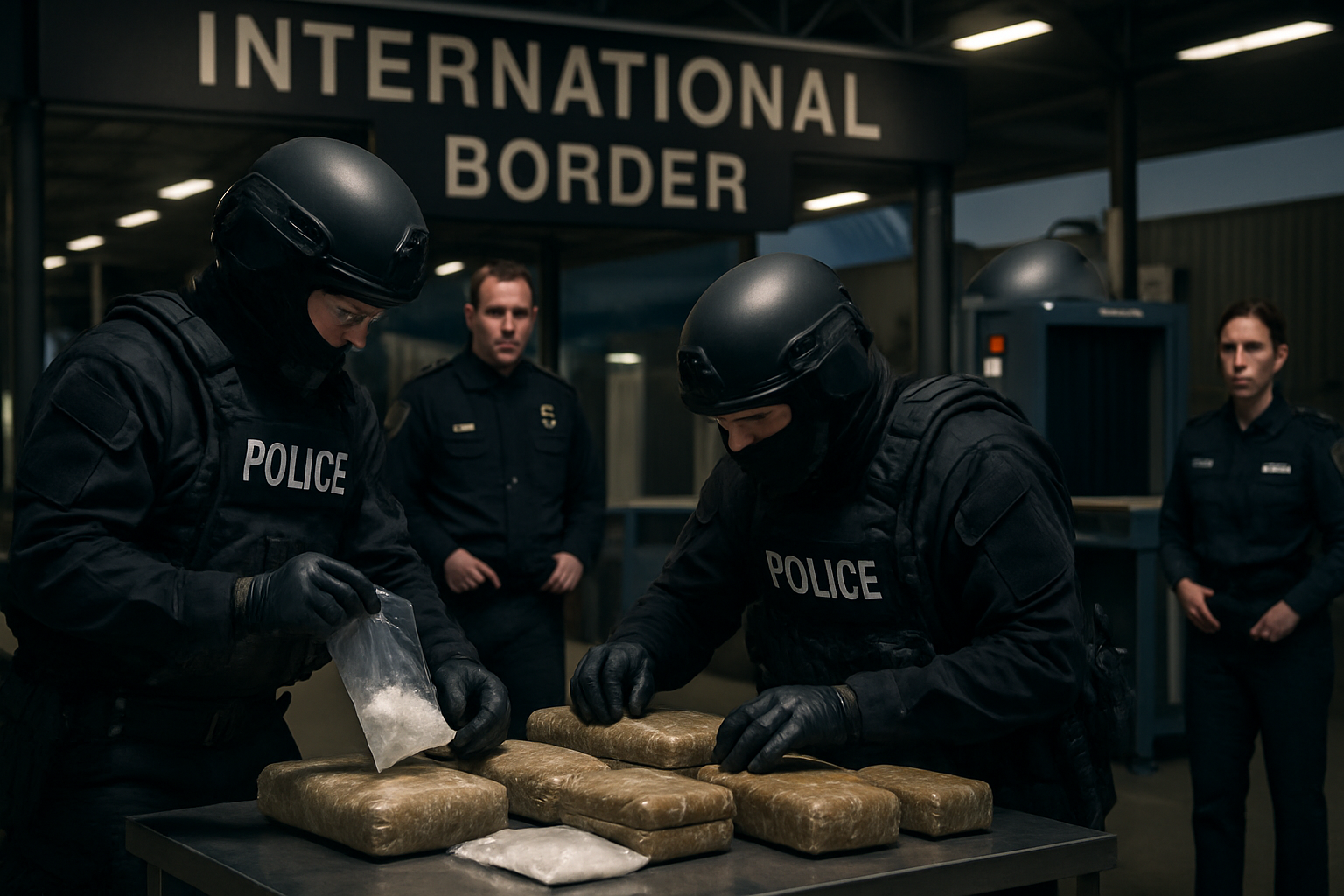
International law enforcement agencies have delivered devastating blows to drug trafficking networks through coordinated operations spanning from Singapore's border checkpoints to U.S. military strikes in the Pacific Ocean, marking a significant escalation in global anti-narcotics efforts.
Singapore's Immigration and Checkpoints Authority (ICA) announced the seizure of narcotics worth over S$2 million in two separate land checkpoint smuggling cases, involving heroin, methamphetamine ("Ice"), and cannabis. According to ICA officials, the seized drugs could potentially feed the addiction of approximately 8,169 abusers for one week, highlighting the massive scale of the intercepted operations.
Singapore Checkpoint Operations Demonstrate Enhanced Security
The Singapore seizures occurred at the nation's critical Woodlands and Tuas checkpoints, which serve as primary entry points for goods and travelers from Malaysia. The operations represent sophisticated attempts by criminal networks to exploit legitimate border crossings for drug smuggling purposes.
Singapore's success builds on the city-state's reputation as having one of the world's most effective anti-drug enforcement systems. The country maintains a zero-tolerance policy toward drug trafficking, with capital punishment for serious offenses and comprehensive screening technologies at all entry points.
The ICA's ability to detect these smuggling attempts demonstrates the effectiveness of Singapore's multi-layered security approach, combining advanced scanning technology, intelligence-led operations, and highly trained enforcement personnel.
U.S. Pacific Operations Mark 40th Strike
Simultaneously, U.S. armed forces announced their 40th attack against suspected drug trafficking vessels in the Pacific Ocean since the beginning of their anti-narcotics military operation in September 2025. The latest strike resulted in the destruction of a vessel suspected of narcotics trafficking, with three crew members surviving the explosion.
This operation is part of the broader "Operation Southern Spear" campaign, which has resulted in over 150 deaths across more than 40 attacks. The U.S. military justifies these kinetic operations under terrorist organization designations, allowing direct military action against suspected trafficking vessels in international waters.
The Pacific operations represent a significant shift from traditional law enforcement approaches to direct military intervention against criminal organizations that have evolved to possess state-like capabilities.
Criminal Network Sophistication Challenges Traditional Enforcement
These recent operations occur within the context of increasingly sophisticated transnational criminal networks that demonstrate advanced technological capabilities, encrypted communications, and compartmentalized international structures.
Intelligence reports from recent major arrests, including the March 2026 capture of Sebastian Marset, the world's third most-wanted drug trafficker, reveal criminal organizations with capabilities rivaling legitimate state institutions. These networks operate across multiple continents with sophisticated surveillance systems, professional money laundering operations, and advanced logistics capabilities.
"Criminal organizations now operate without borders, requiring international cooperation effectiveness that matches their sophisticated networks."
— EU Ambassador Jaume Segura
The evolution of criminal networks has forced law enforcement agencies worldwide to adopt more advanced technologies and enhance international cooperation mechanisms to combat threats that transcend traditional jurisdictional boundaries.
Enhanced International Cooperation Framework
The success of recent operations reflects enhanced international cooperation under frameworks like the "Shield of the Americas" coalition, established in March 2026, which brings together 17 Latin American and Caribbean nations with the United States to combat transnational organized crime.
European law enforcement has also developed sophisticated coordination mechanisms, with specialized corruption and organized crime courts providing templates for effective international cooperation. Enhanced intelligence sharing, coordinated operational planning, and real-time communication have enabled surgical strikes against criminal leadership without triggering widespread violence.
The Singapore and U.S. operations demonstrate how different approaches - advanced checkpoint screening and maritime interdiction - can complement each other in disrupting global drug trafficking networks that exploit multiple transportation methods and routes.
Technology Arms Race in Drug Enforcement
Modern drug enforcement operations increasingly rely on advanced technology to match the sophistication of criminal networks. Singapore's checkpoint operations utilize cutting-edge scanning equipment, biometric identification systems, and artificial intelligence-enhanced threat detection.
Meanwhile, U.S. Pacific operations employ satellite surveillance, drone reconnaissance, and precision-guided munitions to target suspected trafficking vessels. This technological integration represents an arms race between criminal innovation and law enforcement countermeasures.
Criminal organizations have demonstrated their ability to adapt commercial technologies for illegal activities, including encrypted communications that exceed many law enforcement capabilities, advanced concealment methods, and sophisticated financial networks that penetrate legitimate banking systems.
Regional Security Implications
The March 2026 operations carry significant implications for regional security architectures. In Southeast Asia, Singapore's success reinforces the Association of Southeast Asian Nations' (ASEAN) commitment to combating transnational crime through enhanced border security and information sharing.
In the Pacific, U.S. military operations have created concerns among legitimate maritime operators, particularly fishing communities, who face risks from military enforcement zones. The operations have also raised questions about the precedent of lethal strikes against civilian vessels based on suspected activity.
These enforcement approaches must balance effectiveness against criminal networks with protection of legitimate commerce and civilian populations who operate in the same geographic areas.
Economic and Social Impact
The economic impact of successful anti-narcotics operations extends beyond the immediate value of seized drugs. Criminal networks generate billions of dollars in illicit revenue that corrupts legitimate institutions, distorts economic development, and undermines governance in affected regions.
Singapore's S$2 million seizure represents not only drugs prevented from reaching users but also significant financial losses for criminal organizations that rely on successful smuggling operations to fund expansion and corruption activities.
The disruption of Pacific trafficking routes affects supply chains that span from South American production centers to Asian and North American markets, potentially forcing criminal networks to seek alternative, more costly routes or methods.
Challenges and Future Outlook
Despite these operational successes, significant challenges remain in combating sophisticated transnational drug trafficking networks. Criminal organizations demonstrate remarkable adaptability, often reconstituting operations following major arrests or seizures.
The pace of criminal technological adaptation frequently exceeds institutional countermeasure development, creating persistent vulnerabilities that require sustained investment in law enforcement capabilities and international cooperation mechanisms.
Success in disrupting major criminal networks requires addressing underlying conditions that enable recruitment and operations, including poverty, corruption, weak governance, and limited economic opportunities in affected communities.
Democratic Governance and Rule of Law
The evolution of anti-narcotics enforcement raises important questions about maintaining democratic oversight and constitutional protections while addressing criminal organizations with state-like capabilities.
Operations like Singapore's checkpoint seizures demonstrate how effective enforcement can occur within established legal frameworks and due process protections. However, military approaches like the U.S. Pacific strikes raise concerns about accountability and proportionality in the use of lethal force.
The challenge for democratic nations is developing responses that effectively counter sophisticated criminal threats while preserving fundamental rights and international law obligations that distinguish democratic governance from authoritarian approaches.
As criminal networks continue to evolve and adapt, the international community must maintain coordinated, technologically advanced, and legally grounded approaches to protect public safety while upholding the democratic values that criminal organizations seek to undermine through violence and corruption.