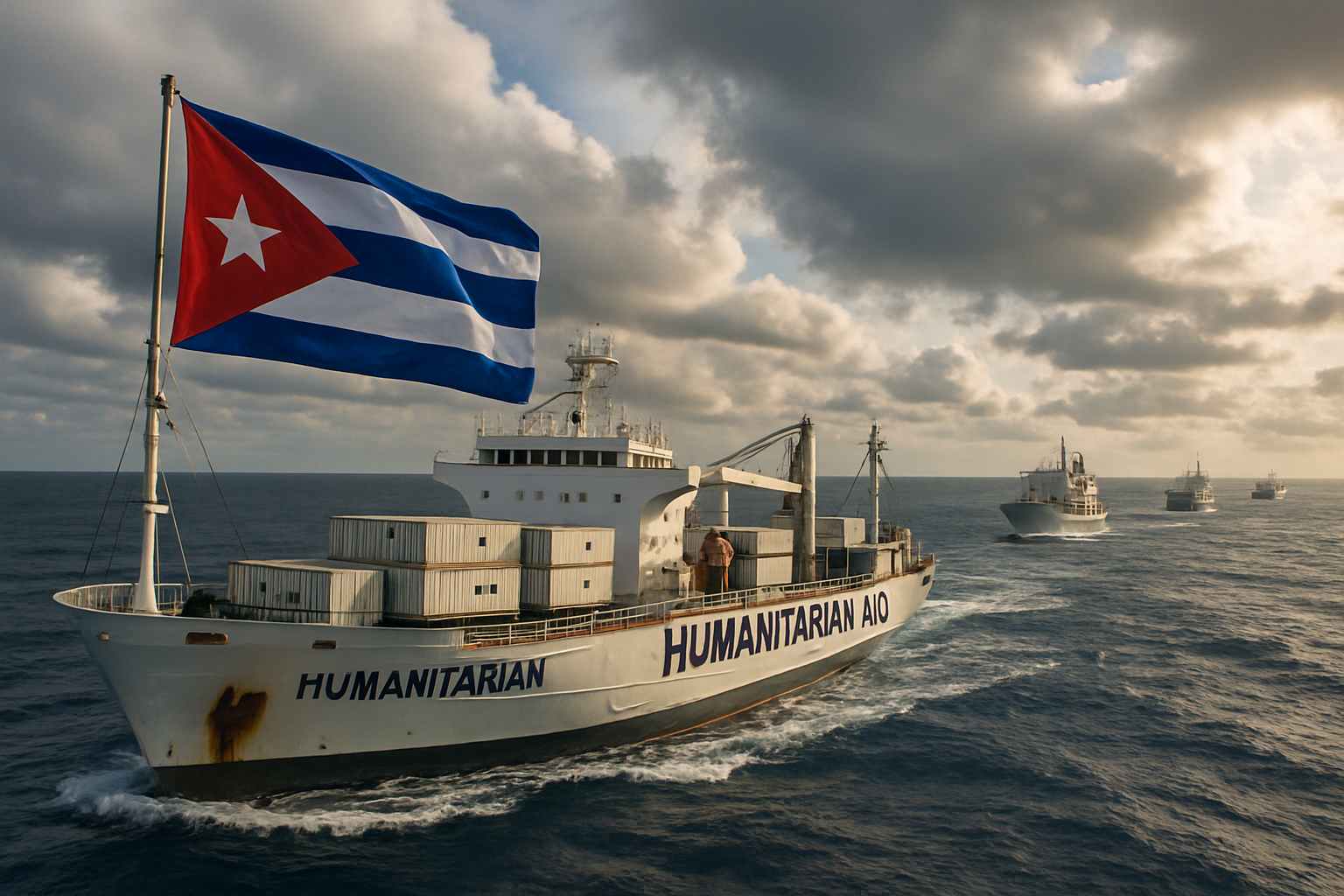
A coalition of international social movements, backed by UK Labour leader Jeremy Corbyn and other prominent figures, has announced an unprecedented humanitarian flotilla to Cuba aimed at challenging the U.S. oil blockade that has plunged the Caribbean island into its worst crisis since the 1990s Special Period.
The flotilla initiative, confirmed by Italian media sources, represents the most significant international solidarity effort since Cuba's complete aviation isolation began in February 2026. The announcement comes as two Mexican naval vessels carrying over 800 tons of humanitarian supplies docked in Havana on Thursday, marking the largest aid operation amid an energy crisis that has left 11 million Cubans without reliable access to fuel, electricity, and international air travel.
Complete Aviation Blockade Achieved
Cuba's isolation has reached unprecedented levels, with all nine major international airports - including José Martí International in Havana - confirming zero Jet A-1 fuel availability through March 11, 2026. This represents the most comprehensive aviation blockade since the 1962 Cuban Missile Crisis, effectively severing the island's connections to the global community.
The aviation crisis has forced major international carriers to suspend operations entirely. Air Canada, WestJet, and Air Transat have evacuated approximately 21,000 stranded Canadian tourists - nearly half of Cuba's foreign visitor base. Russian carriers Rossiya Airlines and Nordwind have similarly suspended flights, evacuating 4,000 Russian tourists through emergency repatriation operations.
The crisis affects 400 weekly flights and 70,000 scheduled seats, creating a connectivity vacuum that European media have characterized as a "deliberately engineered humanitarian emergency." Airlines are exploring complex contingency routing through Mexico and the Dominican Republic, reminiscent of adaptations made during the 1990s Special Period.
Trump's Maximum Pressure Campaign Success
The current crisis stems from President Trump's January 30, 2026 executive order threatening 25% tariffs on any country supplying oil to Cuba. The policy has proven remarkably effective in forcing regional allies to choose between their economic relationships with the United States and humanitarian assistance to Cuba.
Mexico, under President Claudia Sheinbaum, suspended oil shipments to avoid U.S. economic retaliation while maintaining humanitarian aid deliveries. The Mexican naval vessels Papaloapan and Isla Holbox arrived in Havana with 814 tons of food and medical supplies, demonstrating Mexico's attempt to balance competing pressures.
Venezuela, following the removal of Nicolás Maduro in January 2026, has completely halted crude oil shipments as the interim government under Acting President Delcy Rodríguez prioritizes rebuilding U.S. relations over maintaining Cuba's energy security.
"Mexico won't allow its territory to be used to pressure other nations, but we cannot ignore the economic realities we face."
— President Claudia Sheinbaum, Mexico
Humanitarian Crisis Deepens
The energy shortage has created cascading crises across Cuban society. The state electricity company Unión Eléctrica reports that 51% of the population - approximately 5.5 million people - are experiencing scheduled blackouts during peak evening hours. Oil reserves have dropped to a critical 15-20 day supply, while domestic production has collapsed from 3 million to just 700,000 barrels daily.
The Cuban government has implemented comprehensive emergency measures including four-day work weeks for government employees, semi-virtual university classes, suspended public transportation, and the closure of 90% of provincial gas stations. Healthcare systems are severely constrained, with some hospitals suspending non-emergency surgeries due to power outages and staff transportation difficulties.
The tourism industry, a vital source of foreign currency, has collapsed entirely. Major Spanish hotel chains including Meliá and Iberostar have shuttered operations in Varadero and along the northern coast. Canadian authorities issued a "high degree of caution" travel advisory, triggering thousands of trip cancellations and effectively ending the winter tourism season.
Chinese Diplomatic Intervention
China has emerged as Cuba's most vocal international defender, with Beijing issuing an unprecedented demand that Washington "immediately" cease its pressure campaign against the island. The Chinese intervention represents a significant escalation in great power competition over hemispheric influence.
Haitian analysis suggests China's statement reflects broader strategic calculations rather than revolutionary romanticism. Beijing views Cuba as a testing ground for resistance to U.S. economic coercion, with implications extending far beyond the Caribbean to global trade relationships and territorial sovereignty principles.
The Chinese position creates additional complexity for U.S. policy, as Washington simultaneously pursues maximum pressure against Cuba while attempting to manage broader strategic competition with Beijing across multiple fronts including Taiwan, trade, and technology.
International Flotilla as Political Challenge
The announced international flotilla represents the most direct challenge to U.S. policy since the crisis began. Led by social movements and backed by figures like Jeremy Corbyn, the initiative aims to demonstrate international solidarity while testing the boundaries of Washington's enforcement mechanisms.
The flotilla's political significance extends beyond humanitarian relief to broader questions of international law, territorial sovereignty, and the limits of economic coercion as a diplomatic tool. Organizers frame the mission as defending Cuba's right to receive humanitarian assistance despite political disagreements.
The timing coincides with broader international criticism of U.S. tactics. European officials have privately expressed concerns about the collective punishment aspects of policies that primarily affect civilian populations rather than government officials.
Regional Implications and Historical Precedent
Cuba's current crisis exceeds the 1990s Special Period in systematic scope and deliberate implementation. Unlike the earlier crisis, which resulted from the Soviet Union's collapse and external economic factors, the current emergency stems from deliberate U.S. policy targeting the entire population through comprehensive economic isolation.
The aviation blockade is particularly unprecedented, as Cuba maintained international connectivity throughout the Special Period despite severe economic constraints. The complete severance of air links represents a new dimension in economic warfare with implications for international law and humanitarian protection principles.
Regional powers face difficult choices between economic relationships with the United States and solidarity commitments to Cuba. Brazil and Chile have joined Mexico in providing humanitarian assistance while carefully avoiding actions that might trigger U.S. retaliation.
Looking Forward: Sustainable Solutions
The crisis requires either diplomatic breakthrough, alternative supply arrangements that circumvent U.S. pressure, or fundamental changes to Cuba's energy infrastructure. The international flotilla represents one approach, but sustainable solutions will require broader policy changes or international coordination.
European media coverage suggests growing international concern about the humanitarian implications of comprehensive economic isolation. The success or failure of current policies will influence future approaches to economic coercion and the international community's response to civilian population targeting.
The Cuban peso has hit historic lows of 500 units per dollar, reflecting the severity of the economic crisis. Healthcare systems face critical challenges with medicine storage threatened by power outages and essential medical equipment compromised.
As the international flotilla prepares its mission and Mexico continues humanitarian deliveries, the crisis represents a defining test of 21st-century international relations. The outcome will influence precedents for economic warfare capabilities, the effectiveness of collective punishment policies, and the international community's commitment to humanitarian protection principles in an era of renewed great power competition.
The stakes extend far beyond Cuba's 11 million inhabitants to fundamental questions about territorial sovereignty, civilian population protection, and the limits of economic coercion in modern diplomacy. The coming weeks will determine whether innovative international solutions can address the humanitarian emergency while preserving broader principles of international law and human dignity.