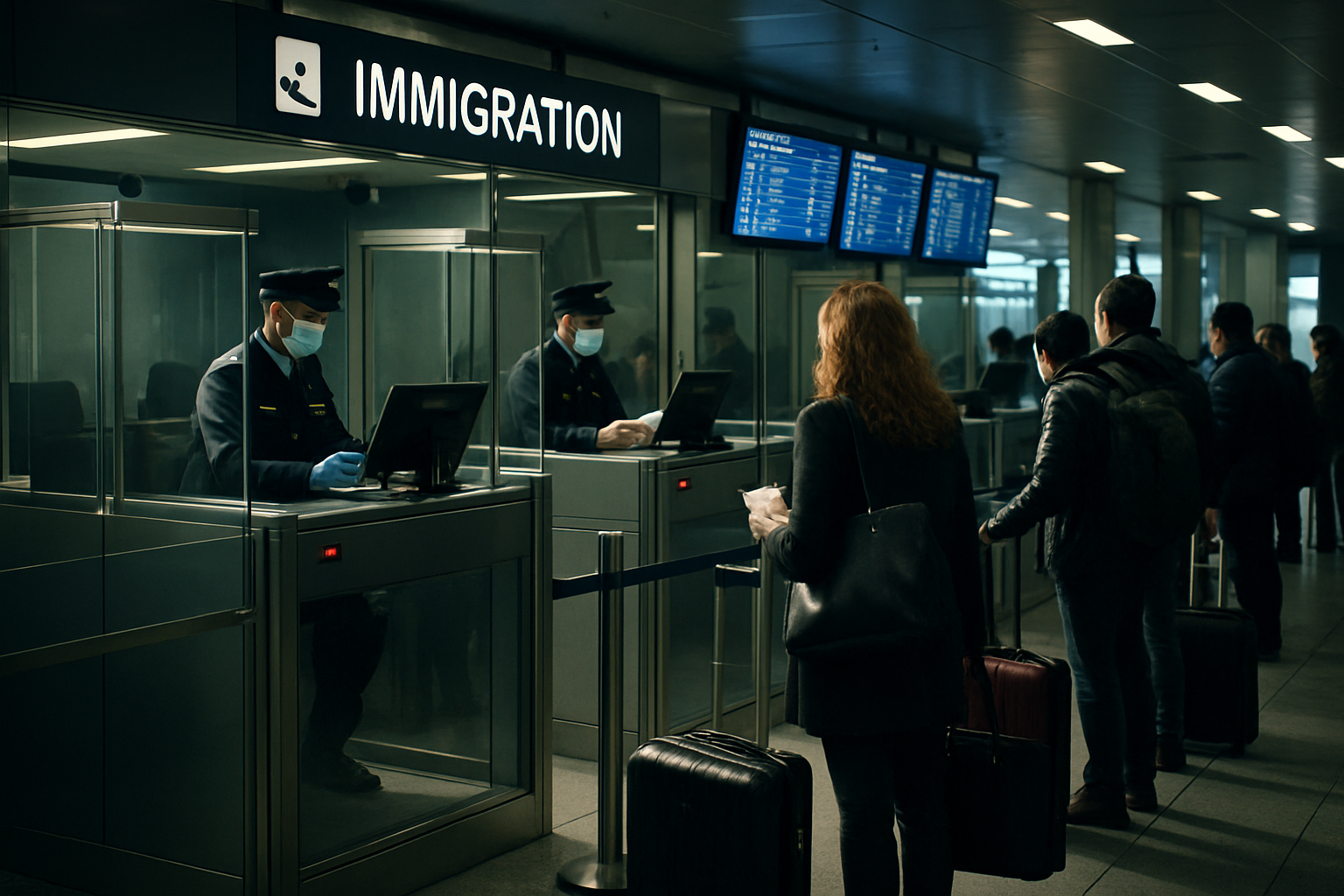
Immigration systems across the globe are experiencing unprecedented strain as nations grapple with complex cases ranging from US veterans facing deportation to countries they've never known, to violent confrontations at international airports, highlighting the deepening crisis in global migration policy.
The human face of this crisis emerges through individual stories that expose the contradictions and failures of current immigration systems. Paul Canton, a former US Marine, faces the stark reality of deportation to New Zealand—a country he left as a child 50 years ago and to which he claims "no connection." His case exemplifies the broader challenges facing immigration authorities worldwide as they navigate complex histories of citizenship, service, and belonging.
Veterans Caught in Immigration Crossfire
"I wouldn't even know where to go," Canton told reporters, expressing the disorientation felt by many caught in similar situations. Having served his adopted country as a US Marine, his potential deportation to New Zealand illustrates how immigration policies can create profound injustices for those who have dedicated their lives to military service.
Canton's case is not isolated. According to immigration advocacy groups, hundreds of veterans face deportation proceedings annually, often for minor infractions that occurred decades ago. The practice has drawn criticism from both military veteran organizations and immigration reform advocates who argue that service members should receive special consideration in deportation proceedings.
Airport Violence Reflects Growing Tensions
Meanwhile, escalating tensions at international borders have manifested in violent confrontations. At Los Angeles International Airport (LAX), a 35-year-old Australian man was arrested after allegedly assaulting a Transportation Security Administration (TSA) officer. The incident, which occurred during what should have been a routine domestic flight from Los Angeles to Las Vegas, demonstrates how immigration-related stress and confusion can boil over into physical altercations.
According to court documents, the Australian citizen approached a uniformed TSA officer exiting a bathroom, accused them of stealing his backpack and passport, then grabbed the officer by the shirt and pulled off their lanyard. The incident escalated when the man allegedly pulled the officer's hair and threw them against a glass wall.
Such airport incidents have become increasingly common as immigration enforcement intensifies and travelers face longer processing times and more stringent security measures. Airport security officials report a notable increase in verbal and physical confrontations related to immigration and documentation issues.
Policy Contradictions Create Legal Chaos
The complexity of modern immigration challenges is further illustrated by a constitutional claim filed in Belize's High Court by American citizen James Eziashi. The San Francisco resident alleges he was unlawfully detained and mistreated by immigration officials while attempting to enter Belize in December 2024 with his husband for a honeymoon trip.
"The couple travelled to Belize on December 8, 2024, but immigration authorities allegedly questioned their travel documents and refused entry to his partner."
— Court Filing, Belize High Court
Eziashi's case highlights how immigration policies can discriminate against LGBTQ+ travelers and how even US citizens are not immune from mistreatment at international borders. His legal action against Belize's Minister of Immigration and Attorney General seeks damages for alleged constitutional rights violations.
Harsh Enforcement Measures Across Asia
The global trend toward stricter immigration enforcement is perhaps most starkly illustrated in Singapore, where eleven Nepalese men face severe punishment for visa violations. The men, who overstayed their visit passes and worked illegally at food and beverage outlets, face up to six months in jail and a minimum of three strokes of the cane—a punishment that has drawn international criticism for its severity.
This case represents Singapore's zero-tolerance approach to immigration violations, which stands in stark contrast to more lenient policies in other nations. The use of corporal punishment for immigration offenses has been condemned by human rights organizations as disproportionate and cruel.
UK's Emergency Immigration Restrictions
Against this backdrop of individual cases, larger policy shifts are reshaping the global immigration landscape. The United Kingdom's implementation of "emergency brake" visa restrictions has suspended study visas for nationals from Afghanistan, Cameroon, Myanmar, and Sudan, citing a 470% surge in asylum applications from students between 2021-2025.
Home Secretary Shabana Mahmood described this as targeting "systematic abuse" of legal migration channels, but critics argue the blanket restrictions violate non-discrimination principles and abandon the UK's humanitarian obligations to those fleeing persecution.
Educational Impact and Economic Consequences
The UK's restrictions threaten to disrupt billions in international student revenue and damage academic partnerships built over decades. Universities are scrambling to develop alternative strategies, including accelerating satellite campus programs to maintain international engagement despite domestic restrictions.
The policy affects thousands of prospective students from countries experiencing severe humanitarian crises. Afghanistan remains under Taliban control with 88% of female households below minimum living standards, Myanmar faces military coup aftermath since 2021, Sudan is engulfed in civil conflict, and Cameroon deals with ongoing separatist movements.
European Policy Transformation
The UK's actions align with broader European trends toward restrictive immigration policies. The European Parliament approved historic asylum procedure changes in February 2026, allowing deportation to "safe" third countries through a center-right and far-right alliance that represents a fundamental shift from protection-based to deterrence-focused principles.
Greece is leading a coalition with Germany, Netherlands, Austria, and Denmark to establish external processing centers in Africa for rejected asylum seekers whose home countries refuse readmission. This represents the most significant transformation in European migration policy since the Dublin system's establishment.
Technology and Enforcement Success
While political debates rage, technological solutions are showing measurable results. The European Union's Entry/Exit System (EES) detected over 4,000 overstayers in its first four months of operation, dramatically improving enforcement capabilities compared to manual passport stamping and inconsistent data sharing between member states.
However, the system's success comes with challenges. Airlines warn of potential four-hour queues during summer 2026, leading the European Commission to authorize partial seasonal suspensions to prevent travel disruptions.
Humanitarian Success Stories Amid Crisis
Not all immigration stories end in tragedy or legal battles. Some nations demonstrate that humanitarian approaches can succeed. Albania has welcomed 27,000 foreign nationals to fill critical labor shortages in fishing, construction, manufacturing, and tourism sectors, showing how immigration can address demographic challenges while providing opportunities for migrants.
Similarly, Australia's recent grant of humanitarian visas to Iranian women's soccer players, who were labeled "wartime traitors" by Iranian state television for refusing to sing the national anthem during matches, demonstrates how international pressure can produce humanitarian outcomes even within restrictive policy frameworks.
Climate Change Amplifying Pressures
Underlying all these developments is the growing pressure of climate displacement. January 2026 marked the 18th consecutive month of temperatures exceeding 1.5°C above pre-industrial levels, creating unprecedented migration pressures that existing immigration systems were never designed to handle.
As extreme weather events become more frequent and severe, the distinction between economic migrants and climate refugees becomes increasingly blurred, challenging traditional categories of immigration law and international protection frameworks.
Economic Contradictions and Labor Needs
The immigration debate is further complicated by economic realities. Many countries implementing restrictive policies simultaneously face severe labor shortages in critical sectors including healthcare, agriculture, construction, and hospitality. This creates a fundamental contradiction between economic needs and political pressures for immigration restrictions.
For example, Canada faces criticism over work permit cancellations affecting healthcare and social services, while the UK's student visa restrictions threaten billions in education revenue and academic partnerships crucial for economic competitiveness.
The Path Forward: Balancing Competing Demands
As 2026 unfolds, immigration policy makers face unprecedented challenges in balancing legitimate security concerns, humanitarian obligations, economic needs, and public opinion pressures. The cases examined—from Paul Canton's deportation dilemma to Singapore's harsh enforcement measures—illustrate how current approaches often fail to address the complex realities of modern migration.
The success or failure of current policy experiments will likely influence international migration management approaches for decades ahead. Whether democratic nations can develop humane, effective immigration systems that serve their citizens while respecting human dignity remains one of the defining challenges of the 21st century.
"The individual migrants caught in these policy shifts have no control over the broader political and economic forces affecting their lives, yet they bear the human costs of policy failures."
— Immigration Policy Expert
As global displacement continues to increase due to climate change, conflicts, and economic disruption, the window for effective international coordination may be narrowing. The stories emerging from borders worldwide in March 2026 serve as both warnings and opportunities—highlighting the urgent need for comprehensive reform while demonstrating the human resilience and international cooperation that remain possible even in the darkest circumstances.
The question facing policy makers is whether they will learn from these individual tragedies and successes to build more just and effective immigration systems, or whether the current trajectory of restriction and enforcement will continue to create more Paul Cantons—people caught between countries, policies, and systems that fail to recognize their fundamental humanity.