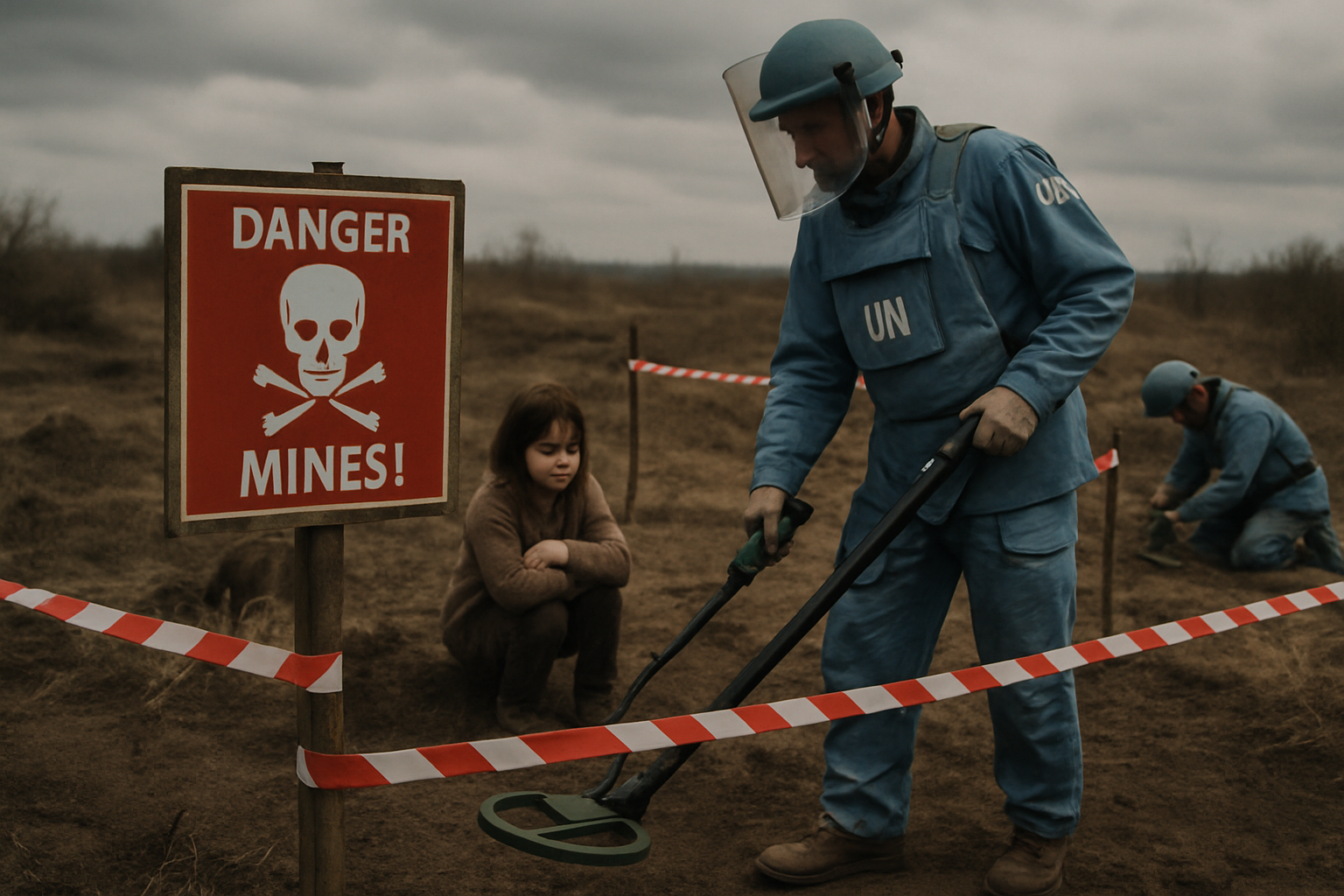
Nearly one Afghan child is killed or injured every day by explosive remnants of war, according to a stark new warning from Save the Children, highlighting a devastating humanitarian crisis that continues to claim young lives more than two decades after major conflicts ended.
From January 2025 to January 2026, 338 Afghan children were killed, injured, or permanently disabled by explosive remnants, with children representing nearly 70 percent of all casualties from such explosions during this period. The figures underscore Afghanistan's grim distinction as the country with the highest number of child casualties due to explosive remnants worldwide.
Afghanistan's Ongoing Contamination Crisis
The United Nations Assistance Mission in Afghanistan (UNAMA) reports that around 50 people are killed or injured every month in mine-related and explosive ordnance incidents across the country. Despite the efforts of aid organizations and demining groups, the scale of contamination remains overwhelming, with more than 2.7 million people—including many children—living within one kilometer of these dangerous zones.
Save the Children's report emphasizes that vast swathes of Afghanistan remain contaminated with hazardous materials, a deadly legacy of decades of conflict. The humanitarian organization has issued urgent calls for increased international funding and support for mine clearance operations, particularly as the country faces compounding crises under current political restrictions.
"These explosive remnants continue to terrorize communities and rob children of their futures. Every day that passes without adequate demining efforts is another day that Afghan children face mortal danger simply trying to live their lives."
— UN Special Rapporteur Richard Bennett
UN Special Rapporteur Richard Bennett has issued urgent appeals for increased international funding for mine clearance and unexploded ordnance removal, coinciding with the April 4 International Day for Mine Awareness. Afghanistan remains "one of the world's most heavily contaminated countries" with mines and unexploded ordnance severely affecting rural communities, limiting agricultural productivity and freedom of movement.
Regional Progress Amid Global Challenges
While Afghanistan faces mounting challenges, Bosnia and Herzegovina demonstrates that sustained international commitment can achieve meaningful progress in mine clearance operations. Enis Horozović, Director of the Bosnia and Herzegovina Mine Action Centre (BHMAC), reports significant improvements in public awareness and casualty reduction.
In Bosnia and Herzegovina, 760 square kilometers of territory still require clearance from mines, but the country has sufficient funding for demining operations through 2026 and 2027. To complete the process by 2034, authorities say a new demining law must be adopted to streamline operations and enhance international cooperation frameworks.
The stark contrast between historical periods illustrates the potential for progress: Bosnia recorded 500 mine accidents in 1996, zero in 2024, and only one incident in 2025 when a young man was injured in a minefield near Doboja. This dramatic improvement reflects both enhanced public awareness and systematic demining efforts supported by sustained international funding and technical assistance.
International Funding and Coordination Challenges
The crisis occurs amid broader challenges facing international mine action efforts. Recent global energy and security disruptions have strained international cooperation mechanisms, potentially affecting funding flows for humanitarian demining programs. The March 2026 global energy crisis, triggered by geopolitical tensions, has redirected international attention and resources toward immediate security concerns.
However, humanitarian organizations emphasize that mine clearance represents a fundamental security and development prerequisite. Countries cannot achieve sustainable economic recovery or social stability while explosive contamination threatens civilian populations, particularly children who are most vulnerable to these hidden dangers.
The Human Cost of Delayed Action
The devastating statistics from Afghanistan underscore the human cost of insufficient international response to explosive remnants. Children bear a disproportionate burden because they are naturally curious and may not recognize the danger posed by unexploded ordnance, often mistaking colorful cluster munitions or other devices for toys.
Beyond immediate casualties, explosive contamination creates long-term barriers to development. Contaminated areas cannot be used for agriculture, education, or economic activities, perpetuating cycles of poverty and displacement. In Afghanistan's case, mine contamination prevents agricultural development and limits access to natural resources that could support economic recovery.
Community Impact and Regional Security
The explosive remnants crisis has broader implications for regional security and stability. Afghanistan's mine contamination contributes to displacement patterns and limits livelihood opportunities, potentially exacerbating humanitarian challenges throughout Central Asia. The lack of safe agricultural land forces families into urban areas or across international borders, creating additional pressure on neighboring countries' resources.
International security experts note that unresolved explosive contamination can undermine peacebuilding efforts and regional stability. Communities living under constant threat from hidden explosives cannot fully participate in economic development or democratic governance, limiting the effectiveness of broader international stabilization efforts.
Technology and Innovation in Mine Action
Modern mine clearance operations increasingly rely on sophisticated detection equipment, AI-powered risk assessment tools, and automated monitoring systems. However, implementation often lags in regions with limited infrastructure or resources, creating disparities in clearance effectiveness between different conflict-affected areas.
Afghanistan's mine clearance operations require extensive international technical assistance, training programs, and equipment provision. The complexity of terrain and the variety of explosive devices deployed over decades of conflict demand specialized expertise and sustained funding commitments from the international community.
Economic and Development Implications
The economic impact of explosive contamination extends far beyond immediate medical costs for casualties. Contaminated agricultural land cannot support farming communities, contaminated infrastructure prevents economic development, and the constant threat of explosive incidents discourages investment and business development.
Bosnia and Herzegovina's experience demonstrates that successful mine clearance can unlock significant economic potential. Areas cleared of explosive remnants become available for agriculture, tourism, infrastructure development, and other economic activities that support community recovery and long-term stability.
International Community Response
The international mine action community faces a critical test of multilateral cooperation and humanitarian commitment. Success in addressing Afghanistan's explosive remnants crisis could provide templates for similar challenges in other conflict-affected regions, while failure may encourage neglect of civilian protection obligations in future conflicts.
Recent global crises have strained international cooperation mechanisms, but humanitarian mine action represents an area where sustained technical cooperation and funding can achieve measurable progress in protecting civilian populations. The contrast between Afghanistan's ongoing casualties and Bosnia's progress demonstrates that international commitment can make a decisive difference.
The April 4 International Day for Mine Awareness serves as an annual reminder that explosive remnants continue to threaten civilian populations worldwide, requiring sustained international attention and resources. The challenge extends beyond immediate humanitarian concerns to encompass regional security, economic development, and the fundamental question of civilian protection in post-conflict environments.
Looking Forward: Sustainable Solutions
Addressing the global explosive remnants crisis requires both immediate humanitarian response and long-term systematic approaches. Short-term priorities include increased funding for mine clearance operations, enhanced international coordination, and improved victim assistance programs for those already affected by explosive incidents.
Long-term solutions demand stronger international legal frameworks preventing the use of weapons that create long-lasting civilian hazards, enhanced post-conflict planning that prioritizes explosive remnants clearance, and sustainable funding mechanisms that support multi-year clearance programs rather than emergency responses to individual incidents.
The crisis facing Afghan children today represents both a humanitarian emergency and a test of international commitment to civilian protection. With nearly one child killed or injured daily, the international community faces an urgent moral imperative to provide the technical assistance, funding, and political support necessary to clear Afghanistan's contaminated areas and protect its most vulnerable populations.
As Bosnia and Herzegovina's success demonstrates, sustained international commitment can transform contaminated landscapes into safe communities where children can play, learn, and grow without fear of hidden explosives. The challenge now is translating this model to Afghanistan and other conflict-affected regions before more young lives are lost to the deadly legacy of past conflicts.