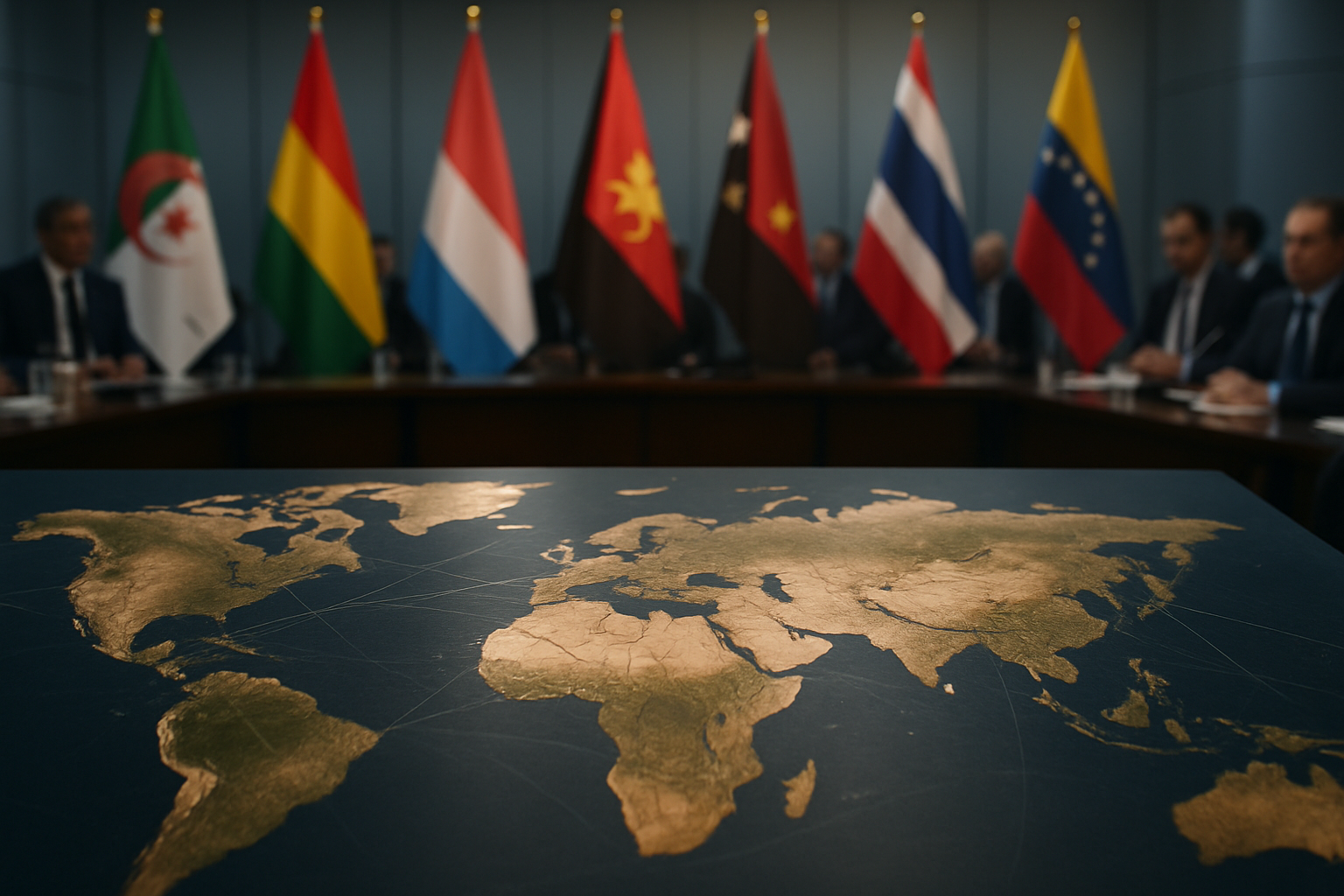
Political leaders across four continents implemented major policy shifts and electoral strategies this week, reflecting a broader pattern of democratic adaptation under pressure as governments grapple with economic challenges, youth unemployment, and evolving international relationships.
The convergence of political developments across Algeria, Canada, Croatia, and Peru demonstrates how contemporary democratic governance faces similar pressures despite vastly different political contexts and geographical locations.
Algeria's Economic Focus Amid Social Pressures
President Abdelmadjid Tebboune chaired a critical Cabinet meeting on Sunday that addressed multiple pressing issues, from electoral law reforms to economic measures designed to protect citizens' purchasing power during Ramadan. The session, which reviewed draft legislation defining electoral constituencies and parliamentary seats, signals Algeria's preparation for democratic processes while managing immediate economic concerns.
In a significant youth-focused initiative, President Tebboune ordered a comprehensive audit into why some young people have been unable to access unemployment benefits despite meeting legal requirements. This directive, issued to the Minister of Youth, reflects growing government attention to youth economic struggles that have historically been a source of political instability in the region.
"The daily and field follow-up of the implementation of all instructions and directives regarding maintaining citizens' purchasing power during Ramadan must be our priority."
— President Abdelmadjid Tebboune
The Cabinet also addressed practical economic measures, including setting a maximum price of 50,000 dinars for imported sacrificial animals for the upcoming holiday season. This price control mechanism demonstrates the government's intervention in essential goods markets to prevent speculation that could burden ordinary citizens.
Perhaps most tellingly, President Tebboune emphasized maximum penalties for food and fruit market speculators, threatening to permanently ban violators from any commercial activity in the country. This hardline approach reflects the government's recognition that economic speculation can rapidly undermine political stability.
Canada's Strategic Electoral Calculations
Prime Minister Mark Carney announced by-elections in three strategically important constituencies: University-Rosedale and Scarborough Southwest in Toronto, and Terrebonne in Quebec. These electoral contests represent crucial tests for the Liberal Party's ability to secure or maintain a thin majority government.
The timing and selection of these ridings suggests careful political calculation by the Carney government. The Toronto constituencies, with their diverse urban populations, will test Liberal appeal to Canada's multicultural electorate, while Terrebonne in Quebec remains essential to any federal majority strategy.
The announcement comes at a time when Canada faces complex international challenges, including managing relationships with the United States under the Trump administration and maintaining its role in international peacekeeping and development assistance. The electoral outcomes will significantly influence Carney's ability to implement his government's domestic and foreign policy agenda.
Croatia's Diplomatic Engagement with Middle East
Croatian Prime Minister Andrej Plenković conducted high-level talks with President Mohamed bin Zayed Al Nahyan of the United Arab Emirates, focusing on security cooperation and potential repatriation issues. While details of the discussions remain limited, the meeting reflects Croatia's continued engagement with Middle Eastern partners despite broader European concerns about regional stability.
This diplomatic engagement occurs within the context of Croatia's EU membership obligations and its historical experience managing complex regional relationships. The talks likely addressed economic cooperation opportunities and security arrangements that could benefit both nations while respecting international law and alliance commitments.
Peru's Emergency Governance Measures
The National Authority of Civil Service (Servir) formally implemented mandatory telework for public sector employees from March 9-14, responding directly to a natural gas supply crisis that threatens energy security across Lima Metropolitan and Callao regions.
This unprecedented measure aims to reduce worker mobility while ensuring continued government service delivery during the energy emergency. However, the policy includes important exceptions for institutions that must maintain in-person operations due to the critical nature of their functions.
Essential services including healthcare facilities, emergency response units, security agencies, and critical infrastructure operators will continue normal operations or implement hybrid work arrangements. Each exempted institution must organize work schedules to guarantee citizen services while managing energy consumption efficiently.
The telework mandate reflects Peru's ongoing struggle with infrastructure vulnerabilities that can rapidly disrupt normal governmental and economic operations. The policy also demonstrates how contemporary governments must balance operational efficiency with service delivery obligations during crisis periods.
Cross-National Patterns in Democratic Governance
The simultaneous political developments across these four nations reveal common patterns in contemporary democratic governance under stress. Governments are implementing immediate economic relief measures while preparing for electoral processes that will determine their political survival.
Youth unemployment and economic opportunity have emerged as central political issues across different political systems and economic development levels. Algeria's audit of unemployment benefit accessibility, Canada's urban electoral strategy, and Peru's emergency employment arrangements all reflect government recognition that economic dissatisfaction among young people poses serious political risks.
Each government is also managing the tension between immediate crisis response and longer-term institutional development. Algeria's market intervention, Canada's electoral timing, Croatia's diplomatic outreach, and Peru's emergency telework policies all represent attempts to maintain political stability while addressing underlying structural challenges.
International Relations and Domestic Politics
The developments also demonstrate how international relationships increasingly influence domestic political calculations. Croatia's UAE engagement, Canada's multi-constituency electoral strategy, Algeria's economic sovereignty measures, and Peru's infrastructure crisis response all occur within broader international contexts that limit and shape available policy options.
Regional security concerns, economic integration pressures, and alliance obligations create complex environments where domestic political success increasingly depends on effective international relationship management. The success or failure of these political initiatives will significantly influence each government's ability to maintain public support while meeting international obligations.
Looking Forward: Democratic Adaptation Challenges
These political developments represent efforts by democratic governments to adapt traditional governance approaches to contemporary challenges that cross traditional policy boundaries. Economic policy, electoral strategy, diplomatic engagement, and crisis management increasingly require integrated approaches that balance competing demands from domestic constituencies and international partners.
The outcomes of Algeria's economic measures, Canada's by-elections, Croatia's diplomatic initiatives, and Peru's emergency responses will provide important indicators of democratic governance effectiveness under pressure. Success will depend on governments' ability to deliver tangible benefits to citizens while maintaining institutional credibility and international cooperation.
As global political and economic uncertainties continue to intensify, these cases offer valuable insights into how democratic governments can maintain legitimacy and effectiveness through adaptive policy responses that address immediate needs while building foundations for longer-term stability and prosperity.