The international community scrambled to respond to the dramatic escalation in the Middle East as the United States and Israel launched "Operation Epic Fury" against Iran, with world leaders, the United Nations, and regional powers issuing urgent calls for de-escalation while condemning the military actions that have plunged the region into its most serious crisis in decades.
As explosions rocked multiple Iranian cities including Tehran and reports emerged of devastating strikes on civilian infrastructure, including a tragic attack on a girls' elementary school in southern Iran that killed at least 53 students and staff, the global diplomatic response has been swift and divided.
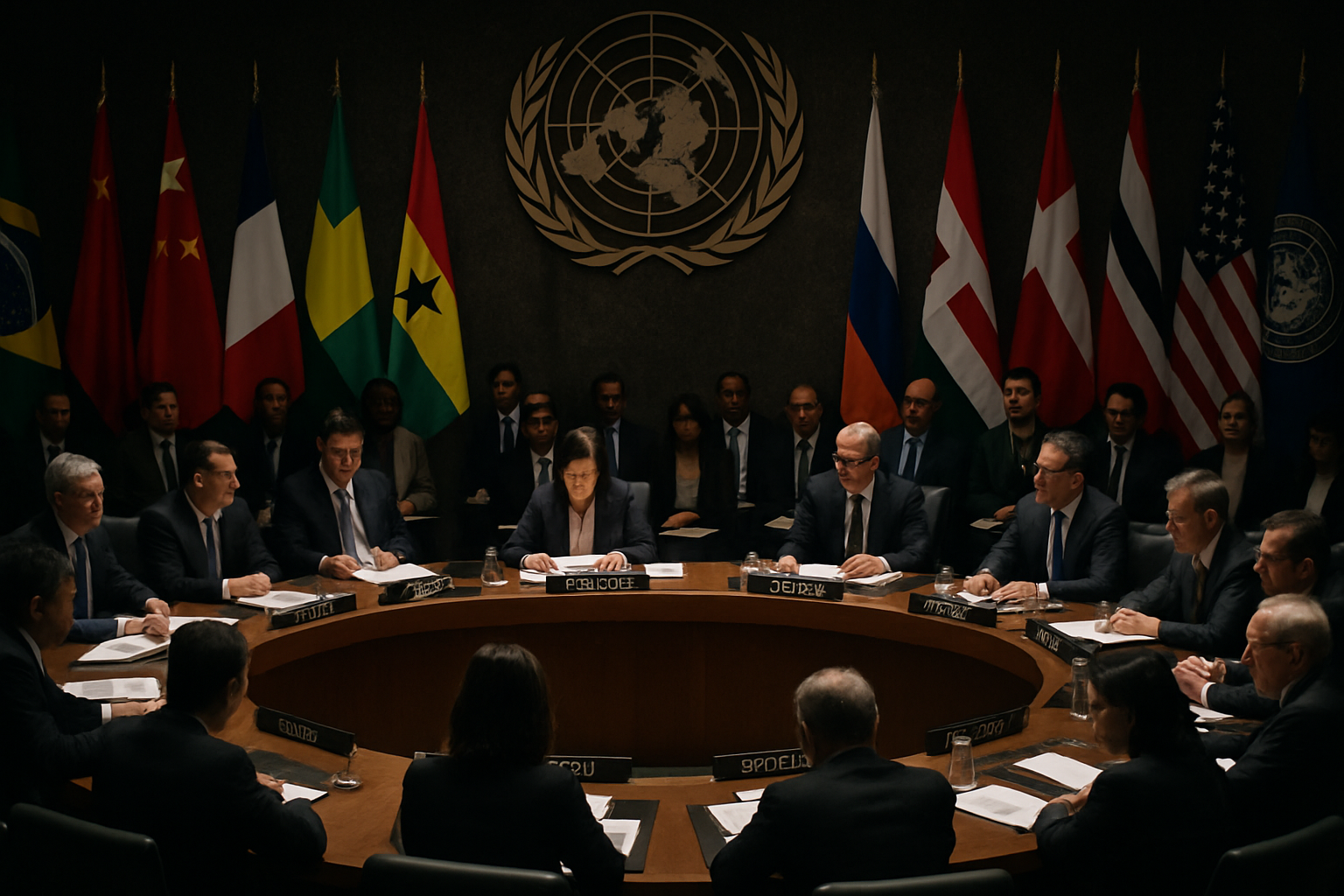
Emergency UN Security Council Session
The UN Security Council convened an emergency session Saturday evening at 22:00 CET (4:00 PM New York time) following a joint request by France, China, Russia, Colombia, and Bahrain. The unprecedented military escalation has forced the international body to address what UN Secretary-General António Guterres described as actions that "undermine international peace and security."
Russian Foreign Minister Sergey Lavrov confirmed Moscow's readiness to contribute to resolving the situation around Iran, including within the UN Security Council framework. In a phone call with his Iranian counterpart Abbas Araghchi, Lavrov emphasized the need for an immediate cessation of American and Israeli attacks on Iran, with Russia condemning what it called "reckless actions by Washington and West Jerusalem" against a sovereign UN member state.
"The use of force from the USA and Israel against Iran, and the subsequent retaliation from Iran over the entire region, undermines international peace and security."
— UN Secretary-General António Guterres
European Union Response
European leaders issued a rare joint statement with France, Germany, and the United Kingdom taking the lead in condemning Iran's retaliatory attacks while making clear they did not participate in the US-Israeli strikes. French President Emmanuel Macron called for the Israeli and American air strikes to stop, describing the outbreak of conflict as "dangerous for all" and demanding that "the escalation must stop."
The European Union announced an emergency meeting of the College of Security due to Iran, with EU Commission President Ursula von der Leyen and European Council President António Costa calling for de-escalation. The 27 EU member states are set to hold an urgent meeting Sunday to address the crisis and discuss the situation of Europeans in the region.
German Chancellor Friedrich Merz, along with Macron and UK Prime Minister Keir Starmer, condemned Iran's counter-attacks in the region while urging Iranian leaders to "seek a negotiated solution" and avoid further attacks against regional countries.
NATO and Regional Allies
NATO issued its first official statement confirming it is "closely monitoring events in the Middle East" after Israel and the United States launched large-scale attacks on Iran. The alliance noted that the United States is a member of the North Atlantic Alliance, emphasizing the implications for broader Western security architecture.
Estonia's Foreign Minister Margus Tsahkna argued that "significantly weakening the Iran regime will bring benefits to European security," while also urging restraint to avoid escalation. The Baltic nation warned its citizens to leave Israel and implemented emergency protocols for regional monitoring.
Middle Eastern and Gulf State Reactions
The Arab world's response has been complicated by the direct Iranian retaliation against Gulf states. Iran launched coordinated missile and drone strikes against Kuwait, UAE, Bahrain, and Qatar, fundamentally disrupting the unprecedented regional coalition that had been supporting diplomatic efforts.
Egypt condemned Iranian attacks targeting "sisterly Arab countries," warning of "comprehensive chaos" in the region. Saudi Arabia called the Iranian strikes "blatant and cowardly" while successfully intercepting incoming missiles with its defense systems. The UAE reported one civilian death in Abu Dhabi from missile shrapnel, while Kuwait Airport suffered drone strikes causing employee injuries.
This marks a dramatic shift from the extraordinary Middle Eastern consensus that had been backing diplomatic processes, with Saudi Arabia, UAE, Qatar, and Egypt previously presenting unprecedented unity in preventing military confrontation.
Asian Powers' Positions
China expressed "deep concern" over the US-Israeli strikes on Iran while stopping short of outright condemnation, displaying diplomatic caution characteristic of Beijing's approach to Middle Eastern conflicts. The Chinese Foreign Ministry called for de-escalation and respect for territorial sovereignty while avoiding explicit blame assignment.
South Korea's Foreign Ministry urged "all parties involved in the attack on Iran to make utmost efforts to ease tensions," reflecting Seoul's traditional position of supporting diplomatic solutions to international crises while maintaining alliance obligations.
Aviation and Economic Disruptions
The crisis has triggered a global aviation emergency, with Iran, Iraq, Israel, UAE, and Qatar closing their airspace to civilian traffic. Major carriers including Emirates, Air France-KLM, Wizz Air, and Bulgarian Air suspended Middle East operations, affecting hundreds of thousands of passengers worldwide.
The Middle East serves as a critical Europe-Asia connecting hub, and the airspace closures have severely disrupted global transportation networks. Oil prices rose immediately on concerns about the Strait of Hormuz, through which 40% of global oil transit passes, potentially threatened by the escalating conflict.
Breakdown of Nuclear Diplomacy
The military escalation comes after the complete collapse of intensive nuclear negotiations that had achieved the most significant progress since the JCPOA breakdown in 2018. Geneva talks had reached "broad agreement on guiding principles" through Switzerland-Oman mediation, but fundamental disagreements over the scope of any agreement proved insurmountable.
Iran had maintained ballistic missiles and regional proxies as "red lines" excluded from nuclear-only talks, while the US under Secretary of State Marco Rubio insisted on comprehensive agreements addressing missiles, armed groups, and human rights. President Trump's explicit regime change advocacy, calling Iranian government overthrow "the best thing that could happen," further complicated diplomatic efforts.
Calls for Nuclear Governance Reform
The crisis occurs against the backdrop of a broader nuclear governance crisis, with the New START treaty having expired February 5, 2026 – marking the first time in over 50 years without US-Russia nuclear constraints. Combined with China's nuclear expansion, the Iranian crisis represents what UN Secretary-General Guterres has called nuclear risks at their "highest in decades."
Several international observers noted that the collapse of Iran diplomacy raises fundamental questions about the viability of diplomatic solutions for modern nuclear crises, potentially setting dangerous precedents for 21st-century proliferation challenges.
Humanitarian Concerns
International human rights organizations are demanding investigations into potential Geneva Conventions violations, particularly regarding the targeting of civilian educational infrastructure. The images of children's backpacks and schoolbooks among the rubble of the Minab elementary school have become powerful symbols of the human cost of diplomatic failure.
Multiple European governments issued immediate travel warnings and authorized embassy staff evacuations, with Sweden and Serbia ordering immediate citizen evacuations from Iran citing "extremely uncertain" security conditions.
Looking Forward
As the international community grapples with this dramatic escalation, the emergency UN Security Council session represents a critical test of multilateral diplomacy's capacity to address rapidly evolving crises. The divided global response – with some powers condemning the initial strikes, others focused on Iranian retaliation, and still others calling for comprehensive de-escalation – reflects the complex geopolitical dynamics that have made Middle Eastern conflicts increasingly difficult to resolve through traditional diplomatic channels.
The crisis has effectively ended what many observers had seen as the most promising diplomatic opening between the US and Iran in years, while simultaneously disrupting regional security arrangements and triggering concerns about broader conflict escalation that could reshape Middle Eastern geopolitics for decades to come.
With military operations continuing and retaliatory strikes expanding across the region, the international community faces the urgent challenge of preventing further escalation while addressing the underlying issues that led to this dramatic breakdown in diplomatic progress.