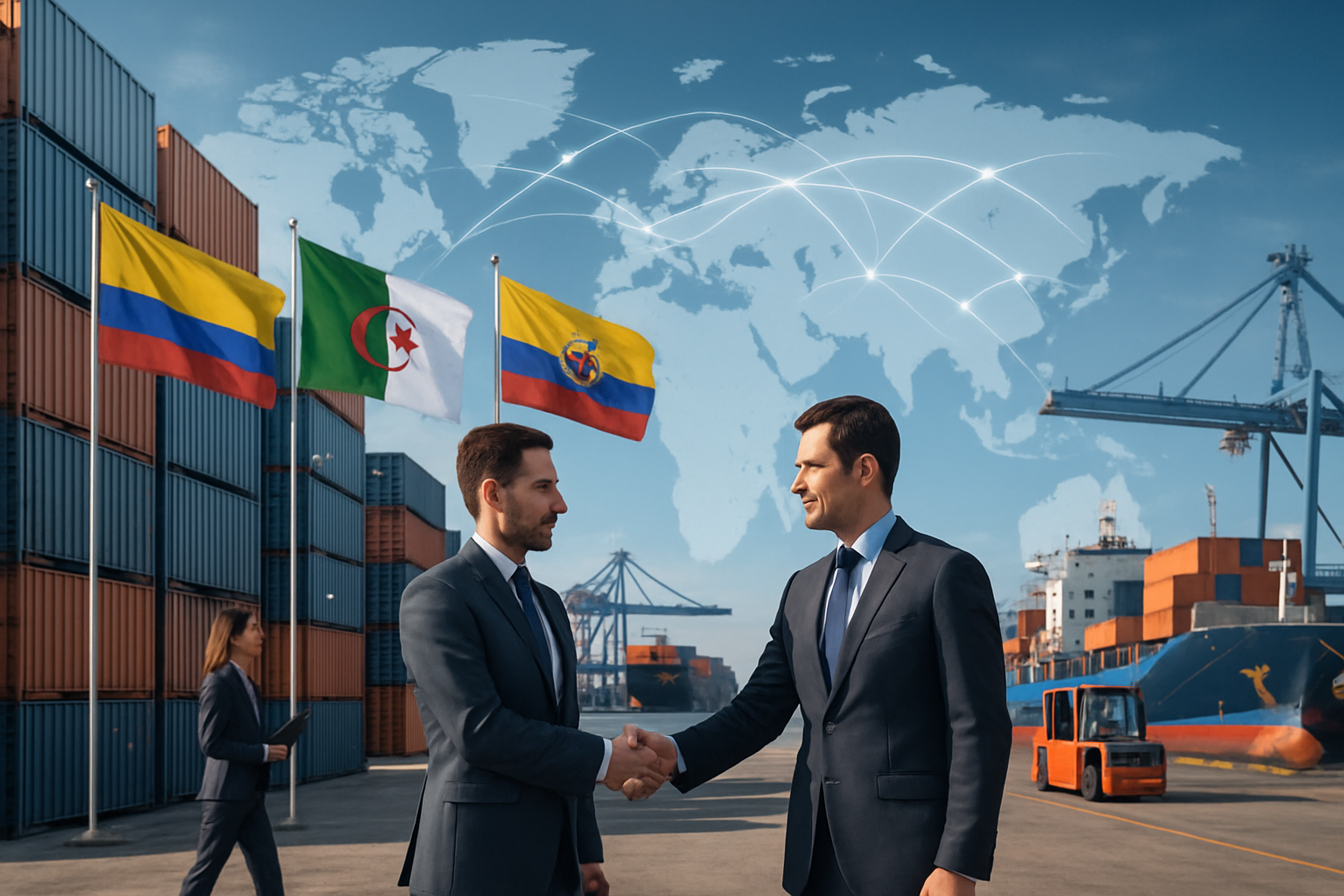
A deepening trade crisis between Colombia and Ecuador has escalated into a full-scale tariff war, with Colombia imposing 100% import taxes in response to Ecuador's earlier tariff increases, while Algeria simultaneously launches ambitious export diversification initiatives targeting European markets.
The Colombia-Ecuador dispute represents the most serious commercial confrontation between the neighboring South American nations in recent memory, stemming from cross-border tensions over drug trafficking and the controversial case of politician Jorge Glas. Colombia's retaliatory 100% import tax affects a wide range of Ecuadorian goods, potentially devastating bilateral trade relationships worth hundreds of millions of dollars annually.
Algeria's Strategic Export Diversification
Amid this regional turbulence, Algeria's Tosyali industrial group has announced major export initiatives targeting European markets as part of a national strategy to boost non-hydrocarbon exports. The timing of Algeria's announcement underscores the country's determination to reduce dependence on oil and gas revenues while establishing new trade partnerships during a period of global commercial uncertainty.
The Algerian government's comprehensive export promotion strategy represents a significant shift in North African economic policy, with officials emphasizing the need to establish a stronger presence in international markets. Industry analysts note that Algeria's iron and steel sector, led by companies like Tosyali, is well-positioned to capitalize on European demand for raw materials and semi-finished products.
"This initiative reflects our commitment to economic diversification and establishing Algeria as a reliable partner in global supply chains beyond traditional energy exports."
— Tosyali Algeria, Official Statement
Colombia-Ecuador Trade War Intensifies
The Colombia-Ecuador conflict has created significant economic disruption across the Valle del Cauca region, where foreign companies and export-oriented businesses face mounting uncertainty. Regional authorities report that international firms operating in the Valle account for more than half of the area's total export volume, making them particularly vulnerable to escalating tariff measures.
Colombian Governor of Valle del Cauca has appealed to the national government to prevent further deterioration of regional economic conditions, warning that continued escalation could have severe consequences not only for the department but for Colombia's broader international trade relationships. The dispute affects numerous sectors including agriculture, manufacturing, and services that depend on cross-border commerce.
Ecuador's initial tariff increases were implemented as part of broader economic measures, but the Colombian response has transformed what began as unilateral trade policy into a bilateral commercial conflict with regional implications. Industry representatives from both countries have expressed concern about the long-term damage to business relationships built over decades.
Regional and Global Trade Context
These developments occur against the backdrop of increasing global trade fragmentation, with nations increasingly turning to bilateral partnerships and regional agreements rather than multilateral frameworks. Recent trends show a marked shift away from traditional multilateral trade institutions toward more targeted, security-oriented commercial relationships.
The Colombia-Ecuador dispute illustrates how political tensions can rapidly translate into economic warfare, potentially disrupting established supply chains and investment patterns across South America. Regional trade integration efforts, including those within the Pacific Alliance and other Latin American frameworks, face mounting challenges from such bilateral conflicts.
Impact on Foreign Investment and Business Confidence
International businesses operating in affected regions report growing uncertainty about future trade policies and investment security. The Valle del Cauca situation demonstrates how quickly regional commercial relationships can deteriorate, forcing companies to reassess their exposure to political risk in Latin American markets.
Foreign direct investment flows to the region may face headwinds as investors seek more stable regulatory environments. The dispute comes at a particularly sensitive time for South American economies seeking to attract international capital for infrastructure development and industrial modernization projects.
Business associations across both Colombia and Ecuador have called for urgent dialogue to prevent further escalation, warning that continued tariff increases could undermine competitiveness in global markets where both countries compete for export opportunities.
Broader Implications for International Trade Architecture
The simultaneous occurrence of Algeria's export push and the Colombia-Ecuador trade war illustrates the complex dynamics reshaping global commerce in 2026. While some nations pursue aggressive export diversification strategies, others become embroiled in destructive bilateral disputes that threaten regional economic integration.
Trade policy experts note that these developments reflect broader challenges facing international economic cooperation, including the decline of multilateral trade institutions and the rise of politically-motivated commercial policies. The trend toward bilateral partnerships, while offering some advantages in terms of flexibility and rapid implementation, also creates new vulnerabilities to political interference.
The Algeria case demonstrates how countries can successfully pursue export diversification during periods of global trade uncertainty, while the Colombia-Ecuador dispute shows how quickly commercial relationships can deteriorate when political considerations override economic interests.
Looking Forward: Challenges and Opportunities
As these trade tensions continue to evolve, regional and international stakeholders face critical decisions about how to manage the balance between national interests and regional economic integration. The success of Algeria's export initiatives may provide a template for other developing nations seeking to diversify their economic relationships, while the Colombia-Ecuador conflict serves as a cautionary tale about the costs of allowing political disputes to derail commercial cooperation.
International trade institutions and regional organizations will need to develop new mechanisms for preventing and resolving such disputes to maintain confidence in cross-border commerce. The stakes extend beyond the immediate parties involved, as global supply chains become increasingly vulnerable to disruption from bilateral political tensions.
The resolution of these current trade tensions may well determine the trajectory of international economic cooperation in the years ahead, as nations grapple with the competing demands of national sovereignty, economic integration, and global competitiveness in an increasingly fragmented commercial landscape.