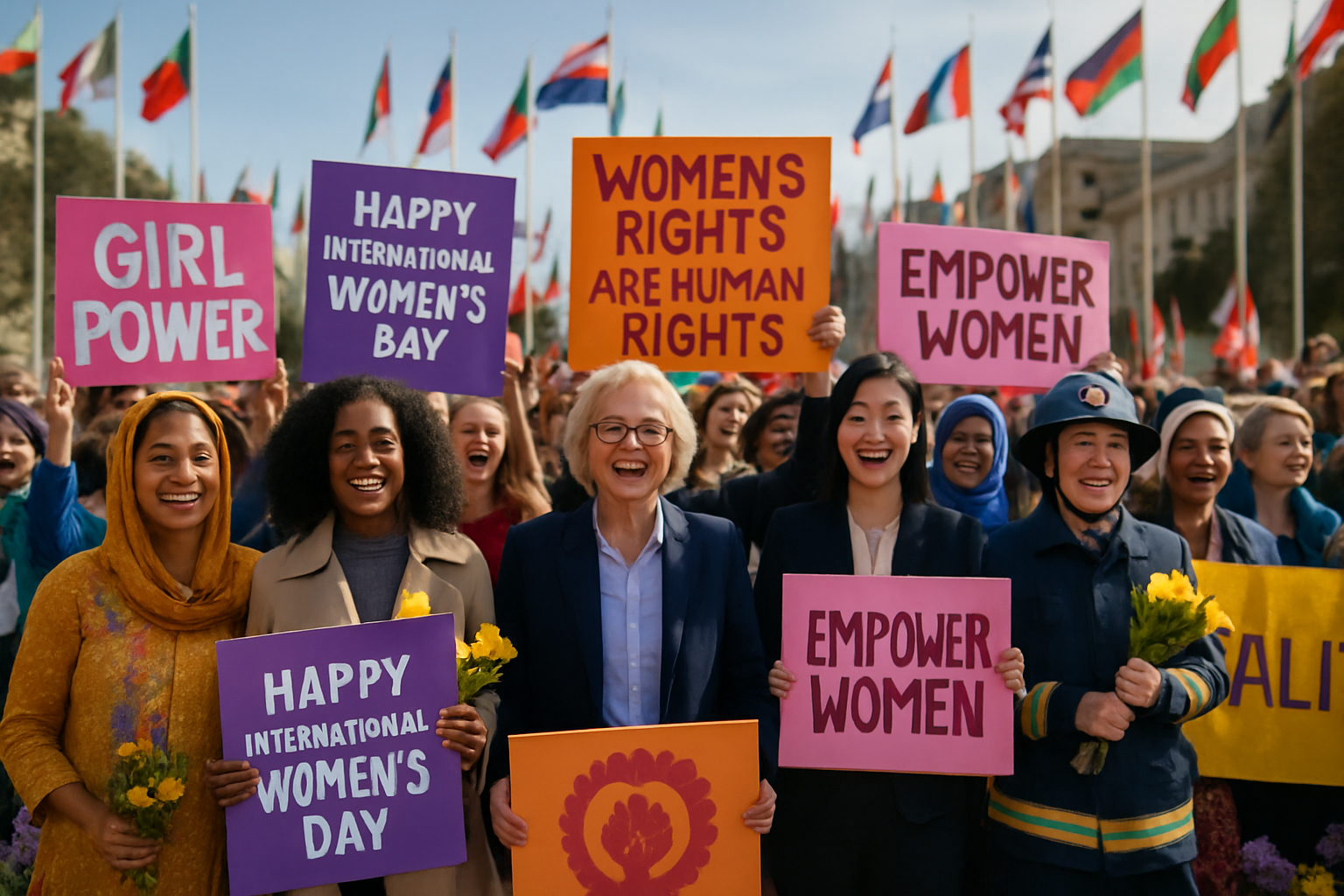
Countries across six continents celebrated International Women's Day 2026 with unprecedented coordinated efforts demanding gender equality, launching transformative women's empowerment initiatives, and recognizing the vital contributions of women to global society.
From Azerbaijan's presidential recognition to Zimbabwe's calls for compassion, the March 8, 2026 celebrations represented one of the most comprehensive global observances in the day's history, with governments, organizations, and civil society groups uniting around the theme of women's rights, justice, and action.
Presidential and Government Leadership
Azerbaijan President Ilham Aliyev shared commemorative posts on social media platforms, joining a chorus of world leaders recognizing women's contributions to national development. In Cameroon, First Lady Chantal Biya prepared to preside over the official parade marking the 41st edition of International Women's Day, scheduled for the Boulevard du 20 Mai in Yaoundé.
Nicaragua's government sent special greetings describing women as "guerreras de amor y luz" (warriors of love and light), emphasizing their crucial role in the country's development and social progress.
Empowerment Through Education and Leadership
In Barbados, young girls participated in special workshops designed to foster leadership skills from an early age. The Caribbean initiative encouraged participants to "see themselves as leaders and change-makers," urging them to develop bold dreams and use their voices to shape the future.
Greece launched campaigns with the message "Γυναίκα είσαι ελεύθερη σε κάθε επιλογή" (Woman, you are free in every choice), emphasizing women's autonomy and decision-making power in all aspects of life.
Pakistan unveiled a groundbreaking Women's Parliamentary Leaders Portal developed by the Women's Parliamentary Caucus with EU financial support and UN Women partnership. Senate Chairman Syed Yousaf Raza Gilani emphasized the importance of strengthening institutional systems supporting women's leadership in politics.
Economic Empowerment Initiatives
Burkina Faso demonstrated concrete support for women's economic independence by delivering a 1.5-hectare agricultural site to women in Gaoua, inaugurated on behalf of President Ibrahim Traoré. The initiative aims to promote women's economic autonomization and contribute to local food security.
Bolivia's analysis revealed significant gaps in women's economic autonomy, with the Women's Coordinator Observatory presenting data showing continued challenges despite normative advances in political participation rights. The organization highlighted persistent structural debts in economic autonomy, justice access, and reproductive rights.
"We don't need to accept 123-year wait or longer for equality. Disability-inclusive investments in women's livelihoods can compress over a century of waiting into a generation of progress."
— Munazza Gillani, Director Sightsavers for Pakistan and Middle East
Social Justice and Healthcare Focus
Haiti's Section of Women's Rights emphasized that the 49th International Women's Day came at a critical moment when judicial systems face severe challenges and women's rights are systematically violated. The organization stressed that "women's rights mean nothing if we cannot defend them seriously."
In Venezuela, anthropologist Aimee Zambrano called for justice systems with gender perspectives, highlighting ongoing struggles against gender-based violence and the need for comprehensive legal reforms.
Bolivia's National Service of the Distribution System (Senasir) reported that 30,712 people receive widow's pensions, with the vast majority being women classified as beneficiaries, demonstrating the system's crucial role in protecting elderly women's economic security.
Political Representation and Structural Change
Bosnia and Herzegovina witnessed the election of new leadership for the SDP Women's Forum in Sarajevo, with Selma Smajlović chosen as president, reflecting ongoing efforts to strengthen women's political participation at local levels.
Zimbabwe's First Lady Dr. Auxillia Mnangagwa issued special messages calling for cultures of compassion and giving, emphasizing that acts of selflessness are key to transforming lives and strengthening communities.
Challenges and Ongoing Struggles
Despite global celebrations, International Women's Day 2026 occurred against a backdrop of significant challenges. The latest World Economic Forum data shows that a girl born today must wait 123 years to see global gender equality achieved—far beyond any expected lifespan.
Afghanistan remains a stark contrast to global progress, ranking 181st out of 181 countries in the Women, Peace and Security Index, with 88% of female-headed households unable to meet minimum living requirements under Taliban restrictions. This represents what experts call the "most severe rollback of women's rights in modern history."
International Cooperation and Future Directions
The 2026 celebrations demonstrated unprecedented international cooperation despite multilateral funding challenges. Bilateral partnerships and regional collaboration networks enabled flexible, culturally responsive approaches while maintaining evidence-based standards and universal human rights commitments.
UN Women's Executive Director Sima Bahous noted that the world has "never been so close to achieving gender equality, never closer to losing it," highlighting the dual nature of current progress and backlash against women's rights globally.
Technology and Innovation
Several countries leveraged technology to enhance women's empowerment initiatives. Pakistan's digital parliamentary portal represents a new model for evidence-based, gender-responsive policymaking, while various nations implemented AI-enhanced systems to identify and address workplace discrimination and pay gaps.
However, experts warned that technology must enhance rather than replace human connections in advocacy work, ensuring that digital solutions don't create new forms of inequality.
Looking Forward: Sustained Commitment Beyond March 8
The most significant aspect of International Women's Day 2026 was the emphasis on year-round commitment rather than annual symbolic recognition. Leaders and advocates stressed that gender equality must be treated as fundamental community infrastructure requiring daily attention rather than crisis management.
Success factors identified across countries include sustained political commitment, comprehensive professional training, robust community engagement, and continued international cooperation. The path forward requires vigilance against backsliding, innovative solutions to persistent challenges, and transformation of annual recognition into sustained daily commitments.
As the world marked International Women's Day 2026, the celebrations served both as recognition of significant progress achieved and a call to action for the extensive work that remains. The convergence of evidence-based prevention strategies, technological innovation, and unprecedented international cooperation provides a foundation for comprehensive women's empowerment that could determine whether societies organize around human flourishing versus merely addressing periodic crises.
The template established in 2026—combining governmental leadership, grassroots activism, economic empowerment, and international solidarity—offers hope that the next generation of women worldwide will inherit a more equitable world, built through sustained commitment to justice, rights, and action for all women and girls.