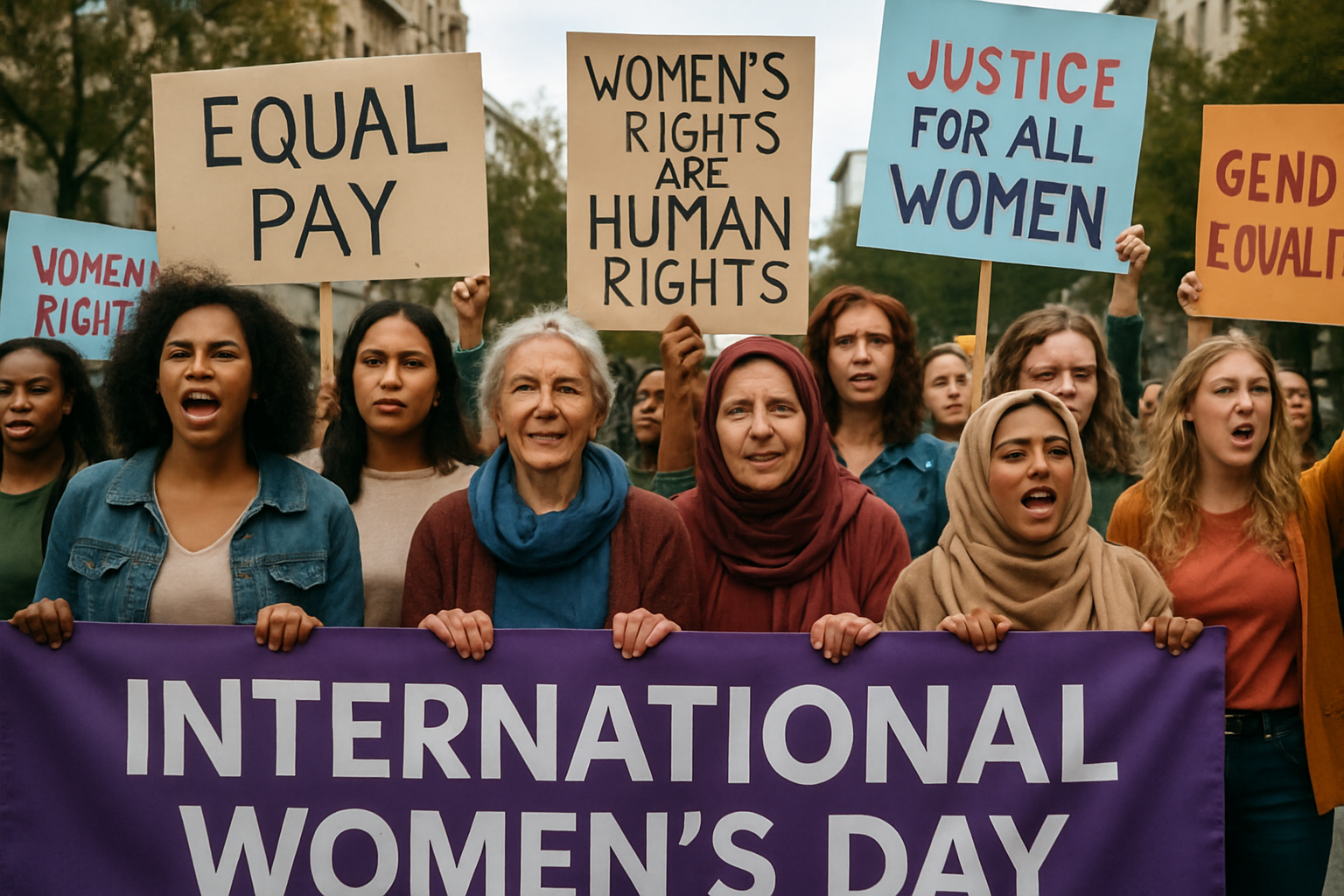
Women and supporters around the world marked International Women's Day 2026 on March 8 with demonstrations, celebrations, and calls for action, highlighting both significant progress achieved and the stark challenges that remain in the global fight for gender equality.
From the streets of Sarajevo to government offices in Algeria, from detention centers in Pakistan to cultural venues in Azerbaijan, the day served as both a celebration of women's achievements and a powerful reminder of the work that lies ahead in securing equal rights and opportunities for all women.
Afghanistan: A Stark Reminder of Rights Under Threat
The most sobering backdrop to this year's celebrations came from Afghanistan, where former President Hamid Karzai issued a rare public statement calling for the restoration of women's rights and the reopening of schools for girls. Writing on social media, Karzai emphasized that Afghan women have "long worked alongside men in shaping the country's progress" and that their contributions remain vital to the nation's future.
Afghanistan's Ministry for the Propagation of Virtue and the Prevention of Vice reported handling 3,511 complaints related to women's issues over the past ten months, with officials claiming to have addressed 3,481 cases. However, this comes amid continued restrictions under Taliban rule that have systematically excluded women from public life, education, and most employment.
"Afghan women have historically played crucial roles in our society's development, and this must continue for Afghanistan to prosper."
— Hamid Karzai, Former President of Afghanistan
Europe: Mixed Progress on Equality
Across Europe, the day was marked by both celebrations of progress and acknowledgment of persistent challenges. In Austria, officials highlighted that women's representation in government and legal professions has reached significant milestones, yet advocates pointed to ongoing intersectional discrimination facing women with disabilities in the workplace.
Austrian research revealed that the gender pay gap has narrowed dramatically over the past 50 years, from 31.4% for those born in 1975 to 19.4% for those born in 2025 - representing one of the most significant reductions in gender income disparity in the nation's history.
However, challenges persist. In the Czech Republic, data showed that women earn 18.5% less than men, giving the country the European Union's second-highest gender pay gap. Meanwhile, Danish women were recognized as among the best in the EU for retirement savings, demonstrating varied progress across different aspects of economic empowerment.
The Netherlands saw discussions about political representation, with Amsterdam Mayor Femke Halsema arguing that the underrepresentation of women in politics should not be framed in terms of "quality" but rather as a systemic issue requiring structural solutions.
Middle East and North Africa: Government Recognition and Grassroots Activism
In Algeria, high-ranking officials offered unprecedented recognition of women's contributions to national development. The head of the Constitutional Court, Leila Aslaoui, praised Algerian women for confirming their place in state institutions, while various government ministers organized ceremonies honoring female employees across different sectors.
The Algerian government's recognition came as political leaders emphasized that women's empowerment represents "a fundamental pillar of national development and building a strong, modern state," according to statements from the Democratic National Rally party.
Jordan saw similar governmental recognition, with Senate President Faisal Al-Fayez congratulating Jordanian women on their contributions across various sectors, acknowledging their "determination and competence" in nation-building efforts.
Global Activism and Protests
Street demonstrations and marches took place across multiple continents, with activists demanding concrete action on gender-based violence, economic inequality, and political representation.
In Sarajevo, Bosnia and Herzegovina, protesters marched under the slogan "Women's safety is a public obligation. A state that does not interfere approves violence," calling for systemic changes to address gender-based violence. The march proceeded from Skenderija to the Historical Museum, with participants carrying banners demanding accountability from government institutions.
France witnessed demonstrations organized by approximately 100 organizations across the country, with activists warning that the rise of far-right movements threatens hard-won women's rights. The protests reflected growing concerns about potential rollbacks of gender equality advances.
In Pakistan, women's rights activists faced a different kind of challenge entirely. Several members of the Aurat March, including prominent activist Dr. Farzana Bari, were detained by police in Islamabad ahead of their planned rally, with authorities citing Section 144 restrictions on public gatherings.
Gaza and Palestine: Women Under Fire
Palestinian women's organizations used International Women's Day to highlight the devastating impact of ongoing conflict on women and girls. The Palestinian Center for the Missing and Forcibly Disappeared reported that approximately 3,200 women remain missing in Gaza during the current crisis.
The Palestinian Ministry of Women's Affairs documented the killing of more than 12,500 women in Gaza since October 2023, including over 9,000 mothers. Rights organizations called the situation "one of the most severe humanitarian disasters in contemporary history," specifically affecting women and girls.
"Palestinian women, especially in Gaza, are commemorating this day amid one of the most severe humanitarian catastrophes in modern history."
— Palestinian Ministry of Women's Affairs
Cultural Celebrations and Recognition
Not all observances focused on challenges and protests. In Azerbaijan, the Qazakh State Drama Theatre staged a special performance of "A Tale of One Night" to mark the day, representing the cultural dimension of women's recognition.
Estonia saw the opening of "Out of Line," a new exhibition dedicated to women, trans, and queer voices at the Bästard Gallery in Tallinn, demonstrating how International Women's Day has evolved to embrace broader conversations about gender and identity.
Educational initiatives also took center stage, with various countries organizing workshops and forums aimed at empowering young girls and women in leadership roles.
Economic Empowerment and Workplace Issues
Economic themes dominated discussions in several regions, with particular attention to persistent wage gaps and workplace discrimination. Hong Kong advocates emphasized the need to ensure that motherhood no longer derails women's careers, calling for systemic changes to support working mothers.
Chief Executive John Lee Ka-chiu noted that women comprise 54% of Hong Kong's population and hold significant representation in government, legal, and accounting sectors, yet barriers remain in corporate leadership advancement.
In Finland, Education Minister Anders Adlercreutz highlighted that violence against women remains "one of Finland's shameful stains," emphasizing that even in countries with strong equality records, significant work remains to be done.
International Cooperation and Solidarity
The day also showcased international solidarity, with various countries and organizations coordinating messages of support and sharing best practices for advancing gender equality. The United Nations' 2026 campaign theme "Rights. Justice. Action. For ALL Women and Girls" resonated across multiple nations' celebrations.
International media coverage highlighted both progress and setbacks, with particular attention to countries where women's rights have faced recent restrictions or where new advances have been achieved.
Looking Forward: Challenges and Opportunities
As International Women's Day 2026 concluded, advocates and officials across the globe emphasized that the fight for gender equality requires sustained commitment beyond annual observances. Many speakers called for transforming symbolic recognition into concrete policy changes and resource allocation.
The contrasts evident throughout the day's global observances - from celebration in some regions to detention of activists in others - underscore the uneven progress of women's rights worldwide and the continued need for international cooperation and advocacy.
From the streets of Sarajevo calling for safety, to the government halls of Algeria recognizing contributions, to the cultural venues celebrating women's voices, International Women's Day 2026 demonstrated both how far the global women's movement has come and how much work remains to achieve true equality for all women and girls.