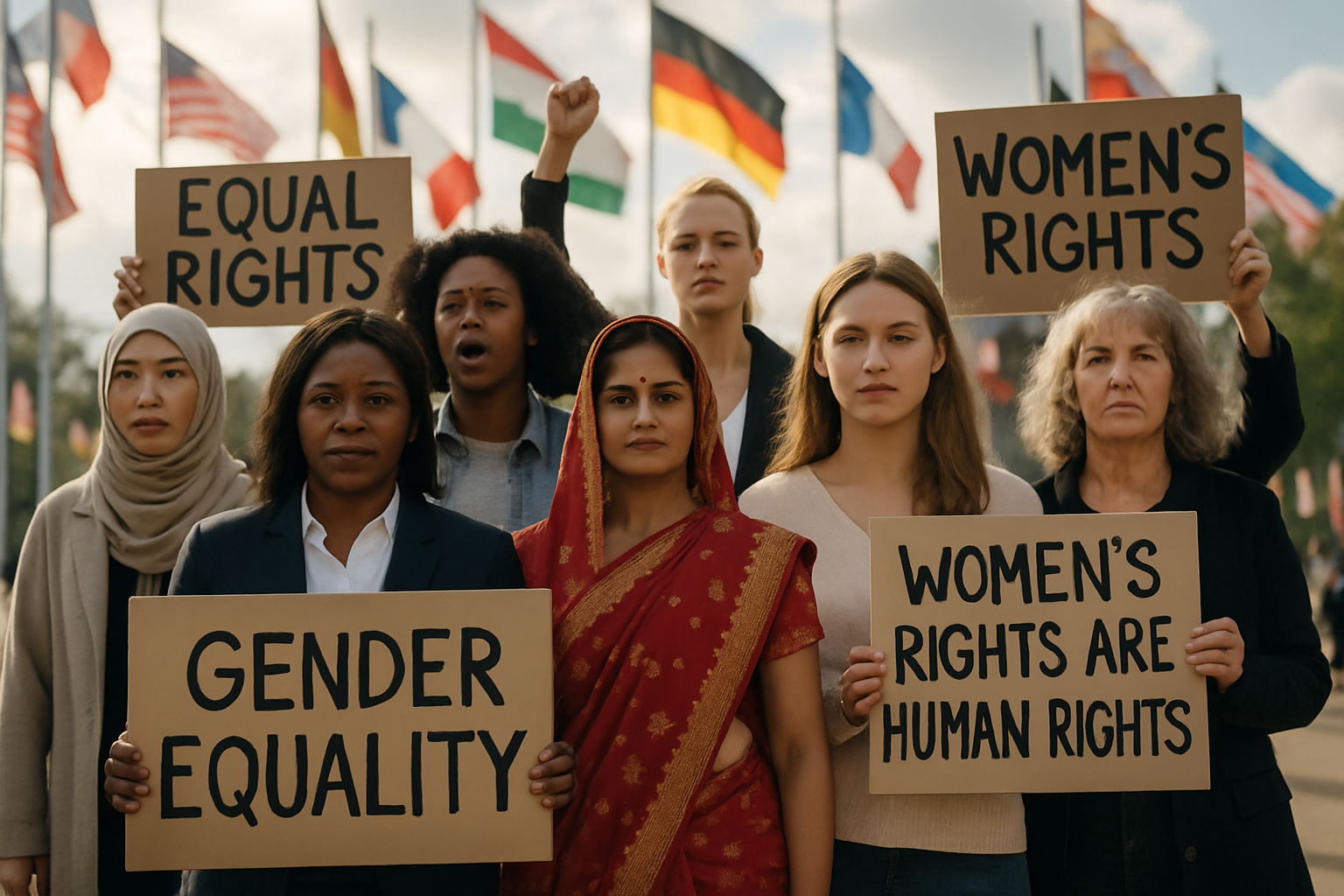
As International Women's Day approaches on March 8, 2026, countries across Europe, Central Asia, and beyond are grappling with a complex landscape of gender equality progress, marked by significant advances in some areas while troubling setbacks emerge in others.
From Austria's ambitious childcare reforms to Cyprus's peace-building initiatives emphasizing women's participation, the global picture reveals both inspiring breakthroughs and persistent challenges that demand sustained attention beyond annual observances.
Political Leadership and Peace-Building
Cyprus has emerged as a leader in integrating gender equality into conflict resolution efforts. The country's Technical Committee on Gender Equality issued a powerful statement ahead of International Women's Day, emphasizing that gender equality is "not only a fundamental human rights principle, it is an essential foundation for peace, reconciliation and a sustainable future in Cyprus."
"Women's full, equal and meaningful participation in public life and decision-making processes is indispensable to building trust, strengthening institutions and supporting lasting peace."
— Cyprus Technical Committee on Gender Equality
The committee's approach aligns with UN Security Council Resolution 1325 and related resolutions on Women, Peace and Security, demonstrating how gender equality principles can be systematically integrated into national peace processes.
Austria's Childcare Revolution
Austria is undertaking a comprehensive reimagining of childcare access, with the NEOS political party highlighting the stark contrast between progressive Vienna policies and more traditional approaches in Upper Austria. The party argues that true gender equality requires "genuine freedom of choice through comprehensive kindergarten expansion," pointing to how adequate childcare infrastructure directly impacts women's workforce participation.
Vienna's innovative approach to early childhood education represents a model that other regions are being urged to adopt, with advocates emphasizing that women's economic empowerment depends fundamentally on accessible, quality childcare options.
Cultural Representation Challenges
Finland provides a sobering reminder of ongoing gender disparities in creative industries. New data reveals that only about one-fifth of Finnish music creators are women, highlighting how gender imbalances persist even in sectors often perceived as more progressive.
This pattern reflects broader challenges across creative and technical fields, where despite decades of equality initiatives, women remain significantly underrepresented in key creative and decision-making roles.
Economic Participation in Central Asia
Kazakhstan offers an intriguing case study in women's professional distribution, with striking statistics showing that 82% of educators and 48% of entrepreneurs in the country are women. This data points to both the concentration of women in traditionally feminized professions like education and their growing presence in business leadership.
The high percentage of female entrepreneurs suggests significant economic empowerment opportunities, while the overwhelming representation in education highlights both women's contributions to social development and potential occupational segregation patterns.
Generational Divides and Youth Attitudes
Perhaps most concerning are emerging trends among younger generations. Spanish research indicates that while 38% of young people identify as feminist, a majority still supports basic gender equality principles, revealing a complex relationship between feminist identity and equality values among youth.
According to research from Planet News' memory archives, international surveys have revealed troubling regression among Generation Z men regarding gender equality, with significant portions believing "enough has been done for gender equality" and that "men are being discriminated against." This generational divide challenges assumptions about automatic progress on gender issues.
Systemic Economic Barriers
Economic inequality remains a central challenge across multiple contexts. Austrian data shows 40% of women consider quitting jobs due to inadequate salaries, reflecting persistent wage gaps and discrimination. Research compiled by Planet News reveals that women face additional barriers in job searches, while traditional gender roles within families continue to limit employment opportunities, particularly for migrant women.
These economic pressures create cascading effects on women's independence, career advancement, and long-term financial security, highlighting how workplace discrimination intersects with broader social and cultural barriers.
Global Context and Historical Perspective
The current developments occur against a backdrop of both remarkable progress and significant setbacks globally. While some nations have achieved substantial advances in areas like education access and legal protection, others face severe restrictions on women's basic rights and freedoms.
Historical analysis shows that gender equality progress is neither linear nor guaranteed, requiring sustained political commitment, comprehensive policy responses including pay equity enforcement, and robust monitoring systems to prevent backsliding.
Technology and Modern Challenges
The intersection of gender equality with technological advancement presents both opportunities and risks. Digital platforms can enable greater economic participation and global connectivity for women, while also creating new forms of harassment and discrimination that require innovative policy responses.
Countries implementing prevention-focused strategies in areas like cybersafety and digital rights report better outcomes for women's participation in technology sectors, suggesting that proactive approaches yield superior results to reactive measures.
Path Forward: Daily Commitment Beyond Annual Recognition
As International Women's Day 2026 approaches, advocates emphasize that gender equality requires "daily commitment versus annual observance." The diversity of challenges across countries demonstrates that while universal principles of women's rights apply globally, implementation strategies must be locally adapted while maintaining international cooperation and accountability.
Success factors identified across different contexts include sustained political commitment to healthcare and education investment, comprehensive professional training in prevention approaches, robust community engagement, and international cooperation for knowledge sharing.
"Gender equality is treated as fundamental community infrastructure versus individual crisis management."
— International Development Researchers
Looking Ahead
International Women's Day 2026 represents a critical juncture in global women's rights policy, with convergence of evidence-based prevention strategies, technological innovation, and international cooperation providing unprecedented opportunities for comprehensive wellness and empowerment promotion.
The success of current initiatives will determine whether societies can organize around human flourishing versus merely addressing crises, affecting the fundamental conditions that enable women to thrive across all sectors of society.
From Austria's childcare innovations to Cyprus's peace-building frameworks, from Finland's creative industry challenges to Kazakhstan's entrepreneurship successes, the global picture reveals that while significant work remains, the foundation exists for transformative progress when communities commit to sustained, comprehensive action beyond symbolic annual recognition.