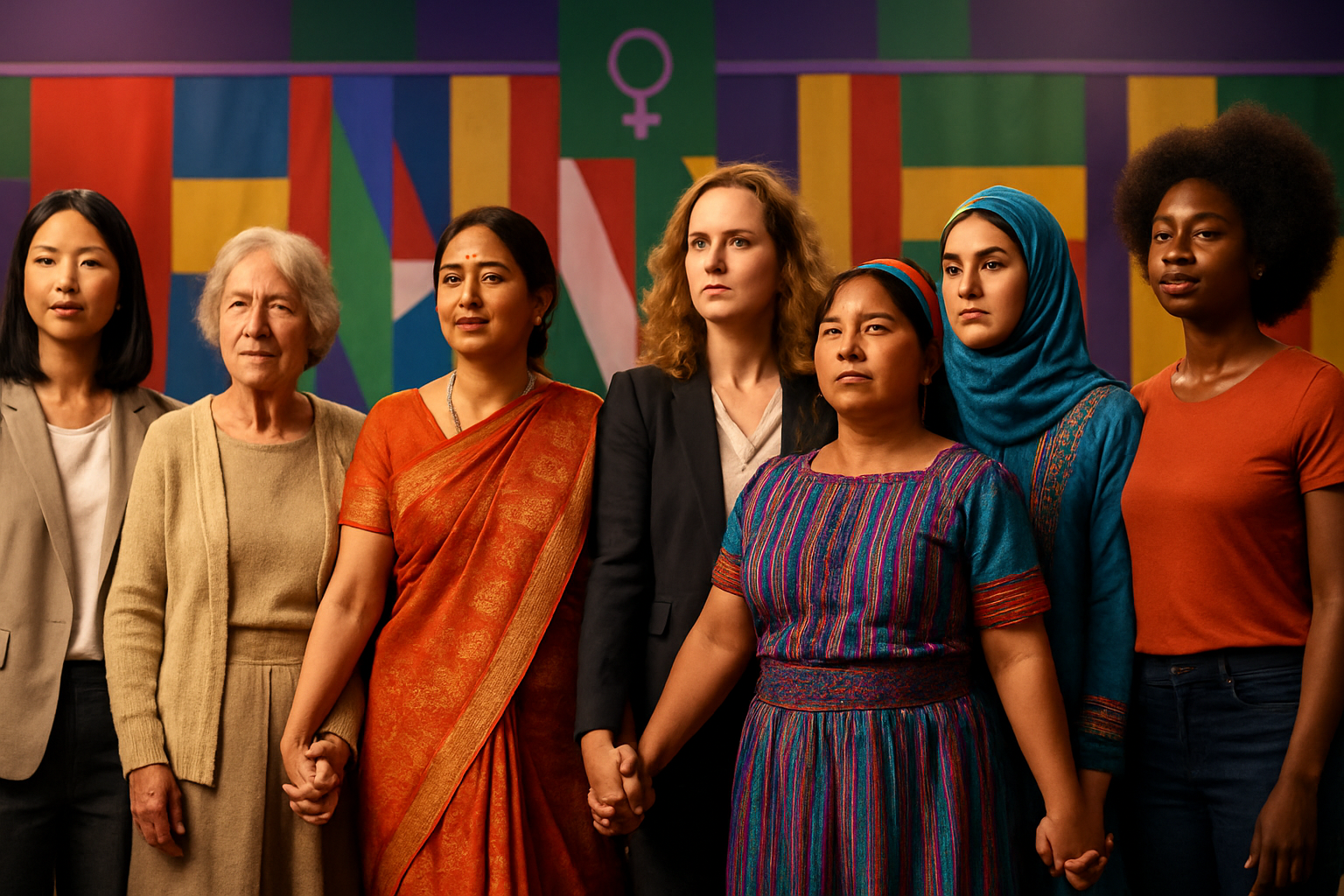
March 8, 2026, witnessed unprecedented global solidarity for women's rights as countries worldwide marked International Women's Day amid stark reminders that the fight for gender equality remains far from over, with Afghanistan serving as the most extreme example of women's rights rollback in modern history.
From the halls of the United Nations to the streets of major capitals, this year's International Women's Day carried particular urgency as new data revealed the persistent gap between progress and reality in women's rights globally. According to UN Secretary-General António Guterres, women worldwide have access to only 64% of the legal rights enjoyed by men, highlighting systemic inequalities that continue to plague societies across the globe.
Afghanistan: The World's Most Severe Rights Crisis
The day's commemorations were overshadowed by the dire situation in Afghanistan, where the Taliban's systematic exclusion of women from public life has created what experts call "gender apartheid." The Georgetown Institute for Women, Peace and Security ranked Afghanistan 181st out of 181 countries in its Women, Peace and Security Index, with 88% of female-headed households unable to meet minimum living requirements.
Former U.S. special envoy for Afghanistan Zalmay Khalilzad used the occasion to call on the Islamic Emirate of Afghanistan to allow girls and women to return to education, while UN Women Afghanistan emphasized that public spaces that once brought communities together are now closed to women and girls.
"The situation in Afghanistan should not be considered normal. When the international community stands with Afghan women, meaningful change remains possible."
— UN Women Afghanistan
UNICEF's Afghanistan office joined the chorus of international organizations calling for an end to restrictions preventing female employees from entering United Nations offices in the country, urging "greater justice, rights and practical action to support Afghan women facing growing restrictions."
Global Leadership Calls for Action
The stark contrast between Afghanistan's regression and global progress was highlighted by leaders worldwide. UN Secretary-General António Guterres noted that while significant strides have been made in recent decades, women still face discrimination that affects 676 million women and girls living within 50 kilometers of active conflict zones where justice systems are largely absent.
In Algeria, Minister of Interior and Local Communities Mohamed Tarek Belaribi emphasized that Algerian women are a "symbol of sacrifice and steadfastness, essential partners in building the state," reflecting a broader recognition of women's contributions to national development across many countries.
Economic Inequality Persists Across Developed Nations
Even in developed countries, significant challenges remain. In Germany, new research revealed a growing "Gender Investment Gap" in startups, with female founders receiving substantially less venture capital than their male counterparts. Simultaneously, however, more women than ever are participating in stock market investments, signaling changing economic patterns.
Denmark's analysis showed that female executives in the private sector earn on average 100,393 kroner per month compared to 88,200 kroner for women, demonstrating persistent wage gaps even at leadership levels. Meanwhile, Italy reported that female employment remains stagnant at 53.3% compared to a European average of 70.8%.
Austria's Educational Breakthrough
Austria provided one of the day's more encouraging stories, achieving a historic milestone where women enrollment in higher education programs surpassed men for the first time. Austrian officials called this development a "decisive factor for societal transformation," though challenges remain with women performing essential yet often invisible, economically unrewarded work.
Grassroots Movements and Cultural Shifts
Across Europe, grassroots movements demonstrated the ongoing relevance of feminist advocacy. In Austria, the SPÖ organized panel discussions titled "With Security for Women! A feminist Balance," while political leaders emphasized that "women's politics must only know one direction: forward, not backward."
Malta's activists adopted the powerful slogan "Women's Day Every Day," emphasizing that gender equality requires daily attention rather than annual symbolic recognition. This sentiment was echoed by organizers across multiple countries who stressed that sustained commitment, not periodic observance, is essential for meaningful progress.
In Bosnia and Herzegovina, the innovative "100 Women on Trebević" mountaineering celebration demonstrated creative approaches to community empowerment, with women "gifting themselves" clean air, movement, nature, and fellowship as forms of grassroots empowerment.
Pacific Region Recognition and Innovation
Papua New Guinea showcased both governmental leadership and community engagement, with Prime Minister James Marape calling for "respect and protection of women" while organizations like NICTA joined International Women's Day walks. The country's Cricket PNG celebrated women's achievements in sports, providing platforms for female leaders to inspire the next generation.
Guyana demonstrated forward-thinking policy development with the launch of the "Voices of Equality, Youth and Women Driving Human Rights and Democracy" project, aimed at empowering women and youth through systematic human rights education.
Latin American Perspectives and Cultural Evolution
Peru's commemoration focused on personal empowerment and family connections, with extensive campaigns featuring "150 frases sobre mujeres fuertes y seguras de sí mismas" (150 phrases about strong and self-confident women) designed to inspire confidence and leadership among women of all ages.
The emphasis on cultural transformation alongside policy change reflected a growing understanding that genuine gender equality requires shifts in both institutional structures and social attitudes.
Technology and Innovation in Gender Equality
Several countries demonstrated how technology can advance women's rights when thoughtfully implemented. Digital platforms are enabling women entrepreneurs to access global markets, while data analytics help organizations identify and address pay gaps more effectively. However, experts warn that technology can also exacerbate inequalities without careful implementation ensuring equal access to digital literacy training and tech jobs.
The Path Forward: Daily Commitment Over Annual Recognition
Perhaps the most significant theme emerging from International Women's Day 2026 was the shift from annual symbolic recognition to sustained daily commitment. Leaders across multiple countries emphasized that gender equality requires "fundamental community infrastructure" rather than individual crisis management.
"Gender equality falls not from heaven - it is fought for anew every day!"
— SPÖ Austria Representative
Success factors identified by advocates include sustained political commitment, comprehensive professional training, robust community engagement, and continued international cooperation. Countries implementing prevention-focused approaches report superior cost-effectiveness compared to crisis-response models.
International Cooperation in Challenging Times
Despite multilateral funding challenges facing traditional organizations, innovative bilateral partnerships and regional collaboration networks are enabling knowledge sharing and resource coordination. This distributed cooperation model allows for culturally responsive approaches while maintaining evidence-based standards and universal human rights commitments.
The convergence of evidence-based prevention strategies, technological innovation, and unprecedented international cooperation provides a foundation for comprehensive women's empowerment that could determine whether societies organize around human flourishing versus merely addressing periodic crises.
Looking Ahead: The Decade of Decision
As International Women's Day 2026 concluded, the message was clear: while remarkable progress has been achieved in many regions, extensive work remains. The path forward requires vigilance against backsliding, innovative solutions to persistent challenges, and the transformation of annual recognition into sustained daily commitments to justice and equality.
The stark contrast between countries celebrating women's achievements and Afghanistan's systematic exclusion of women from public life serves as both a warning and a call to action. True progress in women's rights requires not only celebrating successes but also maintaining international solidarity to support women facing the greatest challenges.
The success of this decade in advancing women's rights will be measured not through symbolic gestures but through sustained policy implementation, institutional change, and cultural transformation that creates genuinely equitable societies worldwide. The voices heard on March 8, 2026, from every continent, make clear that this work cannot wait.