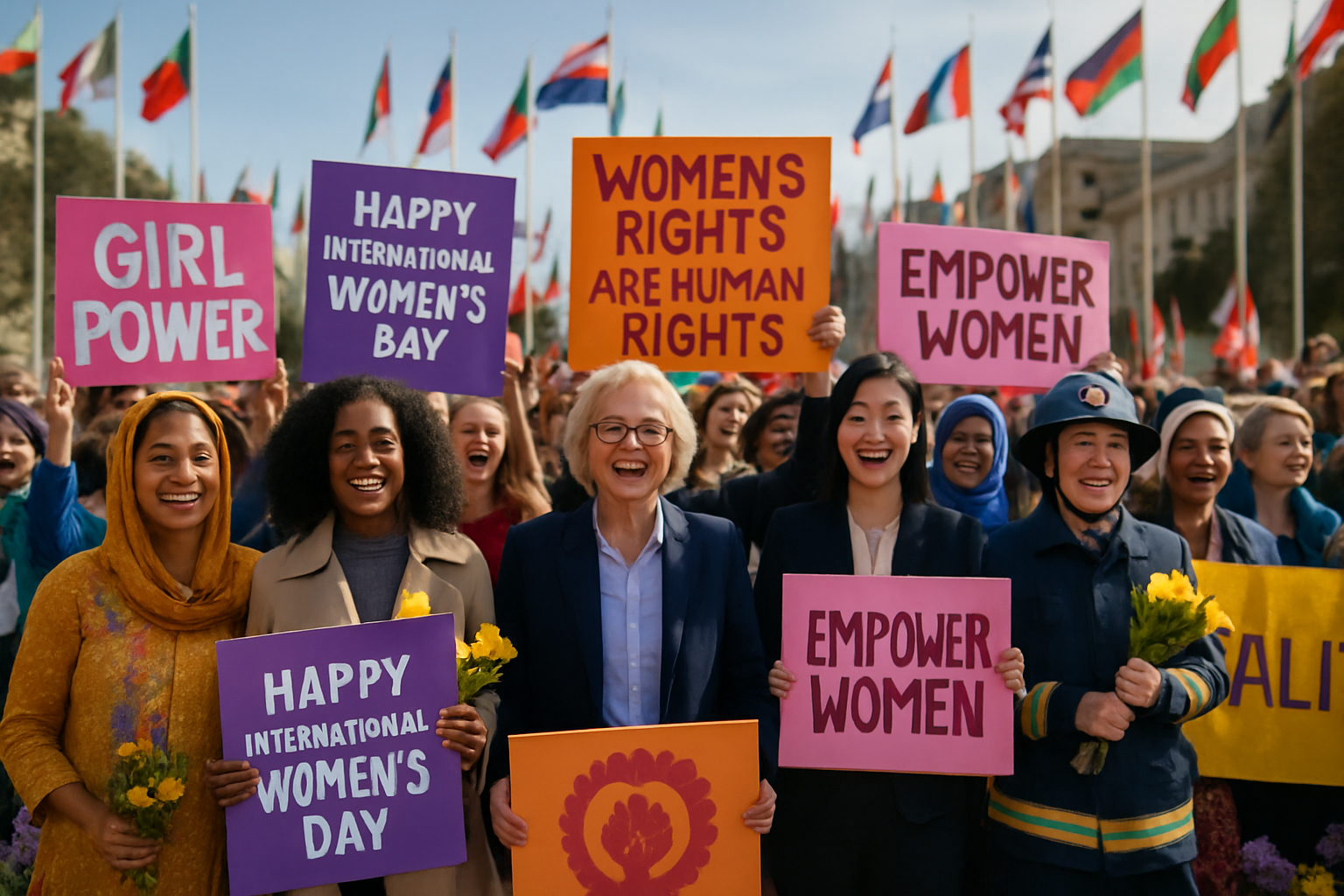
Countries across the globe marked International Women's Day 2026 on March 8 with a remarkable diversity of celebrations, policy announcements, and recognition ceremonies, demonstrating both significant progress in women's empowerment and the persistent challenges that remain in achieving true gender equality worldwide.
From governmental recognition ceremonies in Algeria to women-led environmental initiatives in Uganda, this year's celebrations reflected the evolving theme of transforming annual symbolic recognition into sustained, year-round commitment to women's rights and empowerment.
Governmental Recognition Reaches New Heights
Algeria provided unprecedented official recognition for International Women's Day 2026, with multiple high-level ceremonies demonstrating the country's commitment to women's advancement. National Assembly President Ibrahim Boughali hosted a collective dinner honoring female deputies and journalists from various national media outlets, emphasizing women's prominent role from the independence struggle to contemporary leadership positions.
Meanwhile, in Tisisemilt province, local police services organized a ceremonial tribute for female security personnel, recognizing their professional contributions and active role in security duties and community service. These celebrations reflected the broader North African trend of institutionalizing women's recognition at the highest governmental levels.
Economic Empowerment Takes Center Stage
Burkina Faso demonstrated the shift toward concrete action over symbolic gestures, with Minister of Family and Solidarity Lieutenant-Colonel Pélagie Kaboré, accompanied by Digital Transition Minister Dr. Aminata Zerbo/Sabané, officially delivering a "soumbala" production unit to women in Barsalogho commune in the Koulsé region.
This initiative marked a new format for International Women's Day celebrations, focusing on tangible economic empowerment rather than ceremonial recognition alone. The production facility represents a significant step toward women's economic independence in rural communities, addressing both gender equality and food security concerns.
International Advocacy and Human Rights Concerns
The global celebrations occurred against a backdrop of serious concerns about women's rights worldwide. UN Secretary-General António Guterres highlighted that women in many countries continue to face profound legal limitations on their fundamental rights, emphasizing that legal frameworks often fail to provide adequate protection or justice access.
In the Democratic Republic of Congo, new research revealed troubling trends in women's rights perception. A comprehensive study by Target SARL showed that public perception of women's rights evolution declined from 67% to 57% between 2024 and 2026, representing a 10% decrease over two years. This data underscores the complex and sometimes non-linear nature of progress in gender equality.
"Women continue to struggle with accessing justice due to weak law enforcement, despite legal frameworks existing on paper."
— António Guterres, UN Secretary-General
Political Empowerment and Representation
Political participation emerged as a central theme across multiple countries. In the DRC, political leader Christophe Mboso, second vice-president of the National Assembly, encouraged over 10,000 women at Kinshasa's Vélodrome stadium to pursue economic autonomy and active participation in national development.
Bosnia and Herzegovina's Association of Journalists selected "Gender Equality Champions 2026," recognizing media professionals, organizations, and civil society leaders for their contributions to gender equality. Winners included journalist Rabija Arifović, the Istina.media portal, the Local Foundation Zenica, and lawyer Jovana Kisin Zagajac, highlighting the crucial role of media and civil society in advancing women's rights.
Pacific Island Leadership and Community Engagement
The Federated States of Micronesia showcased the importance of women's leadership in small island states. First Lady Ancelly Simina joined women leaders and community members in Chuuk State to commemorate International Women's Day while celebrating the 16th anniversary of the Chuuk Women's Council. This dual celebration recognized over a decade of dedicated service in women's empowerment and community development.
The event demonstrated how Pacific Island communities integrate traditional governance structures with modern women's rights advocacy, creating culturally appropriate approaches to gender equality that respect local customs while promoting women's advancement.
Support for Conflict-Affected Women
In Bosnia and Herzegovina, Sarajevo Canton Premier Nihad Uk met with representatives of the "Women – War Victims" Association, led by long-time human rights activist Bakira Hasečić. The meeting addressed the ongoing struggle for truth and justice for women who survived wartime sexual violence, as well as their need for housing, economic support, and institutional engagement.
This initiative highlighted the particular vulnerabilities faced by women in post-conflict societies and the importance of addressing both immediate needs and long-term justice concerns for female war survivors.
Global Challenges and Context
The 2026 celebrations took place amid significant global challenges affecting women's rights. Afghanistan continues to rank 181st out of 181 countries in the Georgetown Institute's Women, Peace and Security Index, with 88% of female-headed households unable to meet minimum living requirements under Taliban restrictions, representing what experts call the most severe rollback of women's rights in modern history.
This stark contrast between progress in some regions and severe regression in others underscored the critical importance of international solidarity and sustained advocacy for women's rights globally.
Evolution Toward Sustained Commitment
A significant theme emerging from the 2026 celebrations was the evolution from annual symbolic recognition to sustained, year-round commitment to gender equality. This shift reflects a growing understanding that meaningful progress requires consistent attention and action rather than periodic observance.
Countries investing in comprehensive women's empowerment programs report stronger economic growth, increased innovation capacity, and more resilient communities. This evidence provides compelling justification for treating gender equality as fundamental community infrastructure rather than a periodic social issue.
Technology and Innovation in Women's Empowerment
The celebrations also highlighted the growing integration of technology in women's empowerment initiatives. Digital platforms are enabling women entrepreneurs to access global markets, while data analytics help organizations identify and address pay gaps more effectively. However, experts warn that technology can exacerbate inequalities without thoughtful implementation ensuring equal access to digital literacy training and technology sector employment.
Looking Forward: The Path to Daily Commitment
The most significant development of International Women's Day 2026 was the widespread recognition that gender equality requires what advocates call "fundamental community infrastructure" rather than individual crisis management. Success factors identified across countries include sustained political commitment, comprehensive professional training, robust community engagement, and continued international cooperation.
The diverse approaches documented across Algeria, Burkina Faso, the DRC, Micronesia, and Bosnia and Herzegovina provide practical templates for scaling gender equality initiatives globally while respecting cultural autonomy and leveraging international cooperation mechanisms.
International Women's Day 2026 demonstrated both the remarkable progress achieved through decades of advocacy and the extensive work that remains. The path forward requires vigilance against backsliding, innovative solutions to persistent challenges, and the transformation of annual recognition into sustained daily commitments to justice, safety, and empowerment for all women and girls worldwide.