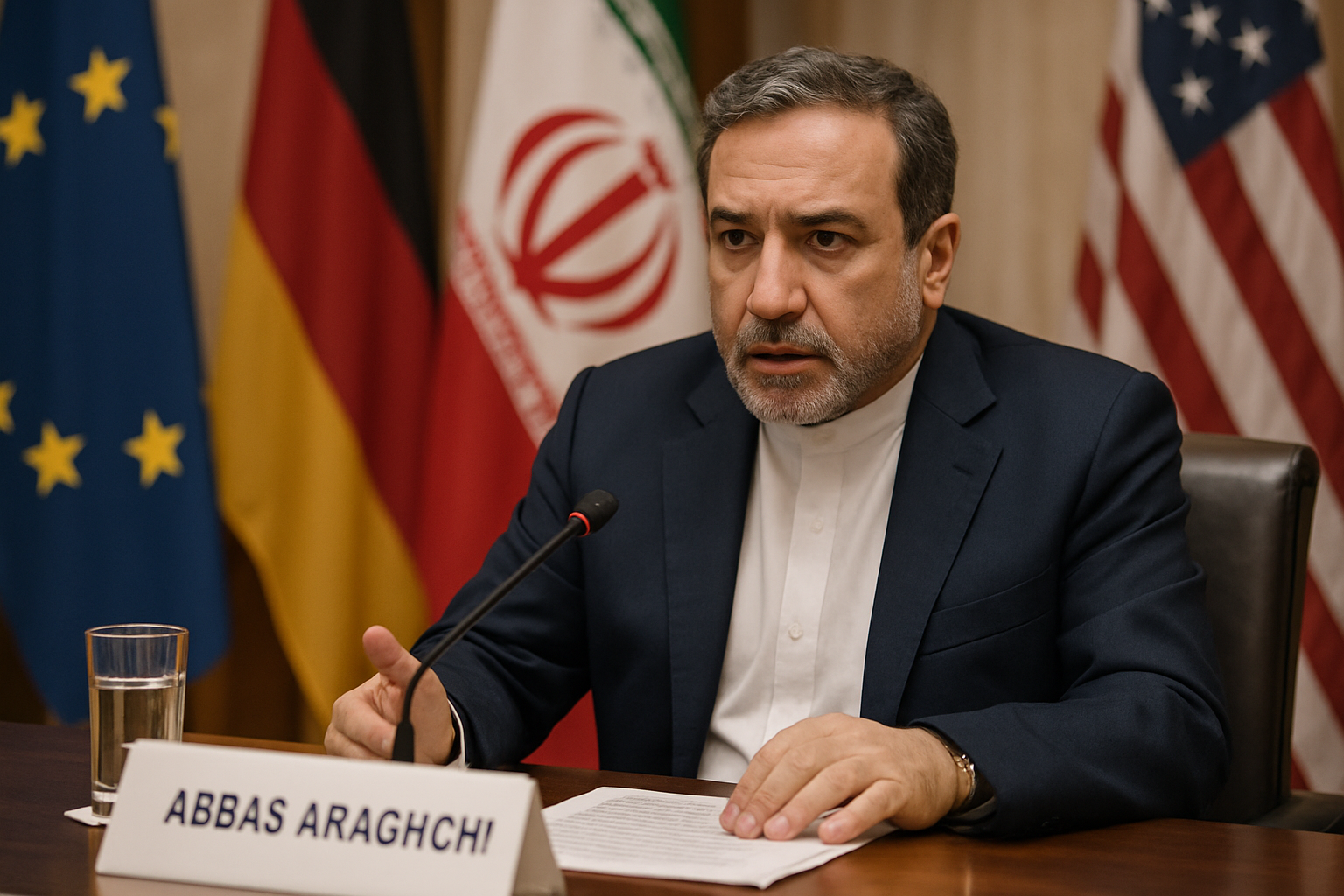
Iranian Foreign Minister Abbas Araghchi has embarked on a critical diplomatic tour spanning Pakistan, Oman, and Russia as Iran seeks to revive stalled nuclear negotiations with the United States amid escalating regional tensions and the collapse of key diplomatic frameworks established earlier in 2026.
Araghchi's return to Islamabad on Sunday marks the latest attempt to leverage Pakistan's proven mediation capabilities following the historic "Islamabad Accord" that achieved a ceasefire just 88 minutes before President Trump's April 8 deadline. The diplomatic tour comes as the United States has dispatched special envoys Steve Witkoff and Jared Kushner to Pakistan for renewed peace negotiations, though mixed signals from Iranian officials suggest significant challenges remain.
Pakistan's Critical Mediation Role
Pakistan has emerged as a template-setting middle power mediator, with Prime Minister Shehbaz Sharif and Field Marshal Asim Munir's "message relay system" demonstrating remarkable diplomatic innovation when traditional mechanisms failed. The previous breakthrough prevented a global catastrophe, with oil prices crashing 20% from $119.50 to $100 and ending an aviation crisis that saw over 18,000 flight cancellations worldwide.
"Pakistan's mediation framework represents one of the most significant diplomatic innovations in modern crisis management," noted diplomatic sources familiar with the negotiations.
— Regional Diplomatic Official
However, the current diplomatic effort faces immediate obstacles. Iranian Foreign Ministry spokesman Baghaei has stated there are "no plans for further negotiations with the US," citing the ongoing naval blockade of Iranian ports. Simultaneously, Parliament Speaker Qalibaf has highlighted the "trust deficit" while leaving the door open for renewed dialogue through intermediary channels.
Nuclear Program Deadlock Unchanged
The fundamental disagreements that have plagued US-Iran negotiations remain unchanged since the JCPOA collapsed in 2018. The United States continues to demand Iran suspend its 60% uranium enrichment program and abandon its stockpile of over 400 kilograms of weapons-grade material. Iran maintains its position that it will "never abandon enrichment even if war is imposed," according to Araghchi's repeated declarations.
This nuclear stalemate occurs against the backdrop of the New START Treaty's expiration in February 2026, marking the first time in over 50 years that the world lacks US-Russia nuclear constraints. The timing adds urgency to efforts to prevent Iranian nuclear weapons development while establishing precedents for 21st-century nuclear governance.
Lebanon Loophole Complicates Efforts
A critical obstacle emerged when Israeli Prime Minister Netanyahu explicitly excluded Lebanon from the ceasefire framework, creating what diplomatic sources describe as an "unbridgeable gap." Israeli strikes killed over 254 people on a single day during previous talks, with 1.2 million Lebanese displaced—representing 25% of the country's population. Iran demands comprehensive enforcement across all fronts, while the US position treats Lebanon operations as separate from bilateral frameworks.
Energy Crisis and Strategic Waterways
The diplomatic breakdown has coincided with a severe energy crisis as Iran maintains control over the Strait of Hormuz, through which 40% of global oil transit passes. The Revolutionary Guard has implemented a cryptocurrency payment system charging $1 per barrel and deployed extensive mining operations that have affected over 150 tankers carrying billions of dollars in cargo.
Oil prices have surged to over $106 per barrel for Brent crude and $104.29 for WTI, marking the second time in 2026 that prices have exceeded $100. Major shipping companies including Maersk and MSC have suspended Persian Gulf operations, creating supply chain disruptions extending far beyond the immediate region.

Congressional Opposition and International Isolation
The Trump administration faces unprecedented domestic opposition, with only 25% of Americans supporting Operation Epic Fury, representing historically low public backing for military action. The operation's costs have reached $11.3 billion in the first week alone, with Pentagon operations projected through September—well beyond initial projections.
Internationally, key NATO allies have rejected military escalation. British Prime Minister Starmer declared the UK "won't be dragged into an Iran war," while France and Germany have emphasized diplomatic approaches. Australia and Japan declined naval support requests, marking the most significant rejection of American military leadership since the 2003 Iraq War.
Regional Coalition Under Strain
Despite the challenges, the unprecedented regional coalition supporting diplomatic solutions has largely held together. Saudi Arabia, UAE, Qatar, and Egypt maintain their consensus backing negotiations, even after suffering casualties during Iran's "Operation True Promise 4" retaliation. The UAE lost one civilian in Abu Dhabi, Kuwait reported 32 injuries at airports, and Qatar suffered eight wounded despite Patriot missile intercepts.
"The coalition's resilience in maintaining support for diplomatic solutions despite direct attacks demonstrates the region's commitment to preventing broader military confrontation."
— Egyptian President Abdel Fattah Al-Sisi
Humanitarian Toll and War Crimes Investigations
The human cost of the crisis continues to mount, with the Iranian Red Crescent reporting over 787 casualties. Most controversially, the Pentagon has acknowledged responsibility for an elementary school strike that killed between 165-185 students, attributed to "outdated targeting data," prompting international war crimes investigations.
International evacuations have reached Arab Spring-scale proportions, with Australia evacuating 115,000 nationals and Germany extracting 30,000. The European Union activated its ESTIA crisis mechanism for the first time in bloc history after Iranian drones struck RAF Akrotiri in Cyprus—the first attack on European territory since World War II.
The Moscow Connection
Araghchi's planned visit to Moscow adds another dimension to Iran's diplomatic strategy. Russia has positioned itself as a strategic partner of Iran, particularly in the context of broader geopolitical tensions with the West. The visit comes as both countries seek to coordinate their responses to Western sanctions and military pressure.
Russian support for Iran's position has been evident throughout the crisis, with Moscow backing Iran's claims regarding maritime sovereignty and criticizing what it terms US "aggression" in the Persian Gulf. The coordination between Tehran and Moscow represents a significant challenge for Western diplomatic efforts.
Template-Setting Significance for Global Governance
UN Secretary-General António Guterres has described the current crisis as the "greatest test of multilateral cooperation in the modern era." The outcomes of these diplomatic efforts will establish precedents for how the international community addresses existential threats in the 21st century, affecting global governance mechanisms for decades to come.
The choice between diplomatic innovation and military escalation extends beyond bilateral US-Iran relations. Success could demonstrate middle power mediation capabilities when traditional mechanisms fail, while failure may accelerate military solutions preference, encouraging nuclear proliferation and undermining diplomatic credibility for territorial and security disputes worldwide.
Critical Juncture for International Relations
As Araghchi continues his diplomatic tour, the international community faces a template-setting moment that will influence energy security paradigms, nuclear governance credibility, and international law enforcement mechanisms. The stakes extend beyond the immediate crisis, affecting territorial sovereignty enforcement and the broader architecture of international stability.
The success or failure of Pakistan's mediation framework, combined with broader international diplomatic efforts, will determine whether innovative diplomatic solutions can bridge decade-old disagreements or whether the world returns to the most dangerous international crisis since the end of the Cold War.
With fundamental disagreements over nuclear programs, regional conflicts, and enforcement mechanisms remaining unresolved, the coming days will test whether diplomatic innovation can triumph over military confrontation in an increasingly volatile and interconnected world.