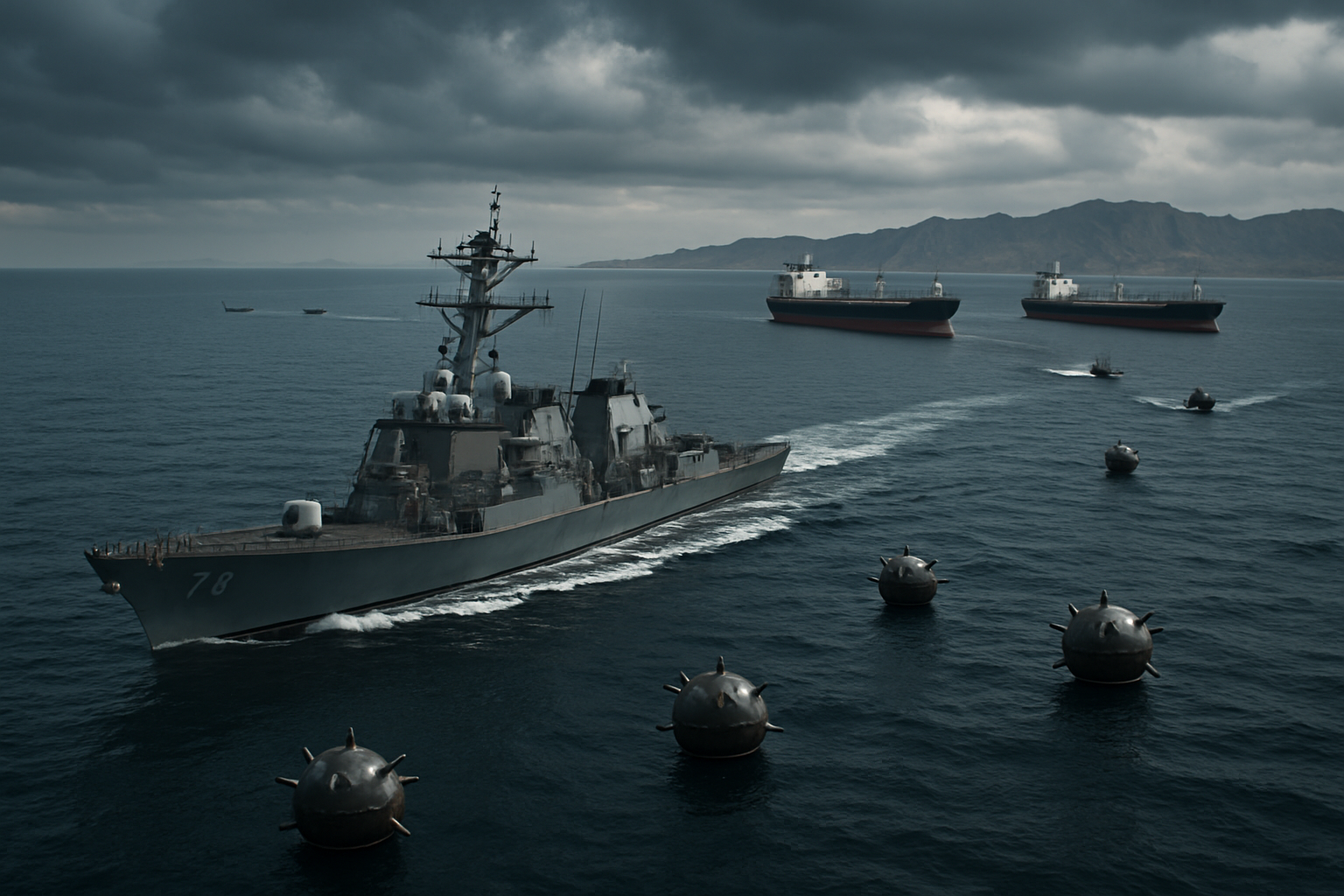
Iran's Revolutionary Guard has begun deploying naval mines throughout the Strait of Hormuz, according to multiple international intelligence sources, dramatically escalating the global energy crisis and threatening the world's most critical oil shipping route.
The strategic waterway, which handles approximately 40% of global seaborne oil transit, has become increasingly dangerous as Iran intensifies its military response to ongoing international conflicts. U.S. intelligence reports indicate Iran is utilizing small vessels to deploy mines from an estimated stockpile of 2,000-6,000 naval weapons, effectively creating a maritime blockade of the 21-mile-wide chokepoint.
International Response and Naval Confrontations
The United States has responded forcefully to Iran's mining operations, with naval forces destroying at least 28 Iranian mine-laying vessels according to Pentagon sources. The confrontation marks a significant escalation in maritime warfare, with Iran's new Supreme Leader Mojtaba Khamenei publicly stating that "the lever of blocking the Strait of Hormuz must continue to be used."
The narrowness of the strait particularly amplifies the danger posed by naval mines, as commercial vessels have severely limited room to maneuver. This geographic reality has forced major shipping companies including Maersk and MSC to suspend all operations in the Persian Gulf, stranding over 150 oil and LNG tankers worth billions of dollars in cargo.
"The narrowness of the Strait of Hormuz makes the danger of sea mines more acute, as ships have less room to maneuver and greater odds of striking one of the weapons."
— Intelligence Assessment, The Japan Times
Global Energy Markets in Crisis
The mining campaign has triggered the most severe global energy crisis in decades, with oil prices surging past $100 per barrel for the first time since 2014. Brent crude reached a peak of $119.50 per barrel, while West Texas Intermediate jumped 18.98% to $108.15 - representing the largest single-day increase on record.
Natural gas prices have exploded by 24% in Europe and 78% in the United States, reaching €47.32/MWh - the highest levels since February 2025. Qatar, which supplies approximately 20% of global LNG exports, has been forced to halt production at its Ras Laffan and Mesaid facilities following Iranian drone attacks.
The International Energy Agency responded with the largest strategic petroleum reserve release in its 50-year history, deploying 400 million barrels from 32 member countries - more than double the amount released during the 2022 Ukraine crisis. Japan is releasing 80 million barrels starting March 16, marking the first such deployment since the 2011 Fukushima disaster.
Aviation Industry Paralyzed
The crisis extends far beyond maritime shipping, with over 18,000 flights cancelled worldwide - the most extensive aviation disruption since COVID-19. Eight Middle Eastern countries have simultaneously closed their airspace, including Iran, Iraq, Israel, UAE, Qatar, Syria, Kuwait, and Bahrain.
Dubai International Airport, the world's busiest with 86 million annual passengers, remains completely shut down due to missile damage. Major carriers including Emirates, Air France-KLM, and Wizz Air have suspended operations indefinitely, affecting hundreds of thousands of passengers globally.
Regional Coalition Under Strain
Iran's escalatory actions have severely strained the regional coalition of Arab states. The UAE reported one civilian killed in Abu Dhabi from falling debris, while Kuwait suffered 32 injuries from airport strikes. Qatar successfully intercepted 65 missiles and 12 drones using Patriot defense systems, though 8 people were injured by fragments.
Egyptian President Abdel Fattah al-Sisi condemned the attacks on "sisterly countries," warning of "comprehensive chaos" spreading across the region. The unprecedented Saudi Arabia, UAE, Qatar, and Egypt diplomatic consensus that initially supported diplomatic solutions now faces severe testing as Iranian retaliation directly targets member territories.
"Iran's UN envoy Amir Saeid Iravani said Tehran will not close the Strait of Hormuz and remains committed to freedom."
— Conflicting Statement, Al Jazeera
Economic Shockwaves Worldwide
Financial markets have crashed globally, with Pakistan's KSE-100 index suffering its largest single-day decline in history at -8.97%. South Korea's KOSPI fell 12%, triggering circuit breakers and pushing the Korean won to a 17-year low. The Dow futures dropped 400-570 points, while European markets experienced severe losses.
Consumer impacts are being felt immediately worldwide. Sweden faces electricity increases of 10-20 öre and gasoline price rises of 1-2 kronor per liter. Ireland is experiencing what officials call "brazen rip-offs" with heating oil approaching €2 per liter. Bangladesh has implemented fuel rationing affecting 170 million people, while Bosnia-Herzegovina reports only two days of gas reserves remaining.
Diplomatic Context and Nuclear Concerns
The mining crisis stems from the complete collapse of U.S.-Iran nuclear negotiations, despite achieving what diplomats called "broad agreement on guiding principles" - the most progress since the 2018 JCPOA breakdown. Fundamental disagreements remain insurmountable, with Iran excluding ballistic missiles and proxy forces as "red lines" while the U.S. demands comprehensive coverage including missiles, armed groups, and human rights.
Iran continues uranium enrichment at 60% purity with over 400 kilograms of near weapons-grade material - sufficient for multiple nuclear weapons if weaponized. The crisis occurs against the backdrop of broader nuclear governance breakdown, with the New START treaty having expired on February 5, marking the first time in over 50 years without U.S.-Russia nuclear constraints.
Historical Significance and Future Implications
The current crisis represents the most dangerous international situation since the end of the Cold War, testing multiple global systems simultaneously. The Strait of Hormuz's closure demonstrates the vulnerability of modern logistics to single-point failures, exposing dangerous over-dependence on strategic chokepoints.
UN Secretary-General António Guterres has called this "the greatest test of multilateral cooperation and crisis management in the modern era." The resolution - or lack thereof - will establish precedents for 21st-century conflict resolution, determining whether diplomatic or military approaches become the preferred method for addressing territorial and nuclear disputes.
Energy analysts warn that fundamental restructuring of global energy architecture is needed to reduce dependence on volatile geopolitical regions. Strategic petroleum reserves provide only temporary relief for sustained disruptions, while supply diversification and renewable energy transitions require years or decades to implement.
Looking Ahead
Recovery timelines remain uncertain, dependent on military operations and diplomatic normalization rather than predictable factors like weather disruptions. Traditional monetary policy has limited effectiveness against structural geopolitical disruptions of this magnitude.
The success or failure of containing this crisis will reverberate through international relations for decades, affecting approaches to nuclear proliferation prevention, energy security planning, and diplomatic credibility worldwide. As one analyst noted, this represents "the most severe energy security crisis in decades, exposing single-chokepoint vulnerabilities that require fundamental transformation."
The stakes could not be higher: regional war prevention, global energy security, nuclear governance credibility, and the enforcement of post-WWII international legal principles are all being tested simultaneously in what may prove to be a template-setting moment for international stability mechanisms in the 21st century.