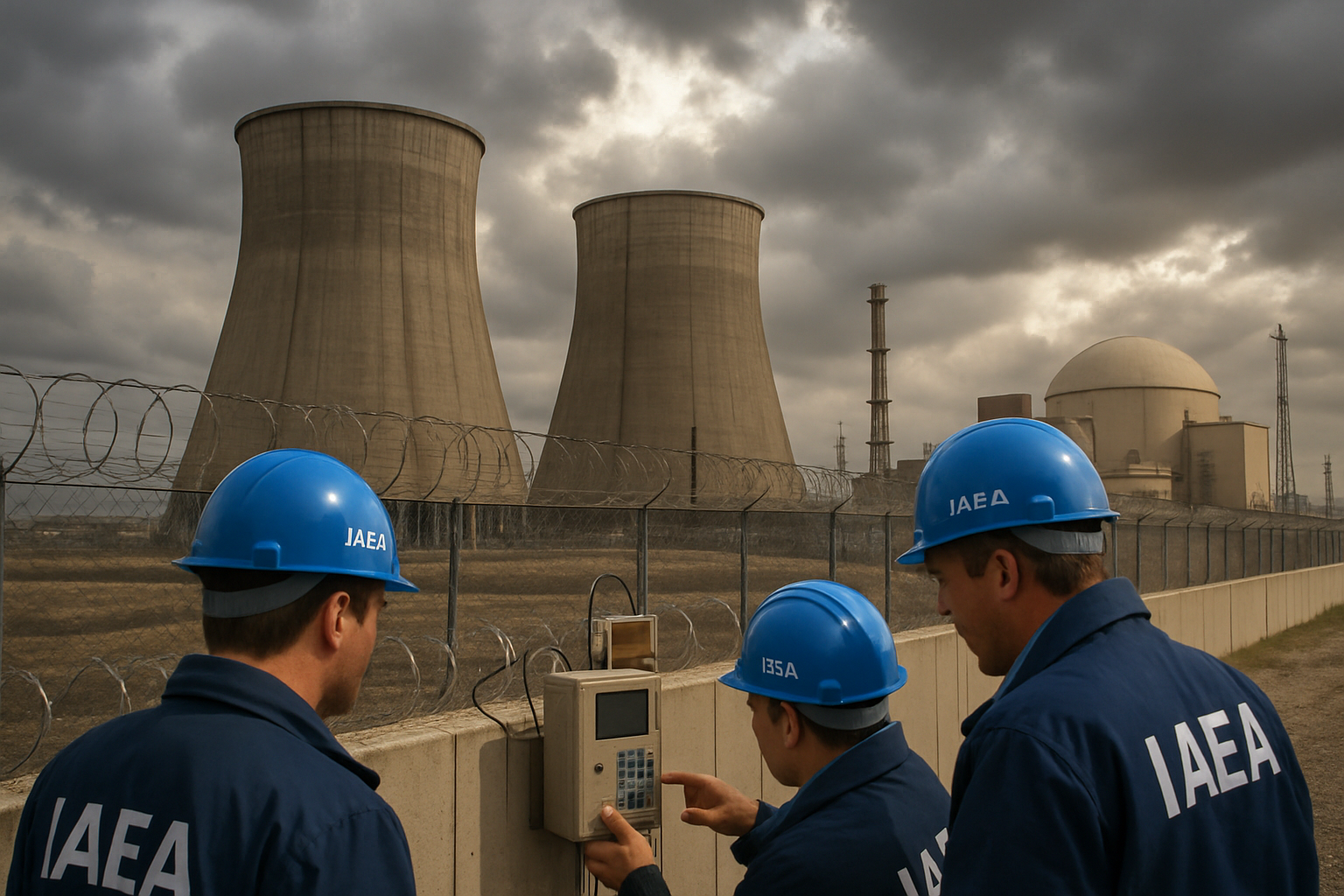
The International Atomic Energy Agency (IAEA) confirmed Saturday that a projectile struck near Iran's Bushehr nuclear power plant, killing one security staff member and damaging a building on site, marking a dangerous escalation in the ongoing six-week conflict between Iran and a US-Israeli coalition.
The strike represents the fourth attack near Iran's only operational nuclear power plant since the beginning of Operation Epic Fury on February 28, 2026, according to Iranian officials. IAEA Director General Rafael Grossi expressed "deep concern" over the incident while confirming that no increase in radiation levels was reported at the facility.
Nuclear Safety Crisis Deepens
The projectile fragment killed one of Bushehr's physical protection staff members, while shock waves and fragments from the strike affected an auxiliary building at the nuclear complex. Iran's Atomic Energy Organization confirmed that preliminary assessments indicated the plant's main sections were not affected and operations continue as normal.
"Nuclear power plant sites and surrounding areas must not be targeted," Grossi emphasized, warning that auxiliary buildings may contain critical safety equipment essential for nuclear operations. The IAEA chief's statement underscores growing international concern about the risks of nuclear accidents during active military conflict.
"No increase in radiation levels was reported following the strike."
— International Atomic Energy Agency Statement
This incident marks the most serious escalation involving nuclear infrastructure since US and Israeli forces began coordinated strikes against Iranian facilities. Multiple nuclear installations, including the Natanz uranium enrichment facility and Isfahan weapons storage sites, have been targeted with 2,000-pound bunker-buster bombs throughout the conflict.
Escalating Regional War
The Bushehr strike occurred amid the most dangerous international crisis since the Cold War, which began following the collapse of nuclear diplomacy talks in Geneva. Despite achieving a "broad agreement on guiding principles" in February 2026 - the most significant progress since the JCPOA collapse in 2018 - negotiations broke down over scope disagreements.
Iran maintained that ballistic missiles and regional proxies were "red lines" to be excluded from nuclear-only talks, while US Secretary Marco Rubio demanded a comprehensive agreement addressing missiles, armed groups, and human rights. The diplomatic failure triggered Operation Epic Fury, the largest US-Israeli coordinated campaign since 2003.
The conflict has expanded beyond Iranian territory, with Tehran's "Operation True Promise 4" targeting US and allied facilities across the region under a "no red lines remain" policy. The campaign has affected civilian infrastructure in Kuwait, UAE, Qatar, and even struck RAF Akrotiri in Cyprus - marking the first attack on European territory since World War II.
Global Crisis Impacts
The ongoing conflict has created unprecedented global disruptions affecting energy markets, aviation networks, and supply chains worldwide. Iran's mining of the Strait of Hormuz with an estimated 2,000-6,000 naval mines has effectively closed the waterway that handles 40% of global oil transit, causing oil prices to surge past $100 per barrel.
Aviation has been severely impacted, with over 18,000 flights cancelled worldwide - the most since the COVID-19 pandemic. Eight Middle Eastern countries have simultaneously closed their airspace, creating what experts describe as an "aviation black hole" severing critical Asia-Europe corridors.
The International Energy Agency has deployed the largest strategic petroleum reserve release in its 50-year history, releasing 400 million barrels from 32 countries to stabilize global markets. However, with over 150 tankers stranded in the Persian Gulf carrying billions of dollars in cargo, the energy crisis continues to intensify.
Nuclear Governance in Crisis
The Bushehr incident comes amid a broader nuclear governance crisis following the expiration of the New START treaty on February 5, 2026 - marking the first time in over 50 years without US-Russia nuclear constraints. Combined with China's nuclear expansion and Iran's continued uranium enrichment at 60% purity (approaching the 90% weapons-grade threshold), UN Secretary-General António Guterres has warned that nuclear risks are at their "highest in decades."
Iran continues to maintain approximately 400 kilograms of enriched uranium, which former IAEA inspector Dr. Yusri Abu Shadi confirmed would make weapons "easily achievable" if weaponized. The targeting of nuclear facilities during active conflict represents an unprecedented challenge to international nuclear safety protocols.
Leadership Transition Amid War
The crisis has been complicated by Iran's succession crisis following Supreme Leader Ali Khamenei's death on March 1, 2026. His son Mojtaba Khamenei has emerged as the first hereditary Supreme Leader in the Islamic Republic's 47-year history, with CIA assessments suggesting Revolutionary Guards have consolidated unprecedented military control over governance during the wartime transition.
This shift from clerical to military leadership has eliminated prospects for diplomatic resolution, with President Trump demanding Iran's "unconditional surrender" and claiming the right to personally choose Iran's next leader - the most direct assertion of American control over Iranian affairs since 1979.
Congressional and International Concerns
The conflict has faced mounting opposition in the US Congress, with only 25% American support representing historically unprecedented unpopularity for early-stage military operations. Senator Richard Blumenthal expressed being "more concerned than ever" about potential ground troop deployment, while the Pentagon has extended operations through September 2026, far beyond the initial 4-6 week timeline.
Operation Epic Fury has cost $11.3 billion in its first week alone, with 150 US troops wounded (8 critically) and 3 confirmed deaths. The USS Charlotte submarine's sinking of the Iranian frigate IRIS Dena marked the first enemy vessel destroyed by a US submarine since World War II.
"This represents the greatest test of multilateral cooperation and crisis management in the modern era."
— UN Secretary-General António Guterres
Humanitarian Impact
The humanitarian toll continues to mount, with Iran's Red Crescent reporting over 787 civilian casualties from US-Israeli strikes. The Pentagon confirmed responsibility for an elementary school strike that killed 165-185 students, attributing the incident to "outdated targeting data" - prompting international war crimes investigations.
International evacuations have reached Arab Spring 2011 levels, with Australia reporting 115,000 citizens trapped in the region and Germany evacuating 30,000 stranded tourists. The European Union activated its ESTIA crisis mechanism for the first time in bloc history following the Cyprus attack.
Global Implications
The strike near Bushehr represents a watershed moment in 21st-century international relations, testing the global community's capacity to manage conflicts with nuclear implications. The rapid transition from diplomacy to military escalation demonstrates the fragility of crisis management mechanisms in an increasingly multipolar world order.
Success in containing the crisis could provide a framework for future nuclear dispute resolution, while failure may accelerate the preference for military solutions in international conflicts, potentially encouraging nuclear proliferation and undermining diplomatic credibility worldwide.
As the conflict enters its sixth week, the targeting of nuclear infrastructure raises unprecedented questions about the safety of civilian nuclear facilities during warfare and the effectiveness of international safeguards designed to prevent nuclear accidents. The incident at Bushehr serves as a stark reminder of the catastrophic risks when nuclear facilities become entangled in military conflicts, with potential consequences extending far beyond the immediate participants.