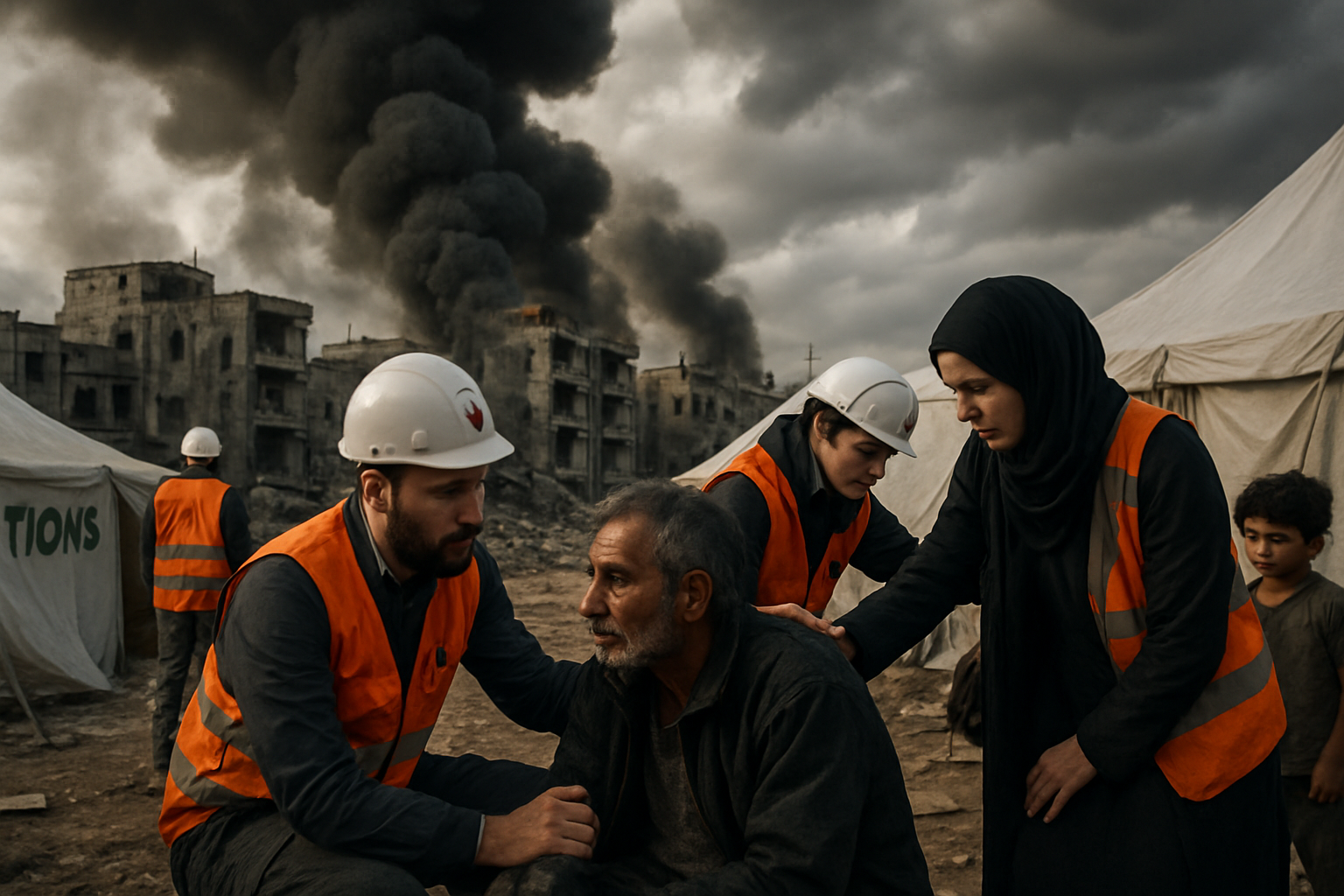
Iranian cluster warheads struck central Israel killing a foreign worker while also claiming Palestinian lives in the West Bank, marking the first Palestinian casualties of the ongoing Iran-Israel war as the conflict enters its most dangerous phase yet.
The attacks on March 19, 2026, represent a deadly escalation in Iranian tactics as the Islamic Republic deploys sophisticated cluster munitions specifically designed to penetrate Israel's Iron Dome defense system. According to reports from multiple sources, the Iranian Revolutionary Guard Corps (IRGC) has shifted to using cluster warheads that fragment in mid-air, causing casualties even when intercepted.
Cluster Munition Tactics Evade Defense Systems
Italian media reported that the Iranian missiles fragment in the sky and strike randomly, describing how "yesterday two elderly people were killed near Tel Aviv and four Palestinian women in the West Bank." The systematic use of cluster warheads marks a deliberate Iranian strategy to maximize civilian casualties despite Israel's advanced air defense capabilities.
The foreign worker was killed in central Israel as part of what appears to be the fourth wave of Iran's "Operation True Promise 4" retaliation campaign. This latest Iranian offensive follows the systematic Israeli targeting of Iran's leadership structure, including the recent assassination of Iranian Intelligence Minister Esmail Khatib and Security Council Secretary Ali Larijani.
Intelligence Assessment: Iranian Regime Survives
Contradicting previous claims of imminent Iranian collapse, U.S. intelligence officials now assess that Iran's regime remains intact and "not in immediate danger," according to classified reports. Intelligence Director Tulsi Gabbard told lawmakers that Iran had not reconstituted its "obliterated" nuclear program after June strikes, contradicting President Trump's justifications for the expanded military campaign.
"The regime is marred but intact, and will seek to rebuild if it survives"
— U.S. Intelligence Assessment
Multiple intelligence reports conclude that Iran's leadership maintains control despite two weeks of intensive bombardment. The assessment suggests that military pressure alone has proven insufficient to achieve the political transformation objectives outlined by the Trump administration.
Regional Dynamics and Palestinian Casualties
The Palestinian deaths in the West Bank represent the first casualties among Palestinians directly attributable to the Iran war, according to Swedish media reports. The incident near Hebron involved "two women and a girl" who were killed, marking a grim milestone as the conflict's reach expands beyond its primary theater of operations.
These casualties occur as Hezbollah has resumed attacks on Israel from Lebanon, apparently breaking its relative quiet since the conflict began. The Lebanese militant group's renewed involvement threatens to further regionalize a conflict that has already drawn in multiple nations and caused global economic disruption.
Psychological Warfare Operations
Israeli intelligence services have reportedly begun psychological operations against Iranian security forces, including threatening phone calls to senior officers. According to Wall Street Journal reports obtained through recorded calls, Mossad agents have been telling Iranian police officials they are on a "blacklist" and warning of their demise as part of efforts to stir internal unrest.
This campaign aims to exploit the crippling of Iran's domestic security apparatus, which Israeli officials hope will contribute to popular uprising against the regime. However, the intelligence assessment suggests these efforts have not yet achieved their intended destabilizing effects.
Funeral Demonstrations and Leadership Casualties
Thousands of regime supporters attended funeral services for Ali Larijani, whom Israel eliminated in Tuesday raids. Italian reports describe how the crowd saluted the leader who had become the "de facto" ruler following Supreme Leader Ali Khamenei's death on March 1. The funeral demonstrations highlight the regime's continued ability to mobilize public support despite intensive military pressure.
The systematic targeting of Iranian leadership has also claimed Intelligence Minister Esmail Khatib, representing what Israeli Defense Minister Israel Katz described as a streamlined assassination campaign. Netanyahu and Katz have authorized military forces to eliminate any senior Iranian official without requiring additional approval for each strike.
Energy Infrastructure Targeting
Iran's threats to destroy U.S. and Israeli energy infrastructure have materialized with attacks on installations serving the massive South Pars/North Dome gas field. These strikes on critical energy facilities represent a dangerous escalation that could affect global energy markets, with oil prices already surging past $110 per barrel.
The targeting of energy infrastructure has prompted warnings from Supreme Leader Mojtaba Khamenei, who vowed to maintain closure of the Strait of Hormuz and continue attacks on Gulf countries. This represents the first public statement from Iran's new hereditary leader since assuming power following his father's death.
Global Crisis Implications
The conflict has now disrupted global aviation with over 18,000 flights cancelled worldwide, the most severe disruption since COVID-19. Dubai International Airport, the world's busiest, remains shuttered due to missile damage, while major shipping companies have suspended Persian Gulf operations.
European territory was attacked for the first time since World War II when Iranian drones struck RAF Akrotiri in Cyprus, prompting an unprecedented naval coalition response including British, Spanish, Italian, French, Dutch, and Greek vessels.
Congressional and International Scrutiny
U.S. Congressional opposition to the war continues mounting, with Senator Richard Blumenthal expressing being "more concerned than ever" about potential ground troop deployment. The conflict maintains historically low public support at just 25% among Americans, while costs have reached $11.3 billion in the first week alone.
The humanitarian crisis continues expanding with Iran's Red Crescent reporting over 787 civilian casualties from U.S.-Israeli strikes, including the Pentagon's confirmed responsibility for an elementary school attack that killed 165-185 students using what officials acknowledged was "outdated targeting data."
As the conflict enters Day 19, the strategic landscape reveals a resilient Iranian regime adapting its tactics while facing continued pressure from Israeli operations and U.S. military forces. The use of cluster munitions against civilian targets, combined with the first Palestinian casualties of the Iran war, signals a dangerous new phase in what UN Secretary-General António Guterres has called "the greatest test of multilateral cooperation in the modern era."