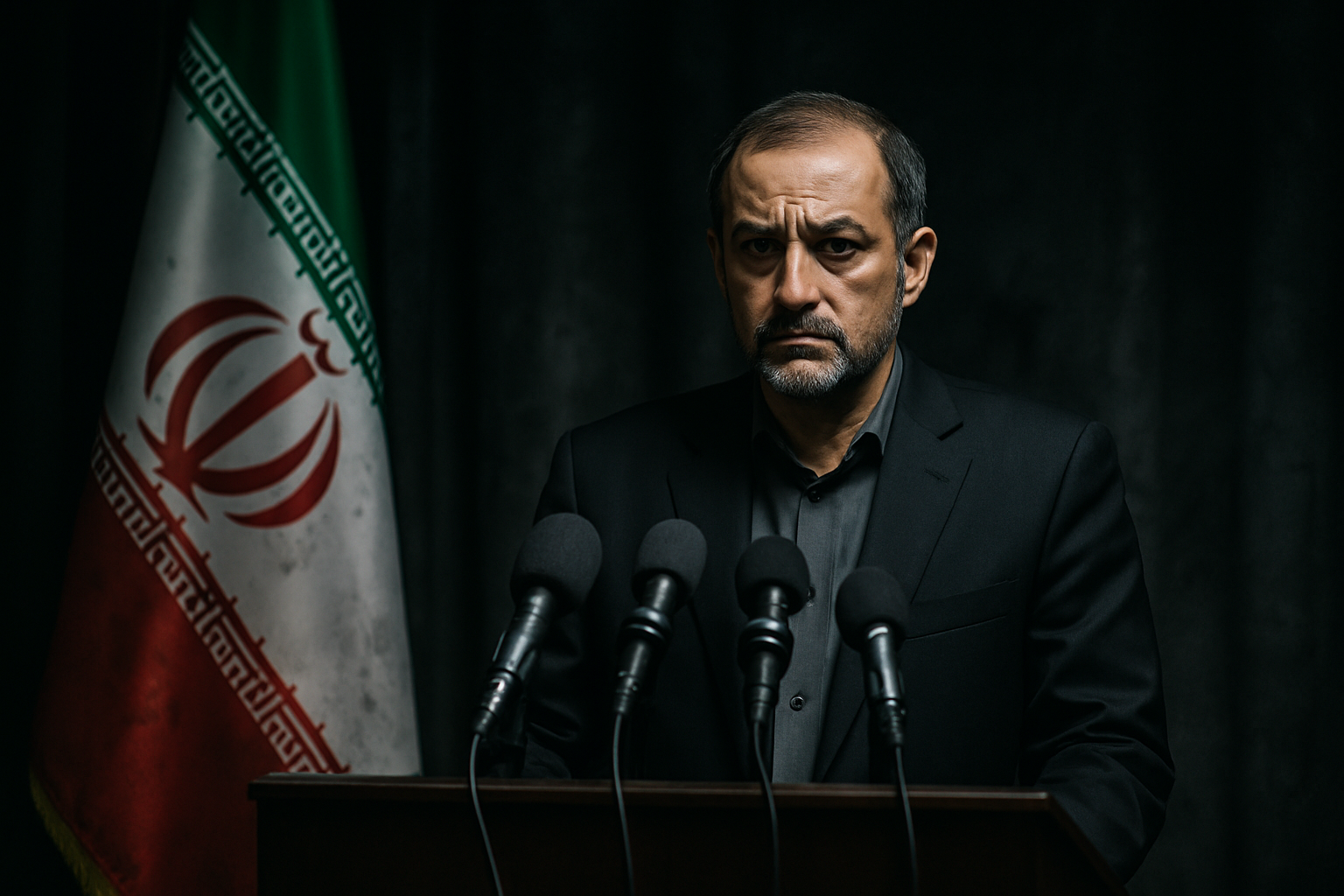
Iran's Supreme National Security Council officially confirmed the death of its Secretary Ali Larijani in Israeli strikes Tuesday evening, marking the most significant blow to Tehran's leadership structure since the March conflict began with the assassination of Supreme Leader Ali Khamenei.
Multiple Iranian state media outlets, including Fars News Agency and Press TV, released simultaneous statements confirming that Larijani "obtained the sweet grace of martyrdom" alongside his son Morteza and deputy officials in what the Supreme National Security Council described as dawn strikes targeting the leadership compound.
Strategic Impact on Iran's Security Architecture
The confirmation of Larijani's death represents a catastrophic degradation of Iran's command structure during its most dangerous military confrontation since the 1980s. Intelligence analysts describe Larijani as having emerged as Iran's "de facto leader" following the constitutional succession crisis that began with Khamenei's death on March 1, 2026.
"With the elimination of Ali Larijani, Israel has struck at the heart of Iran's strategic coordination capabilities," said Shahram Kholdi, an international security analyst writing for Iranian opposition media iranintl.com. "This represents a new blow to Iran's capacity for coordinated response, weakening an already fragmented system under unprecedented pressure."
The timing of the strikes appears calculated to maximize disruption during Iran's hereditary succession process, with Mojtaba Khamenei having assumed the role of Supreme Leader following his father's death - the first such transition in the Islamic Republic's 47-year history.
Escalation in Month-Long Conflict
Tuesday's confirmation comes on Day 18 of what has become the most dangerous international crisis since the Cold War. The conflict began with "Operation Epic Fury," the largest coordinated US-Israeli military operation since the 2003 Iraq invasion, which resulted in the confirmed death of Iran's Supreme Leader Ali Khamenei and triggered massive Iranian retaliation under "Operation True Promise 4."
"Iran's National Security Council confirms that Secretary Ali Larijani obtained the sweet grace of martyrdom at dawn today alongside other officials and his son."
— Iranian Supreme National Security Council Statement
The ongoing conflict has produced unprecedented global disruptions, with over 18,000 flights cancelled worldwide, oil prices surging past $106 per barrel, and the Strait of Hormuz effectively closed, threatening 40% of global oil transit. The International Energy Agency has released a record 400 million barrels from strategic reserves - the largest intervention in the agency's 50-year history.
Broader Military Campaign
Israeli Defense Minister Israel Katz had earlier announced successful strikes targeting both Larijani and Basij militia commander Gholamreza Soleimani, claiming a "$10 million bounty on Ali Larijani - we did it for free." However, verification remained challenging due to the active information warfare environment surrounding military operations.
The strikes represent a systematic degradation of Iran's leadership structure, following the confirmed deaths in March of Defense Minister Aziz Nasirzadeh, IRGC Chief Mohammad Pakpour, and over 40 senior officials during the initial Operation Epic Fury assault.
Regional and Global Implications
The death of Larijani significantly impacts regional coalition dynamics, as Saudi Arabia, UAE, Qatar, and Egypt had maintained an unprecedented consensus supporting diplomatic resolution until Iranian retaliation began targeting their territories directly. Egyptian President Sisi has warned of "comprehensive chaos" spreading across the region as coalition members face pressure between US alliance obligations and Iranian threats.
European territory has been attacked for the first time since World War II, with Iranian drones striking RAF Akrotiri in Cyprus, prompting an unprecedented naval coalition response involving British, Spanish, Italian, French, Dutch, and Greek vessels to protect European interests.
Economic and Humanitarian Crisis
The conflict has produced the largest coordinated evacuation since the Arab Spring of 2011, with Australia reporting 115,000 nationals trapped in the region and Germany working to extract 30,000 stranded tourists. The EU activated its ESTIA evacuation plan for Cyprus for the first time in the bloc's history.
Iran's Red Crescent reports over 787 civilian casualties from US-Israeli strikes, while humanitarian organizations have documented systematic targeting of infrastructure, including a Pentagon-confirmed strike on an elementary school that killed 165-185 students due to what officials described as "outdated targeting data."
Nuclear Diplomacy Breakdown
The current military escalation emerged from the complete collapse of nuclear negotiations despite achieving what diplomats called "broad agreement on guiding principles" - representing the most significant progress since the 2018 JCPOA breakdown. However, fundamental scope disagreements proved insurmountable, with Iran excluding ballistic missiles and proxy groups as "red lines" while the US demanded comprehensive agreements covering missiles, armed groups, and human rights issues.
Iran continues enriching uranium to 60% purity with over 400 kilograms of weapons-grade material - sufficient for multiple nuclear weapons if weaponized. The crisis occurs amid broader nuclear governance breakdown, with the New START Treaty having expired February 5, marking the first time in over 50 years without US-Russia nuclear constraints.
Congressional and International Response
US Congressional scrutiny has intensified, with bipartisan lawmakers demanding answers on strategy, costs, and potential ground troop deployment. Senator Richard Blumenthal expressed being "more concerned than ever" about boots on the ground, while Pentagon operations are prepared to continue through September - far beyond initial 4-6 week timelines.
President Trump has demanded Iran's "unconditional surrender" and claimed the right to personally choose Iran's next Supreme Leader, representing the most direct assertion of American control over Iranian affairs since 1979. This policy evolution from nuclear-focused concerns to comprehensive regime change has eliminated negotiated solution possibilities.
Template-Setting Crisis
UN Secretary-General António Guterres has described the current situation as "the greatest test of multilateral cooperation and crisis management in the modern era." The rapid transition from promising diplomatic breakthrough to military confrontation demonstrates what analysts characterize as the fragility of crisis management in the multipolar era.
"The elimination of coordinating leaders increases the risk of miscalculation under pressure, even if the structure survives the systematic targeting of Iran's command apparatus."
— Shahram Kholdi, International Security Analyst
The stakes encompass regional war prevention, global energy security, nuclear governance credibility, and international law enforcement of post-WWII order principles - all tested simultaneously in what represents the most dangerous moment since the end of the Cold War.
Looking Ahead
With Ali Larijani's death confirmed, Iran faces further degradation of its strategic coordination capabilities during the most severe crisis in the Islamic Republic's history. The hereditary succession under Mojtaba Khamenei, combined with Revolutionary Guard consolidation of power, suggests a hardening of positions that makes diplomatic resolution increasingly unlikely.
The conflict's implications extend far beyond Middle Eastern boundaries, affecting global energy architecture, aviation networks, supply chain resilience, and nuclear proliferation prevention mechanisms. Success or failure in containing the escalation will likely serve as a template for 21st-century conflict resolution approaches, determining whether diplomatic or military solutions become the preferred method for addressing future territorial and nuclear disputes worldwide.
As the world watches this unprecedented crisis unfold, the international community faces critical decisions in the coming days and weeks that will reverberate through international relations for decades, fundamentally shaping the post-Cold War international order's sustainability and effectiveness.