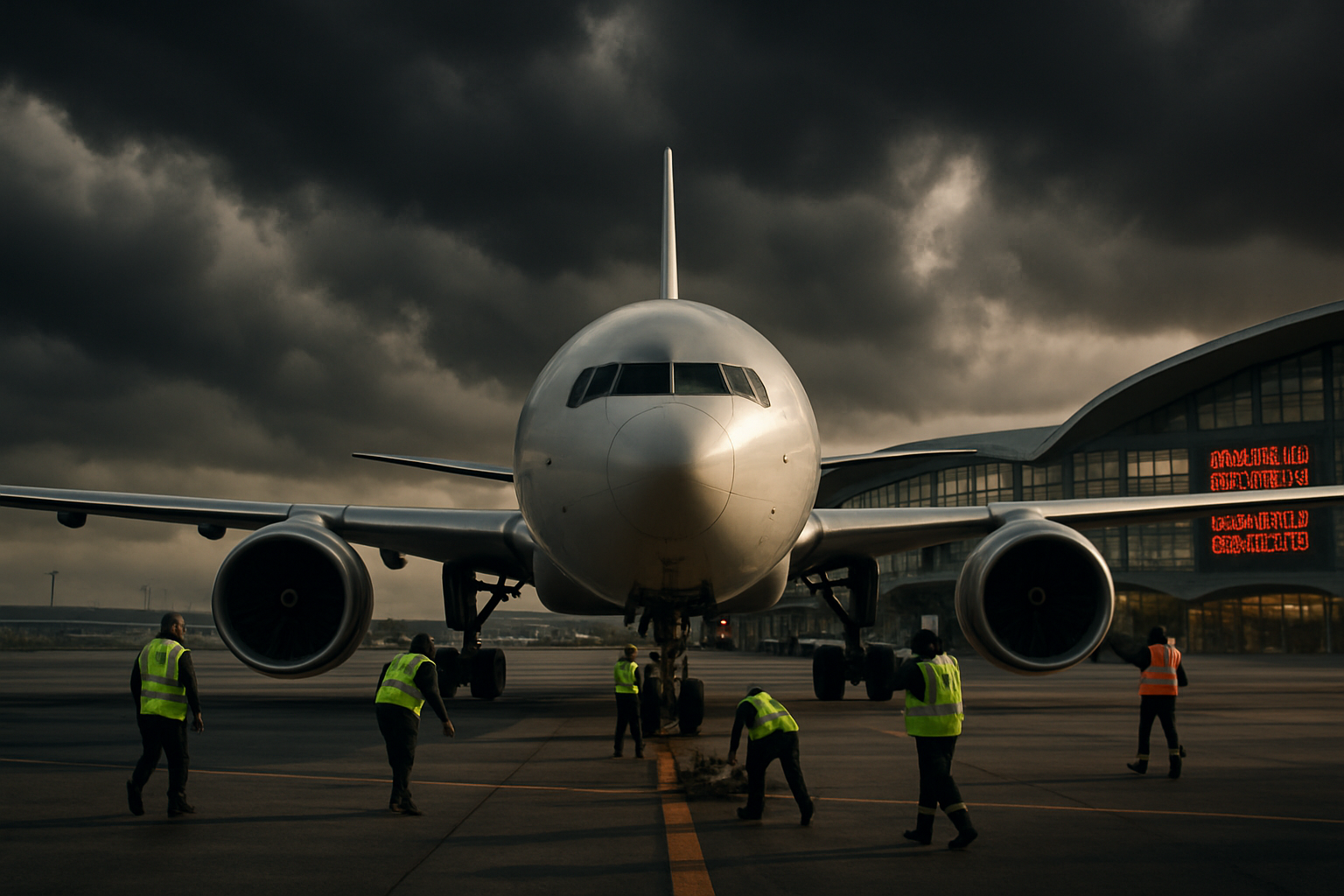
The global aviation industry is experiencing its most severe crisis since the COVID-19 pandemic, with airlines forced to cancel thousands of flights and implement massive fare increases as the ongoing Iran conflict continues to disrupt critical Middle Eastern airspace and fuel supplies.
According to multiple sources, over 20,000 flights have been cancelled worldwide since March 2026, making this the most extensive aviation disruption in over six years. The crisis centers around the closure of eight Middle Eastern countries' airspaces—Iran, Iraq, Israel, UAE, Qatar, Syria, Kuwait, and Bahrain—following the escalation of military operations in February.
Lufthansa Cancels 20,000 Flights Amid Fuel Crisis
German airline Lufthansa has announced the cancellation of 20,000 flights through the summer season, citing unsustainable fuel costs and operational pressures. The carrier has suspended unprofitable routes from Munich and Frankfurt, marking one of the most dramatic capacity reductions by a major European airline.
The cancellations come as jet fuel prices have surged an unprecedented 122%, from $85-90 per barrel to $150-200 per barrel, due to Iran's closure of the Strait of Hormuz—a critical chokepoint that normally handles 40% of global oil transit.
"The current fuel cost environment makes many of our routes economically unviable,"
— Lufthansa spokesperson
The German airline has also permanently closed its CityLine subsidiary and grounded up to 40 aircraft as part of urgent cost-cutting measures. Similar actions have been taken across the industry, with SAS cancelling over 1,000 flights and Air New Zealand reducing services affecting 44,000 passengers.
Dubai International Airport Remains Shuttered
Dubai International Airport, the world's busiest with over 86 million passengers annually, remains completely closed due to missile damage sustained during Iranian retaliation operations. The shutdown has eliminated a critical Europe-Asia hub, forcing airlines to implement complex rerouting strategies through alternative corridors.
Emirates and Etihad Airways, the UAE's flagship carriers, continue to face operational collapse with indefinite suspensions of Middle East operations. This has created cascading effects throughout the global aviation network, as the Middle East serves as a vital connecting point for intercontinental travel.
European Airlines Warning of Summer Shutdown
The crisis has reached a critical threshold in Europe, with International Energy Agency Director Fatih Birol issuing an unprecedented warning that Europe has "perhaps six weeks of jet fuel" remaining before systematic flight cancellations become inevitable by early June.
Ryanair CEO Michael O'Leary has been conducting daily emergency calls with European fuel suppliers, while multiple Italian airports—including Milan, Venice, Bologna, and Brindisi—are already experiencing severe fuel limitations.
Air France-KLM has implemented emergency surcharges of €50 for economy class and €200 for business class on long-haul routes, while Norwegian Airlines deployed 125 additional aircraft to capture market share as competitors reduce capacity.
Massive International Evacuations
The crisis has triggered the largest coordinated international evacuation since the Arab Spring in 2011, with over 500,000 citizens extracted from Middle East conflict zones. Australia has 115,000 trapped nationals, Germany 30,000 stranded tourists, and Cyprus activated its ESTIA evacuation plan for the first time in history.
Individual passenger costs have reached extreme levels. Swedish traveler Emily Grosser paid $560 for alternative routing from Paris to Australia after her Dubai connection was cancelled, exemplifying the financial burden on stranded passengers.
Energy Markets in Turmoil
The aviation fuel crisis is part of a broader energy emergency stemming from Iran's Revolutionary Guard maintaining control over the Strait of Hormuz. Oil prices have reached historic levels, with Brent crude peaking at $119.50 and West Texas Intermediate jumping 18.98% to $108.15.
Over 150 oil and LNG tankers remain stranded in the Persian Gulf, with major shipping companies Maersk and MSC suspending all operations in the region. Qatar's LNG facilities, which normally supply approximately 20% of global exports, have been halted due to infrastructure damage.
Government Emergency Responses
Governments across Europe have implemented unprecedented emergency measures. Hungary has imposed price caps to prevent "war-driven explosions" in fuel costs, while France has deployed 500 fuel inspectors to prevent price manipulation. Romania has outlined five emergency scenarios to prevent diesel prices from exceeding 10 lei per liter.
The International Energy Agency has coordinated the largest strategic petroleum reserve release in its 50-year history, with 400 million barrels from 32 countries—double the amount released during the 2022 Ukraine crisis.
Industry Transformation Accelerating
The crisis is forcing permanent changes to the aviation industry. Enhanced security screening, mandatory conflict insurance, and pre-approval for high-risk destinations are becoming standard features. Airlines are accelerating route diversification strategies to reduce dependence on Middle Eastern hubs, particularly as Russian and Ukrainian airspace remains closed.
Travel insurance gaps have been exposed, with standard policies excluding war-related cancellations, driving a shift toward package tours that offer more comprehensive coverage frameworks over independent travel arrangements.
Regional Tourism Winners and Losers
The crisis has created clear regional winners and losers in the tourism sector. Croatia is benefiting as travelers seek safer European alternatives, operating 62 medical clinics in what represents Europe's most extensive seasonal healthcare network. Spain, with capacity for 513.6 million tourist nights annually, is capturing redirected demand from traditional Middle Eastern destinations.
Conversely, the Caribbean faces a "perfect storm" of Middle East disruptions combined with Cuba's aviation isolation, while New Zealand's tourism recovery is threatened as one-third of European travelers typically use Middle Eastern hubs for connections.
Nuclear Diplomacy Breakdown
The aviation crisis stems from a complete breakdown in US-Iran nuclear negotiations, despite what had been described as a "broad agreement on guiding principles"—the most progress since the 2018 JCPOA collapse. The failure to reach a comprehensive agreement led to Operation Epic Fury, the largest US-Israeli military operation since 2003, followed by Iranian retaliation.
UN Secretary-General António Guterres has called the situation "the greatest test of multilateral cooperation in the modern era," warning that nuclear risks are now at their "highest in decades."
Recovery Timeline Uncertain
Unlike weather-related disruptions that have predictable recovery timelines, the current crisis depends entirely on military and diplomatic resolution. Airlines are conducting daily operational reviews but cannot make long-term scheduling decisions with multiple airspaces closed and fuel markets volatile.
Even when flights resume, clearing the backlog of cancelled flights and stranded passengers could take weeks. The crisis is forcing fundamental reconsideration of route planning, risk assessment, and international cooperation frameworks for an increasingly volatile geopolitical environment.
"This is a watershed moment that will influence aviation operational practices, regulatory frameworks, and international cooperation for decades to come."
— UN Secretary-General António Guterres
The April 2026 aviation crisis represents a template-setting moment for 21st-century crisis management, determining whether the industry can maintain global connectivity or will fragment into regionalized, security-conscious networks that prioritize safety over seamless international travel. The decisions made in the coming weeks will influence aviation policies and emergency planning approaches worldwide for decades ahead.