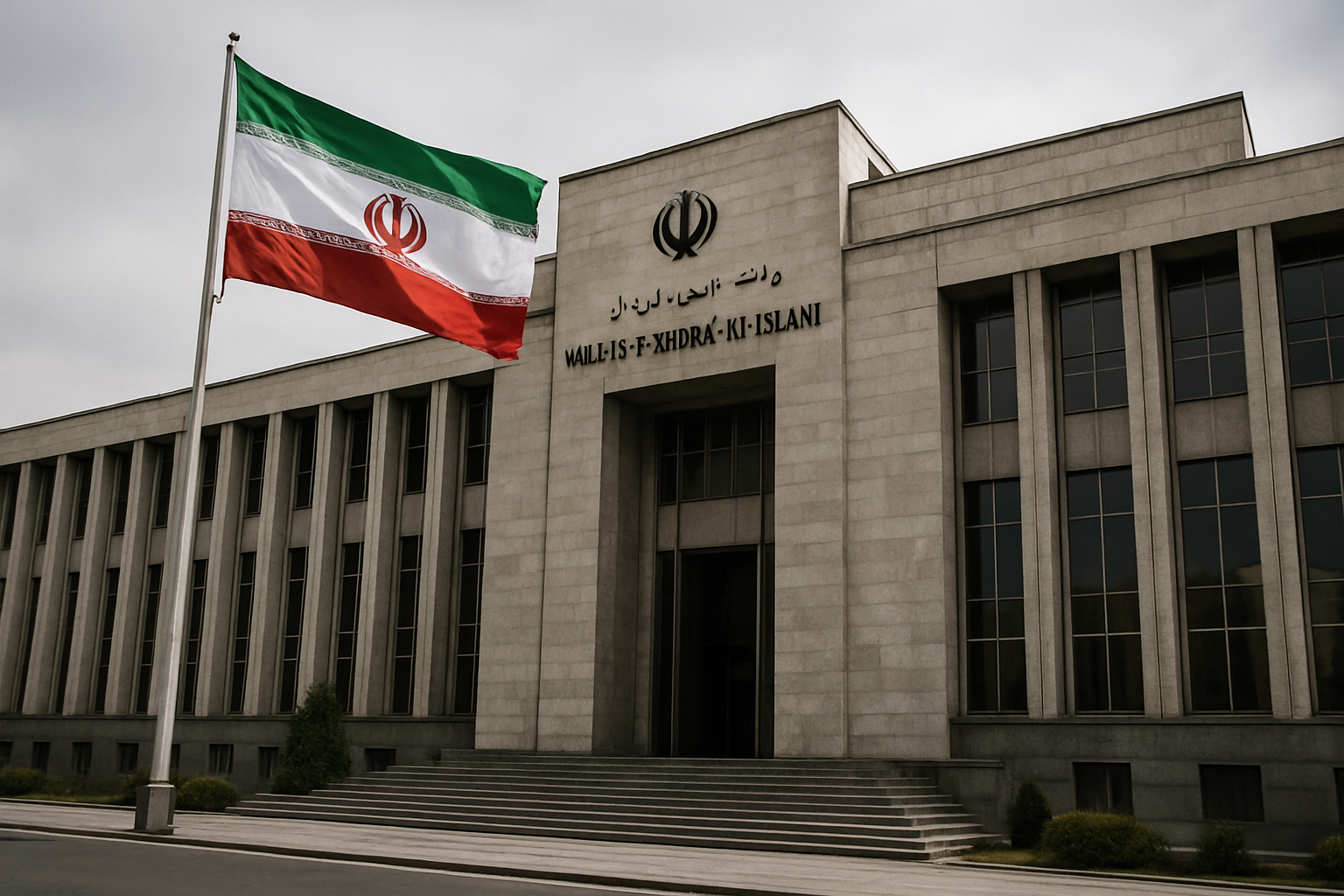
Iran's Parliament Speaker Mohammad Bagher Qalibaf announced on Sunday that all European Union military forces have been classified as "terrorist groups" under Iranian law, marking a dramatic escalation in diplomatic tensions following the EU's recent blacklisting of Iran's Islamic Revolutionary Guard Corps (IRGC).
The declaration was made during a pre-session address at the Iranian parliament's open session on February 1, 2026, as lawmakers demonstrated solidarity by wearing the green uniforms of the Revolutionary Guards. The session was punctuated by chants of "Death to America," "Death to Israel," and "Shame on you, Europe," according to multiple international news sources.
This retaliatory move comes just days after the European Union formally added Tehran's Islamic Revolutionary Guard Corps to its list of terrorist organizations, a decision that has significantly strained Iran-EU relations. The EU designation was largely prompted by Western governments' accusations that the Guards orchestrated a violent crackdown on recent protest movements in Iran, resulting in thousands of deaths.
Parliamentary Address and Revolutionary Commemorations
Speaking during the commemorations marking the anniversary of Imam Khomeini's return to Iran and the beginning of the Ten-Day Dawn celebrations of the Islamic Revolution, Qalibaf emphasized Iran's independence and resistance to foreign influence. He stated that the victory of the 1979 revolution ended foreign domination over Iran and restored courage to a nation that had previously experienced foreign occupation, coups, and territorial losses.
According to Iranian state media, Qalibaf described a strong, independent, and unified Iran as "the main obstacle" to what he characterized as the long-term plans of global powers. He argued that hostility toward the Islamic Republic stems from its success in building such a state based on Iranian and Islamic culture, referencing Imam Khomeini's political and religious testament that emphasized unity and shared purpose.
Background: EU's IRGC Designation
The European Union's decision to designate the Islamic Revolutionary Guard Corps as a terrorist organization represents one of the most significant diplomatic sanctions against Iran in recent years. The move affects all 27 EU member states, including Portugal, whose military forces are now specifically targeted under Iran's reciprocal declaration.
Western governments have consistently accused the IRGC of carrying out systematic crackdowns on protest movements that have swept Iran over recent years. These protests, which began as demonstrations against government policies, evolved into broader calls for political reform and have reportedly resulted in thousands of casualties according to human rights organizations.
The EU designation imposes various restrictions on the IRGC, including asset freezes and travel bans for key personnel, while also criminalizing financial support for the organization within EU territories. Portugal's Defense Minister Nuno Melo has notably declined to comment on Iran's retaliatory designation of European armies as terrorist groups.
Regional Implications and Timing
The timing of Iran's announcement is particularly significant as it coincides with heightened regional tensions in the Middle East. According to recent developments, Iran's Supreme Leader Ayatollah Ali Khamenei has issued warnings about potential "regional war" if the United States takes military action against Iran, while the USS Abraham Lincoln carrier strike group has been deployed to the Arabian Sea.
Despite these escalating tensions, there are reports of potential diplomatic openings, with President Trump indicating that Iran is "talking seriously" with Washington about possible negotiations. These diplomatic efforts, however, are occurring against a backdrop of continued military posturing by both sides, including Iran's naval exercises in the Strait of Hormuz featuring live-fire drills conducted on February 1-2, 2026.
International Response and Legal Implications
The Iranian parliament's designation of European armies as terrorist groups raises complex questions about international law and diplomatic reciprocity. While Iran's domestic legislation allows for such designations, the practical implications for European military personnel and operations remain unclear.
The move represents a significant departure from traditional diplomatic protocols and could potentially complicate any future dialogue between Iran and European nations. European officials have yet to provide detailed responses to Iran's designation, though the action is expected to further strain already fragile diplomatic relations.
This development also comes at a time when international attention is focused on other regional issues, including the recent reopening of the Rafah crossing between Gaza and Egypt after nearly two years of closure, and ongoing humanitarian concerns in various Middle Eastern theaters.
Broader Context of Iran-West Relations
The reciprocal terrorist designations highlight the deteriorating state of Iran-West relations, which have been marked by cycles of sanctions, diplomatic isolation, and periodic attempts at engagement. The current escalation reflects deeper disagreements over Iran's domestic policies, regional influence, and nuclear program.
Recent developments have shown both confrontational and potentially conciliatory elements in Iran's foreign policy approach. While the parliament's terrorist designation of European armies represents a hardline response, there are simultaneous reports of Iranian officials engaging in preliminary discussions with U.S. representatives about possible diplomatic solutions to regional tensions.
The announcement by Parliament Speaker Qalibaf underscores Iran's strategy of responding to Western sanctions and designations with symmetric measures, a pattern that has characterized Iranian foreign policy for decades. This approach reflects the Islamic Republic's consistent position that it will not accept unilateral Western pressure without responding in kind.
Looking Forward
As diplomatic tensions continue to escalate, the international community faces the challenge of managing increasingly complex relationships in the Middle East. The Iranian parliament's designation of European armies as terrorist groups represents a new chapter in Iran-EU relations that could have far-reaching implications for regional stability and international diplomatic norms.
The situation remains fluid, with potential for both further escalation and diplomatic resolution. The coming weeks will likely prove crucial in determining whether current tensions lead to deeper isolation or provide an impetus for renewed dialogue between Iran and Western powers.