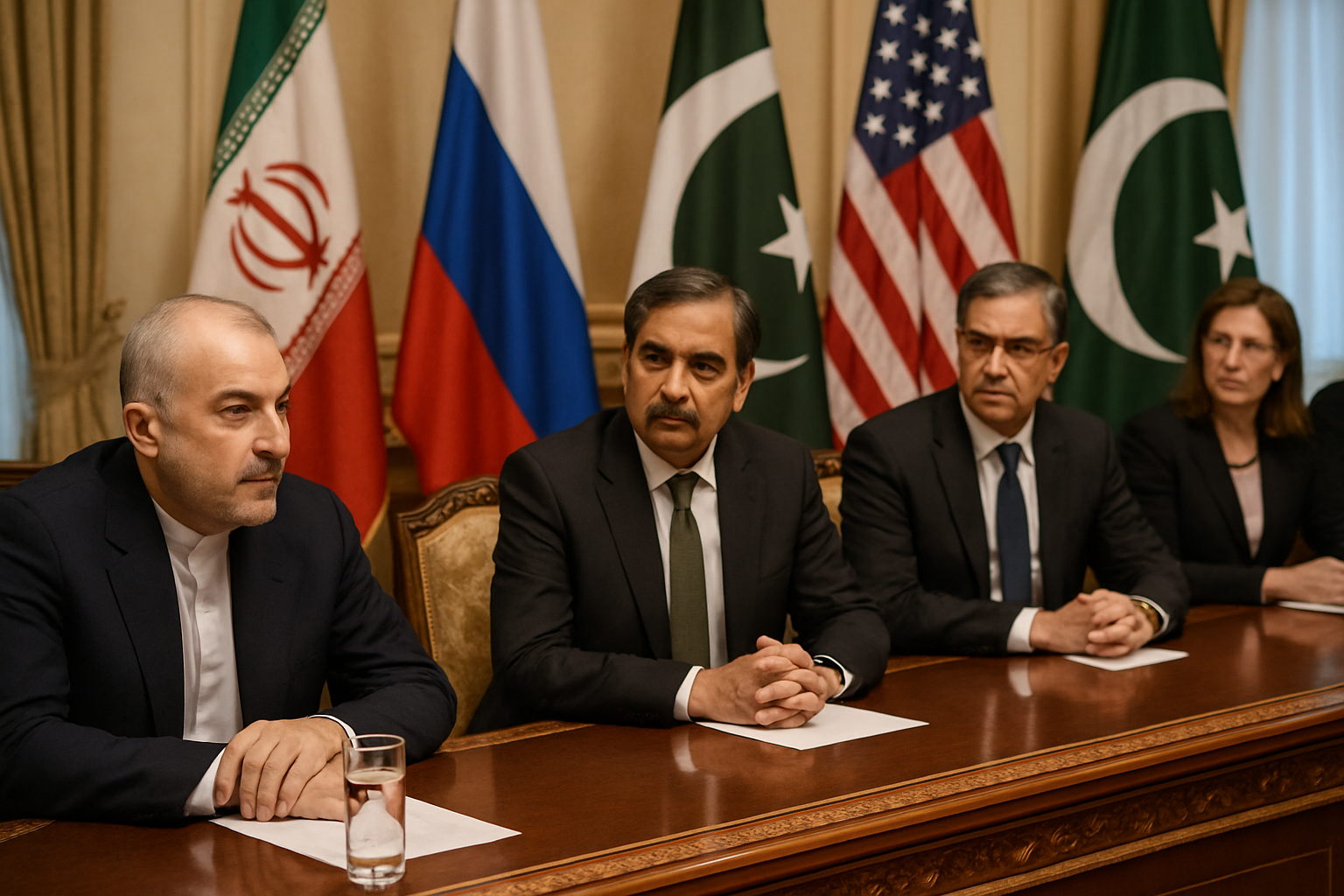
Iran's Foreign Minister Abbas Araghchi embarked on a crucial diplomatic shuttle between Moscow and Islamabad on Monday, seeking support from Vladimir Putin while Tehran reportedly transmitted new proposals to the United States through Pakistani mediators, highlighting the Islamic Republic's dual-track approach as nuclear tensions reach a critical juncture.
According to multiple diplomatic sources, Araghchi's arrival in St. Petersburg represents the latest phase of Iran's intensified diplomatic efforts following the collapse of direct negotiations with Washington. The visit comes as Iran faces mounting pressure over its nuclear program while simultaneously seeking to maintain strategic partnerships with major powers.
New Iranian Proposal to Washington
Axios reported that Iran has submitted a comprehensive new proposal to the United States through Pakistani intermediaries, aiming to revive stalled nuclear negotiations. The proposal, according to diplomatic sources, includes terms for reopening the strategically vital Strait of Hormuz while postponing discussions on Iran's ballistic missile program and regional proxy activities.
The reported proposal represents a significant shift in Iran's negotiating stance, potentially offering to address immediate economic concerns while deferring the most contentious security issues that have repeatedly derailed previous diplomatic efforts.
"Iran has transmitted a new proposal that could include terms linked to reopening the Strait of Hormuz"
— Axios Report
Pakistan has emerged as a crucial mediator in recent months, with Prime Minister Shehbaz Sharif and Field Marshal Asim Munir previously achieving breakthrough moments through innovative "message relay systems" when direct communication between Tehran and Washington proved impossible.
Trump's Direct Communication Offer
In a notable shift from traditional diplomatic protocols, President Donald Trump indicated that Iran could contact the United States directly rather than through intermediaries. Speaking to Fox News, Trump suggested that secure communication channels are available and emphasized efficiency over prolonged diplomatic travel.
"If they want to talk, they can come to us, or they can call us. You know, there is a telephone. We have nice, secure lines," Trump told "The Sunday Briefing" on Fox News.
The President's comments signal a potential willingness to bypass traditional diplomatic channels, though they came as his administration cancelled planned talks in Pakistan, citing continued disagreements over Iran's nuclear program.
Strategic Partnership with Russia
Araghchi's meetings in Russia underscore Iran's effort to strengthen ties with Moscow amid Western sanctions and diplomatic isolation. Russian state media confirmed Putin's willingness to meet with the Iranian Foreign Minister, highlighting the increasingly close relationship between the two sanctions-hit nations.
The timing of the Moscow visit is particularly significant, occurring as both countries face unprecedented Western pressure and as Russia continues its military operations in Ukraine. Iran and Russia have developed extensive cooperation in recent years, including defense partnerships and economic arrangements designed to circumvent international sanctions.
Iranian officials have pointed to "constant bilateral talks between Iran and Russia" across a wide range of issues, suggesting the relationship extends far beyond immediate crisis management to long-term strategic coordination.
Nuclear Program at the Center
The diplomatic flurry occurs against the backdrop of Iran's continued uranium enrichment at 60% purity, significantly above the 3.67% limit established in the 2015 Joint Comprehensive Plan of Action (JCPOA). Intelligence assessments suggest Iran now possesses sufficient enriched uranium for multiple nuclear weapons if it chooses to weaponize its program.
Previous negotiations achieved what Iranian officials described as "broad agreement on guiding principles," representing the most significant progress since the JCPOA's collapse in 2018. However, fundamental disagreements persist over the scope of any potential agreement.
Iran maintains that ballistic missiles and regional proxy activities constitute "red lines" that must be excluded from nuclear negotiations, while the United States insists on a comprehensive approach addressing missiles, armed groups, and human rights concerns.
Regional and Global Stakes
The diplomatic initiatives carry enormous regional and global implications, particularly given Iran's control over the Strait of Hormuz, through which approximately 40% of global oil transit passes. Any escalation or resolution of tensions directly impacts international energy markets and global economic stability.
Regional powers including Saudi Arabia, UAE, Qatar, and Egypt have maintained an unprecedented consensus in support of diplomatic solutions, reflecting widespread concern about the potential for broader military conflict in the strategically vital Persian Gulf region.
The collapse of the New START treaty between the United States and Russia in February 2026 has created additional urgency around nuclear governance issues, marking the first time in over 50 years that the world's two largest nuclear powers operate without bilateral constraints.
International Context and Implications
UN Secretary-General António Guterres has described the current moment as representing "the greatest test of multilateral cooperation in the modern era," emphasizing the template-setting nature of how this crisis is resolved for future international disputes.
The success or failure of Iran's current diplomatic initiatives will likely influence approaches to nuclear proliferation, territorial sovereignty enforcement, and crisis management mechanisms for decades to come. European allies have maintained calls for diplomatic solutions while preparing for potential security contingencies.
Congressional opposition in the United States to military solutions has reached historically unprecedented levels, with only 25% public support for military action, creating additional pressure for diplomatic breakthroughs.
Looking Ahead
As Araghchi continues his diplomatic tour, the international community watches for signs of breakthrough or further deterioration. The dual-track approach of engaging both Russia and the United States simultaneously represents Iran's recognition that no single power can provide a complete solution to its current challenges.
The coming days will prove critical in determining whether innovative diplomatic solutions can bridge decade-old disagreements over nuclear issues, regional conflicts, and sanctions relief, or whether the world moves toward more dangerous phases of this crisis.
Pakistan's continued mediation efforts, combined with potential direct US-Iran communication and strengthened Iran-Russia coordination, create a complex diplomatic matrix that could either produce breakthrough solutions or further complicate an already volatile situation.