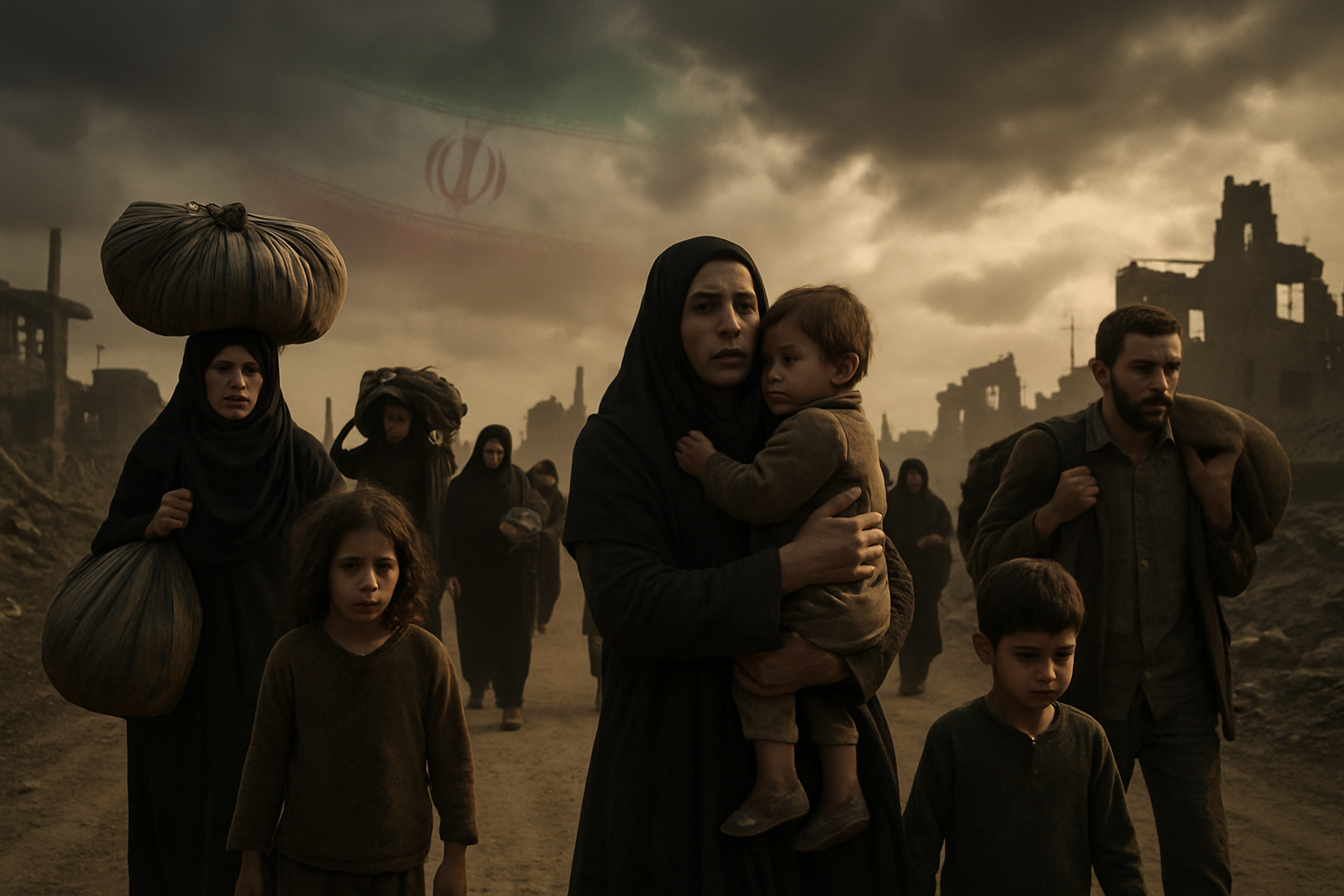
The United Nations High Commissioner for Refugees (UNHCR) reported Thursday that up to 3.2 million people have been internally displaced within Iran since military conflict erupted on February 28, marking one of the most severe humanitarian crises in the region since the Cold War ended.
The massive displacement represents between 600,000 and one million Iranian households forced to flee their homes as US-Israeli "Operation Epic Fury" continues its systematic targeting of Iranian infrastructure and military installations. The UNHCR assessment, based on preliminary data from displaced households, warns that the figure is "likely to increase as fighting persists, signaling a troubling escalation in humanitarian needs."
Scale of the Crisis
According to multiple UN sources, the displacement crisis began with the outbreak of military operations on February 28 and has rapidly accelerated as strikes have intensified. The affected population includes families fleeing combat zones, individuals evacuating areas near strategic targets, and communities displaced by infrastructure damage.
"This number is likely to increase as fighting persists, signaling a troubling escalation in humanitarian needs," the UNHCR stated in its Thursday assessment. The agency noted that many displaced families have sought shelter with relatives, moved to safer provinces, or found temporary accommodation in public buildings and informal settlements.
"The sudden movement of millions of people is creating urgent needs for shelter, food, medical care, and basic services across multiple provinces."
— UNHCR Spokesperson
The displacement crisis occurs within the broader context of Operation Epic Fury, the largest coordinated US-Israeli military campaign since the 2003 Iraq invasion. The operation has targeted thousands of sites across Iran, including military installations, government facilities, and critical infrastructure.
Afghan Refugees Among the Affected
The crisis has particularly impacted Afghanistan's refugee population in Iran, with the UN confirming that Afghan families living in Iran have been "affected by recent attacks, worsening already fragile humanitarian and living conditions."
Afghan refugee communities, many of whom fled their homeland seeking safety, now find themselves caught in another conflict zone. The UNHCR noted that these vulnerable populations face additional challenges in accessing emergency services and finding alternative shelter arrangements.
The displacement of Afghan refugees highlights the regional dimensions of the crisis, as families who had already experienced forced migration now face secondary displacement within their host country.
Humanitarian Response Challenges
Humanitarian organizations report that the sudden surge in displaced populations has overwhelmed existing support systems across Iran. Emergency shelters, schools, places of worship, and community centers have been converted to accommodate displaced families, but capacity remains insufficient.
The Iranian Red Crescent, despite operating under wartime conditions, has reported over 787 civilian casualties from the ongoing strikes, while simultaneously attempting to coordinate relief efforts for millions of displaced persons.
"Many of the displaced have fled their homes in search of safety, often moving to nearby provinces or staying with relatives and host communities," the UNHCR assessment noted. "Others have sought temporary shelter in public buildings and informal settlements, placing additional pressure on local resources."
International Implications
The displacement crisis comes amid the complete collapse of nuclear diplomacy between Iran and the United States. Despite achieving what diplomats described as "broad agreement on guiding principles" in Geneva talks - the most progress since the 2018 JCPOA collapse - fundamental disagreements over scope proved insurmountable.
Iran had insisted on nuclear-only negotiations, excluding ballistic missiles and regional proxy relationships as "red lines," while the US demanded comprehensive agreements covering missiles, armed groups, and human rights issues.
The humanitarian emergency has severely strained regional relationships, with traditional US allies Saudi Arabia, UAE, Qatar, and Egypt finding their unprecedented diplomatic consensus supporting peaceful resolution threatened as Iranian retaliation has targeted their territories.
Global Context
The Iranian displacement crisis unfolds alongside multiple international emergencies. Global aviation networks have been paralyzed with over 18,000 flights cancelled worldwide - the most extensive disruption since COVID-19. Eight Middle Eastern countries have simultaneously closed their airspace, creating cascading effects on international travel and commerce.
Energy markets have experienced severe volatility, with oil prices surging past $80 per barrel as Iran has declared the Strait of Hormuz - carrying 40% of global oil transit - "unsafe for shipping." This has stranded over 150 tankers worth billions in cargo and disrupted global supply chains.
Historical Precedent
The scale of Iran's internal displacement crisis represents one of the largest population movements in the Middle East since the Arab Spring of 2011. International observers note that the rapid onset and massive scale distinguish this crisis from gradual displacement seen in other regional conflicts.
UN Secretary-General António Guterres has characterized the overall situation as "the greatest test of multilateral cooperation in crisis management in the modern era," emphasizing the template-setting implications for 21st-century conflict resolution approaches.
The crisis occurs against the backdrop of broader nuclear governance challenges, as the New START treaty between the US and Russia expired on February 5, marking the first time in over 50 years that the world's two largest nuclear powers operate without arms control constraints.
Looking Ahead
The UNHCR and partner organizations face unprecedented challenges in providing humanitarian assistance while military operations continue. Access to affected areas remains limited due to ongoing security concerns, complicating efforts to deliver aid and assess the full scope of needs.
International humanitarian law experts have raised concerns about the protection of civilians and displaced populations during active military operations. The targeting of civilian infrastructure, including the tragic Minab elementary school attack that killed 53-85 students and staff, has drawn widespread condemnation and calls for Geneva Conventions investigations.
As the conflict enters its second week, the humanitarian implications continue to expand beyond Iran's borders. Lebanon has reported over 454,000 displaced civilians fleeing Israeli strikes in retaliation for Hezbollah's involvement, creating multiple simultaneous displacement crises across the region.
The coming days will be critical in determining whether the displacement crisis can be contained through diplomatic intervention or whether it will expand into a broader regional humanitarian emergency affecting millions more civilians across the Middle East.